
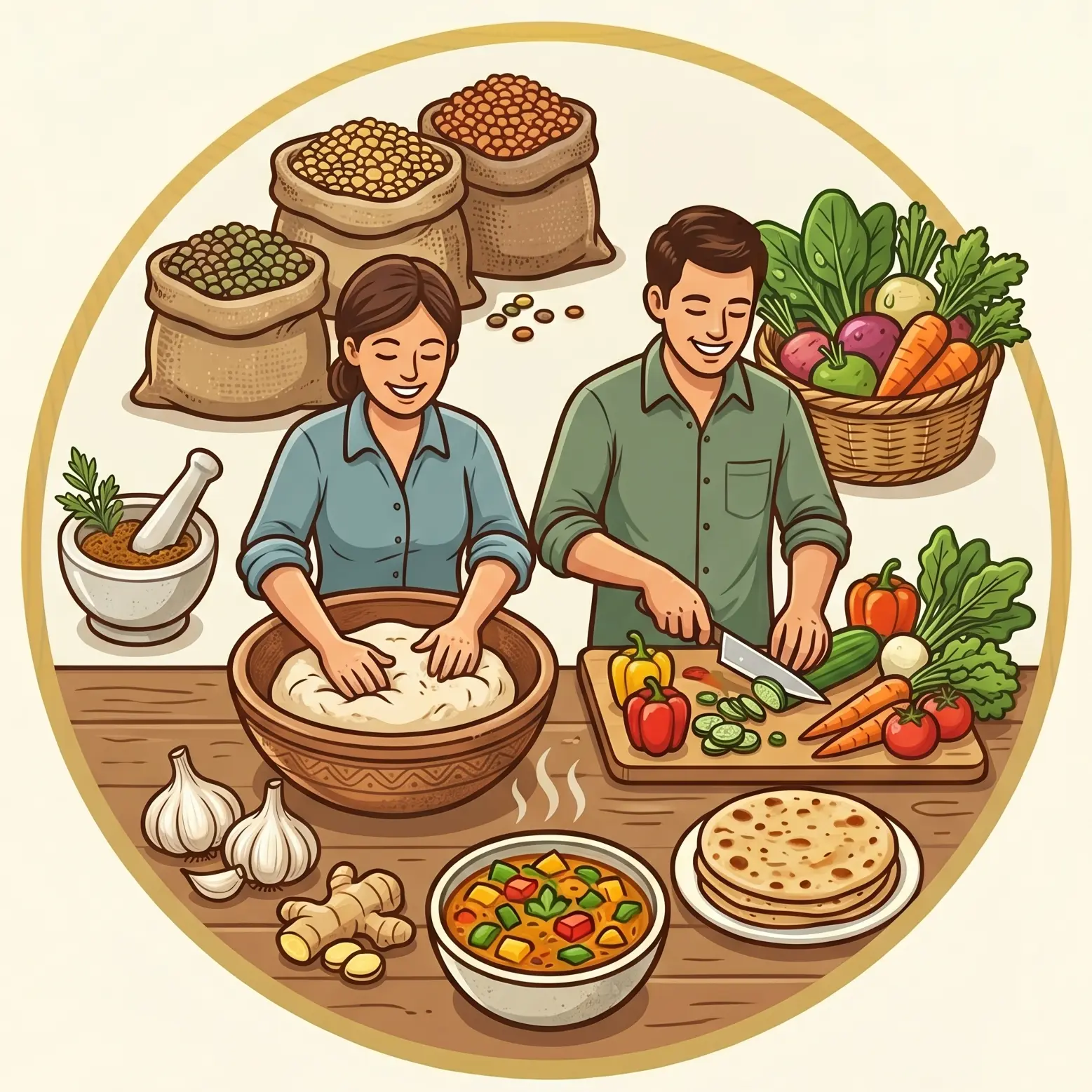
If eating well in India feels harder than the internet says it should be, that is not a character flaw. Three real things are working against you, and none of them is willpower.
Healthy Eating In India, Made EASY
The five swaps written out properly, what to change, what to keep, and the exact move for the situations that break plans: the office pantry, the family function, and the highway with nothing but chips.
Download the guide (PDF)Free, no sign-up, opens straight away.
Problem one: availability
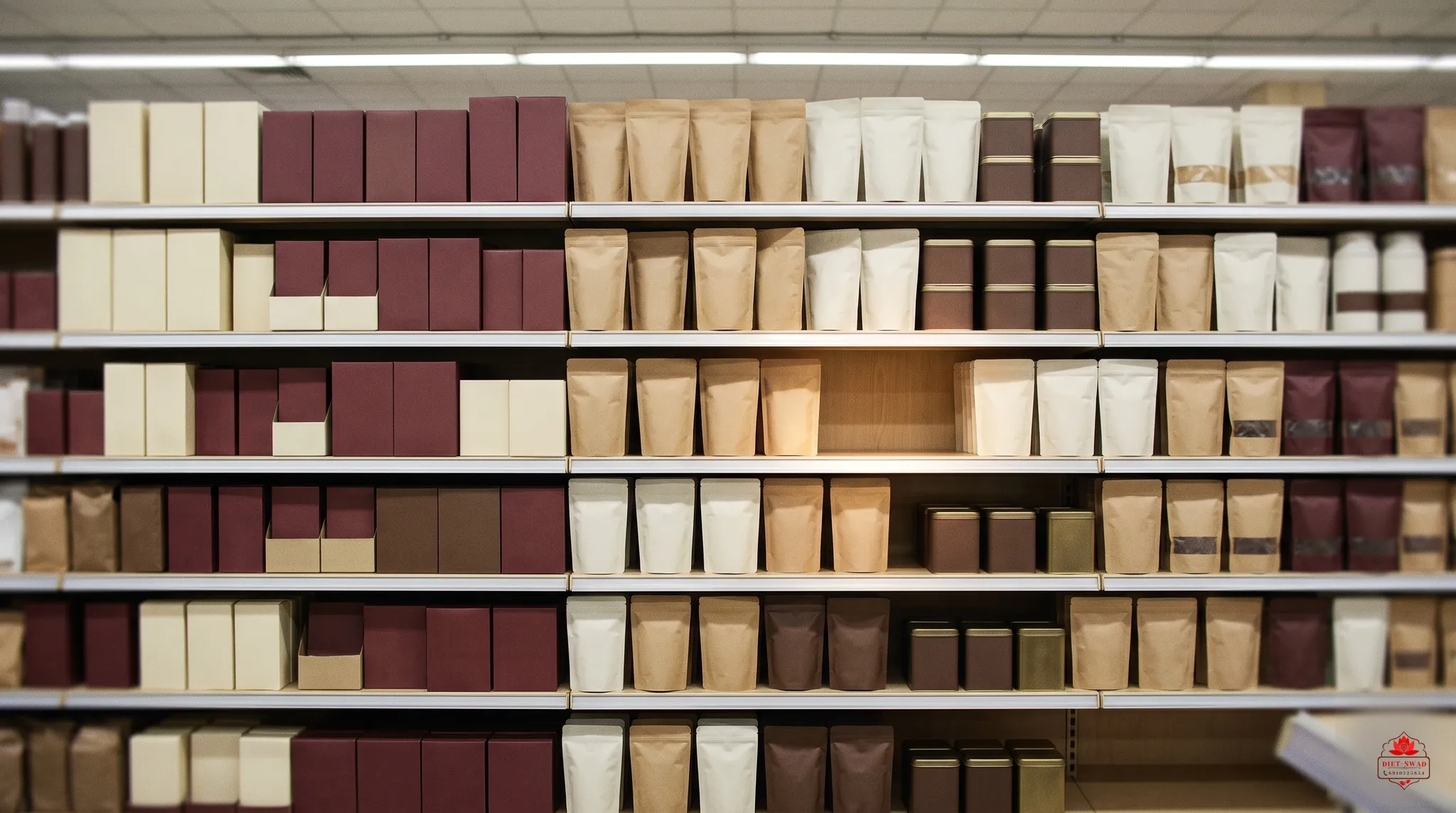
Walk into any kirana, any station, any office pantry. What is stocked at eye level, in every size, at every price point, is packaged and heavily processed. What is not stocked is anything else.
The cleaner option usually exists, but it hides in an expensive corner of a large shop, or online, or in a city you do not live in. So the default is chosen for you by whoever stocks the shelf, and choosing differently costs planning, money, or both.
There is decent evidence that this matters more than we like to admit. In a tightly controlled trial published in 2019, people eating an ultra-processed diet ate around 500 calories a day more than the same people eating a minimally processed one, with both diets matched for sugar, fat, salt and fibre, and everyone free to eat as much as they wanted. Nobody was choosing to overeat. The food itself made overeating easier.
Problem two: social pressure
This is the one that no imported diet plan survives contact with.
At a family function, refusing food is not a dietary choice, it is a social act. "Ek toh le lo" is not really about the ladoo. Saying no reads as rejecting the person offering, which is why holding a plan in a room full of relatives is genuinely hard in a way that skipping a snack alone at home is not.
The move that works is not refusing. It is: take it, take a small bite, praise it properly, put it down. Nobody counts your bites. They register that you accepted. Your plan survives and so does the relationship, and the second one matters more.
If you are the host, you have more power than the guest does. Put out things that look festive and happen to be clean, dates stuffed with nuts, a bowl of good cashews, cocoa-rich bites. Nobody at the table experiences it as a compromise, because it does not look like one.
Problem three: information
The third problem is that the pack is written to be difficult. Small print, English, and sugar spread across four names so that no single one climbs near the top of the ingredient list.
This one is solvable, and it unlocks the other two. Flip the pack, read the first three ingredients, then read the "of which sugars" line. Two checks, ten seconds. Our 60-second label routine has the full method, and the ten-item kitchen breakdown applies it to things already in your house.

Five changes that survive all three
Not a diet. Five defaults, each one chosen to work inside the problems above rather than pretending they are not there.
- The chai companion. Chai stays exactly as it is. Only the thing next to it changes, from a maida biscuit to a millet or atta one, or a few nuts. Because chai happens twice a day, this single swap moves more packets out of your month than any heroic decision you will make.
- The office drawer. Stock it before you are hungry. At 4:30 pm you will eat whatever is within arm's reach, so the entire job is making sure the near thing is the good thing.
- The function move. Bite, praise, put down. The one from the section above.
- The travel backup. A small permanent pack in your bag. Hunger plus zero options is what kills plans on highways and at railway stations, and a backup removes the phrase "there was nothing else" from your life.
- The five-second flip. First three ingredients, plus the sugars line. This one makes the other four automatic, because once you have seen what you were eating you do not really unsee it.
Change defaults, not diet
Here is the part that makes it stick. Do not try to change what you eat. Change what is nearest.
Same chai, better biscuit. Same drawer, better stock. Same functions, smarter move. Defaults do not need willpower, that is the entire point of a default, and it is why this approach outlasts the motivated version of you.
One default for each of the five moments

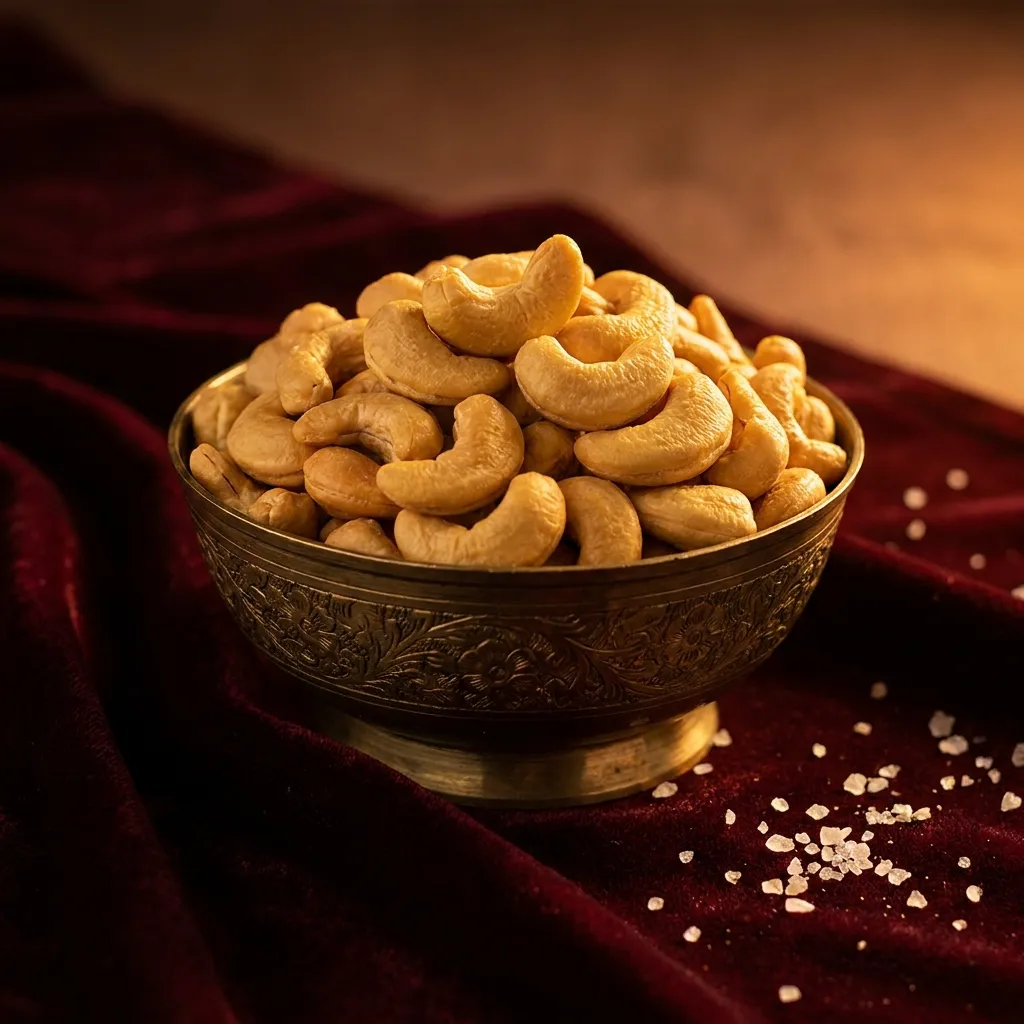

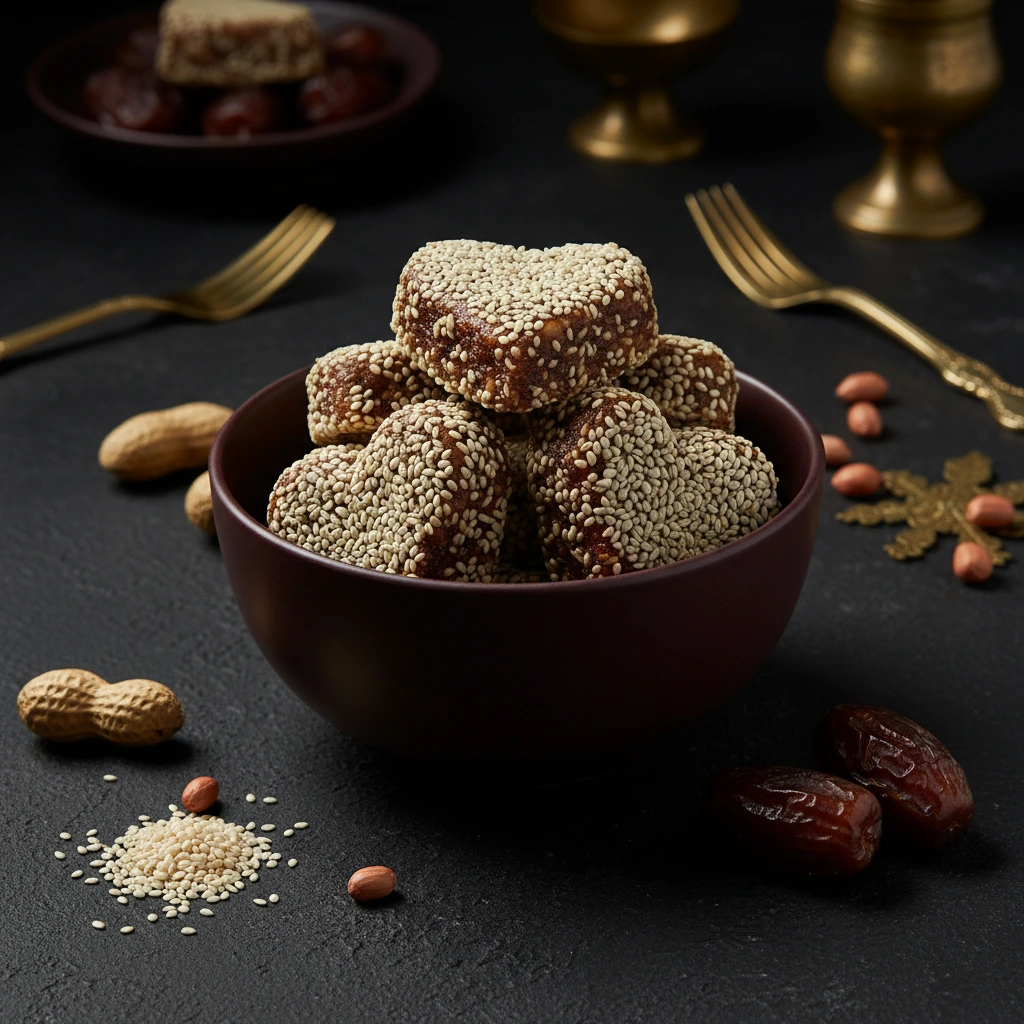
We built the range around those exact five moments instead of around a food philosophy, which is why it maps onto them so neatly: the chai slot, the drawer, the bag, and the sweet craving at the end of the day.
If you would rather start with a structure than a principle, the 7-day swap challenge gives you one change a day for a week.
Frequently asked questions
Why is it harder to eat healthily in India than the advice suggests?
Three structural reasons, not a lack of discipline. What is stocked everywhere is mostly packaged food, so the default is chosen by the shelf, not by you. Family and office life make refusing food a social act rather than a dietary one. And labels are genuinely hard to read, with sugar often split across several names.
How do I refuse food at a family function without offending anyone?
Do not refuse. Accept the plate, take a small bite, praise the food genuinely, and put it down. People register that you accepted, and nobody counts how much you ate, so the relationship stays intact and your plan does too. If you are hosting, serve festive-looking options that happen to be clean and nobody experiences it as a restriction.
Does processed food actually make you eat more?
There is direct evidence that it can. In a controlled inpatient trial published in Cell Metabolism in 2019, participants ate roughly 500 calories a day more on an ultra-processed diet than on a minimally processed one, even though the two diets were matched for sugar, fat, salt and fibre and everyone could eat freely. This was a small, carefully controlled study rather than a large population one.
What is the single easiest change to make first?
Change what sits next to your chai. It requires no new habit, no schedule and no willpower, because the ritual itself stays exactly the same and only the accompaniment changes. Since chai typically happens twice a day, that one substitution affects more of your month than a bigger change you make occasionally.
Do I need to read labels on everything I buy?
No, and trying to would make the habit collapse. Read the labels on the four or five things you buy every single week, because those are what actually add up. Two checks are enough: the first three ingredients, and the "of which sugars" line in the nutrition table.
It was never willpower
The problems are real, they are structural, and most of them were built by people who were not thinking about you at all. That is oddly freeing. You cannot fix Indian retail. You can absolutely decide what is in your drawer on Monday morning.
Bas itna hi. Start with the chai one.
Sources
- Hall KD, et al. Ultra-Processed Diets Cause Excess Calorie Intake and Weight Gain: An Inpatient Randomized Controlled Trial of Ad Libitum Food Intake. Cell Metabolism, 2019. pubmed.ncbi.nlm.nih.gov/31105044
- Monteiro CA, et al. Ultra-processed foods: what they are and how to identify them. Public Health Nutrition, 2019: the cosmetic-additive marker test. pubmed.ncbi.nlm.nih.gov/30744710
- ICMR-NIN. Dietary Guidelines for Indians, 2024. nin.res.in/dietaryguidelines
- FSSAI. Food Safety and Standards (Labelling and Display) Regulations, 2020: ingredient order, declared percentages and the nutrition panel. fssai.gov.in
General nutrition information in plain language, not medical or dietary advice. If you have a health condition, an allergy or specific dietary needs, please speak to your doctor or a qualified dietitian.