
You do not need a nutrition degree to read a food label. You need an order: the same five things, looked at in the same sequence, every single time. That is the whole trick. It takes about a minute at first and roughly ten seconds once your eyes know where to land.
Here is the order. Flip the pack over and go.
Label 60 Seconds Mein: The Cheat Sheet
The whole method on one page, the five steps in order, sugar's eleven disguises in a single table, the green-flag and red-flag columns, and a pocket version you can print and keep in your wallet.
Download the guide (PDF)Free, no sign-up, opens straight away.
Step 1 (0–15 seconds): read only the first three ingredients
By law, ingredients are listed heaviest first. So the first three are the product. Everything after them is, more or less, seasoning.
This one rule does most of the work. A pack that says "wholesome" and "goodness of grains" on the front, but opens with refined wheat flour, sugar and palm oil on the back, is a sugar-and-maida biscuit wearing a nice jacket. Front of pack is marketing. Back of pack is law.
Maida vs atta, in one line. Both are wheat. Atta keeps the fibrous brown outer layer and the nutrient-rich germ. Maida has had both stripped out, leaving fast-digesting white starch. On a label maida is written as Refined Wheat Flour. Same thing, formal clothes.
Step 2 (15–30 seconds): find all the sugar, not just the word "sugar"
Companies know you scan for one word. So sugar arrives under several names at once, and because each name is weighed separately, none of them has to sit near the top of the list. Split it into four names and suddenly sugar looks like a minor character.
The ones worth recognising:
- Liquid glucose, glucose syrup, dextrose: refined starch turned into fast sugar.
- Invert sugar, invert syrup: ordinary sugar split into its two halves. Sweeter, cheaper.
- Fructose, corn syrup, high-fructose corn syrup: syrup-form sugar.
- Maltodextrin: technically a starch, behaves like sugar in the body.
- Fruit juice concentrate: fruit with the fibre taken out. That is flavoured sugar.
- Malt extract: sugar from grain.
- Cane juice, cane crystals: sugar with a farmhouse accent.
Count them. Seedhi baat: two or more different sugars on one snack label and you are holding a dessert, whatever the front says.
Step 3 (30–40 seconds): what a "flavour" is telling you
"Natural flavour", "nature-identical flavour" and "artificial flavour" all mean the same practical thing, the taste was added separately rather than coming from the ingredient itself.
Real vanilla says vanilla extract. Real chocolate says cocoa solids. A flavouring is not poison, and this is not a scare. It is simply a signal: the actual ingredient was expensive, so a cheaper stand-in is doing the talking. Useful to know, not worth panicking over.

Step 4 (40–50 seconds): do not decode the INS numbers. Count them.
INS stands for International Numbering System, a shared code so the same additive has the same name in every country. INS 500 is baking soda. INS 330 is citric acid, the sourness in a lemon. The number is an identity, not a warning.
Which is exactly why memorising them is a waste of your minute. Count instead. A recipe made in a kitchen needs zero. A decent packaged product needs one or two. A label carrying eight of them is not a recipe, it is a formulation, and that count is the honest signal, not any single code in the row. Researchers use much the same shortcut: a long run of additives that exist for colour, texture and mouthfeel is one of the markers used to identify ultra-processed food.
More on what those codes actually do in our piece on what preservatives are and what they do.
Step 5 (50–60 seconds): one line in the nutrition table
Skip the calories. Skip the protein claim on the front. Find the line that reads "of which sugars", per 100 g, and read that number.
- Under 5 g per 100 g, genuinely low in sugar.
- 5 to 20 g: the middle. Portion is the thing that matters.
- Above 20–25 g: it is a sweet. Enjoy it knowing that.
One number, and it cuts straight through every claim printed on the other side of the pack. The World Health Organization suggests keeping free sugars under 10% of daily energy, and ideally under 5%, this line is how you find out where a packet actually sits.
The whole thing, as a pocket list
- Ingredient #1: millet, oats, whole grain, dates or nuts is a good start. Refined wheat flour or sugar is not.
- The fat: butter, ghee or a named cold-pressed oil tells you more than "edible vegetable oil", which tells you almost nothing.
- The sweetener: one named sweetener is fine. Two or three different sugar names is the red flag.
- Flavour: a real extract beats "nature-identical" every time.
- Additives: nought to two, ordinary. A long parade, informative.
- Transparency: printed percentages mean the company is willing to be checked.
Labels built to survive this exact test

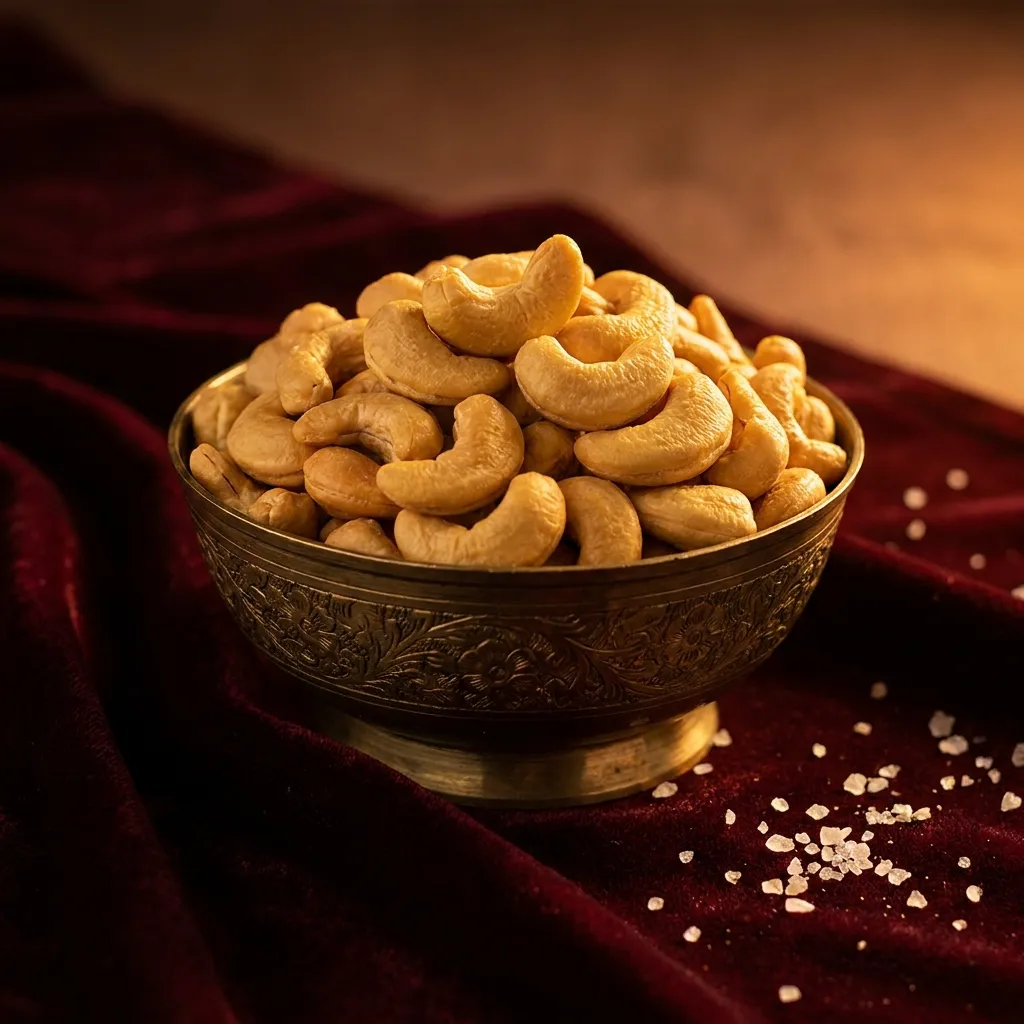

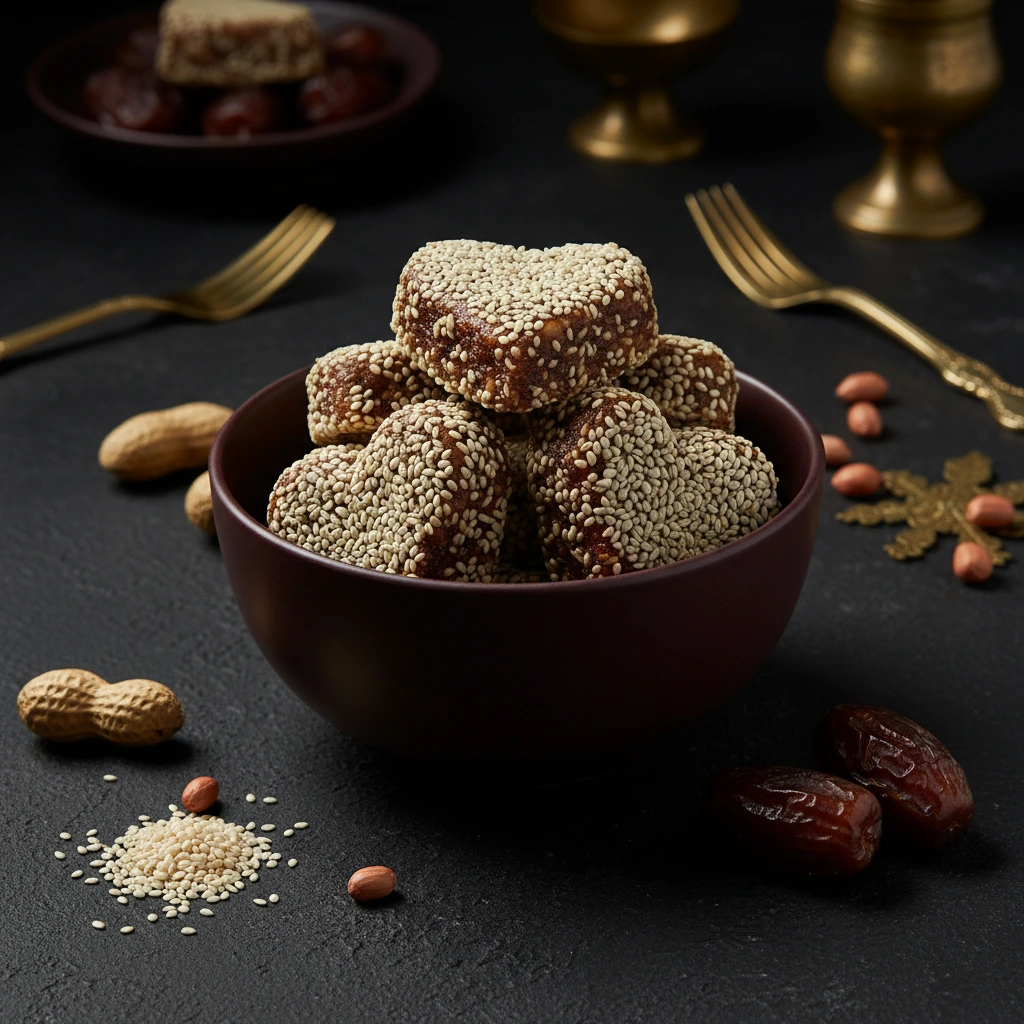
We would rather you ran this test on us than took our word for it. Every percentage is printed on our packs precisely so that step 1 and step 5 give you a real answer in ten seconds.
Once the method is automatic, the natural next step is applying it to the things already sitting in your kitchen, bread, ketchup, juice, health-drink powder. That is the subject of the ten-item kitchen breakdown. And if you want the bigger picture on what the back of a snack pack is really saying, start with what is really inside packaged snacks.
Frequently asked questions
How do I read a food label quickly?
Use a fixed order rather than reading everything. Look at the first three ingredients, then count how many different sugar names appear, then check whether flavour is added or real, then count the INS additive codes, and finally read the "of which sugars" line per 100 g. Five checks, about a minute at first and roughly ten seconds once it is habit.
Why are the first three ingredients so important?
Ingredients are listed by weight, heaviest first, so the first three make up most of what is in the pack. If refined wheat flour, sugar and palm oil are the top three, that is what you are mainly eating, regardless of what the front of the packet claims. Everything listed after them is present in much smaller amounts.
What names does sugar hide under on Indian labels?
Common ones include liquid glucose, glucose syrup, dextrose, invert sugar, invert syrup, fructose, corn syrup, maltodextrin, fruit juice concentrate, malt extract and cane crystals. Because each name is weighed separately, splitting sugar across several of them keeps any single one from appearing near the top of the ingredient list.
Do I need to memorise INS numbers?
No. INS is simply an international code so the same additive is named identically everywhere, and many are harmless everyday substances such as baking soda or citric acid. Counting is far more useful than decoding: zero to two additives is ordinary, while a long run of them indicates a product engineered for shelf life, colour and texture.
What counts as a high sugar content per 100g?
As a rough guide, under 5 g per 100 g is genuinely low, 5 to 20 g is a middle band where portion size decides, and above roughly 20 to 25 g means the product is a sweet. The World Health Organization advises keeping free sugars under 10% of daily energy intake, and under 5% for additional benefit.
Practise it five times and it is yours
The first label takes a full minute and feels like homework. By the fifth, your eye jumps to the right three places on its own, and you will never really stop doing it. It is the rare habit that costs ten seconds and pays for years.
Ulta karke dekho, flip it over. That is the entire skill.
Sources
- FSSAI. Food Safety and Standards (Labelling and Display) Regulations, 2020: ingredient order, declared percentages and the nutrition panel. fssai.gov.in
- Monteiro CA, et al. Ultra-processed foods: what they are and how to identify them. Public Health Nutrition, 2019: the cosmetic-additive marker test. pubmed.ncbi.nlm.nih.gov/30744710
- World Health Organization. Healthy diet fact sheet: free sugars below 10% of total energy intake, and under 5% for additional benefit. who.int
- ICMR-NIN. Dietary Guidelines for Indians, 2024. nin.res.in/dietaryguidelines
General information about food labelling, not medical or dietary advice. If you have a specific health condition, an allergy or special dietary needs, please speak to your doctor or a qualified dietitian.