
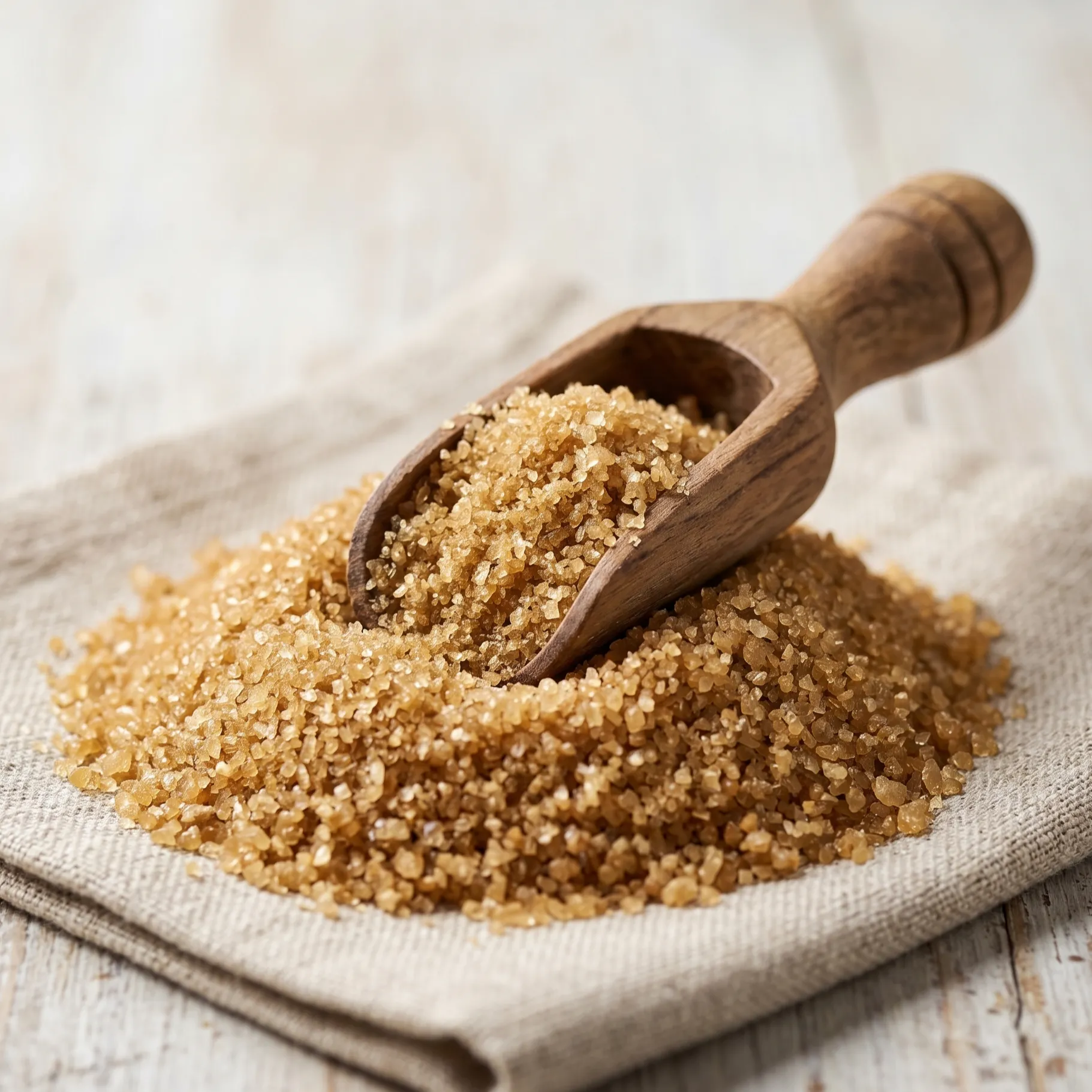
Nolen gur is jaggery, but not from sugarcane. It is boiled down from the sap of the date palm, tapped in the cold months, and it tastes of smoke and caramel in a way that cane gur simply does not. Nolen means new, so the name is really about freshness: the first gur of the season.
If you grew up in Bengal, none of this is news, and winter has a smell attached to it. If you did not, this is one of the few remaining Indian foods that genuinely cannot be manufactured year-round, and that is worth understanding.
How it is actually made
The process is almost unchanged and it is hard, cold work.
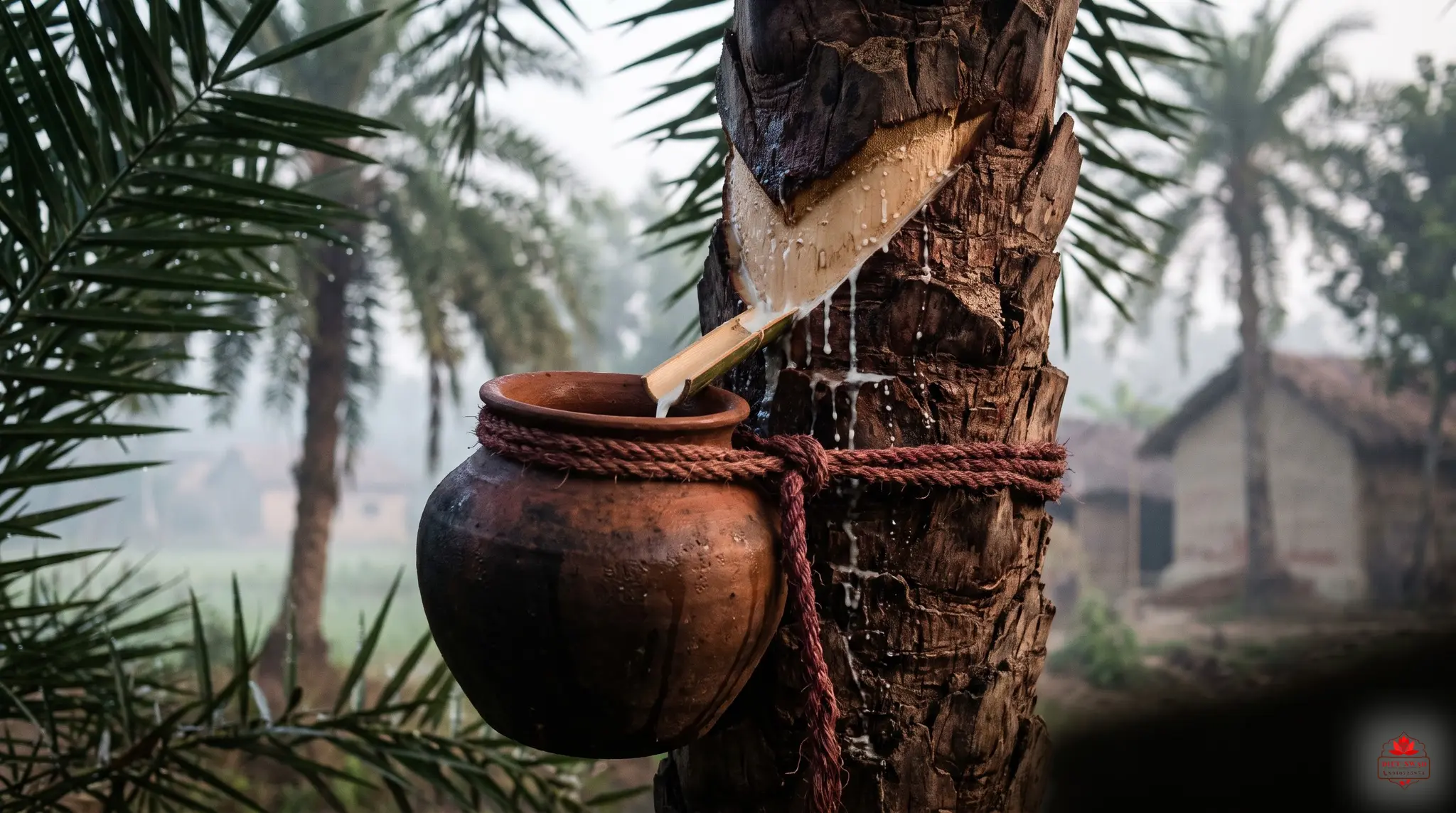
- The tree is cut. A tapper, called a shiuli, climbs the date palm and shaves a section of the trunk near the crown to open the sap channels.
- A pot is hung overnight. An earthen pot collects the sap, or rosh, as it runs slowly through the night. Cold nights give the best flow and the cleanest taste.
- It is collected at dawn and boiled immediately. This part is not optional. Date-palm sap begins to ferment within hours, so it goes straight to a wide open pan over a wood fire.
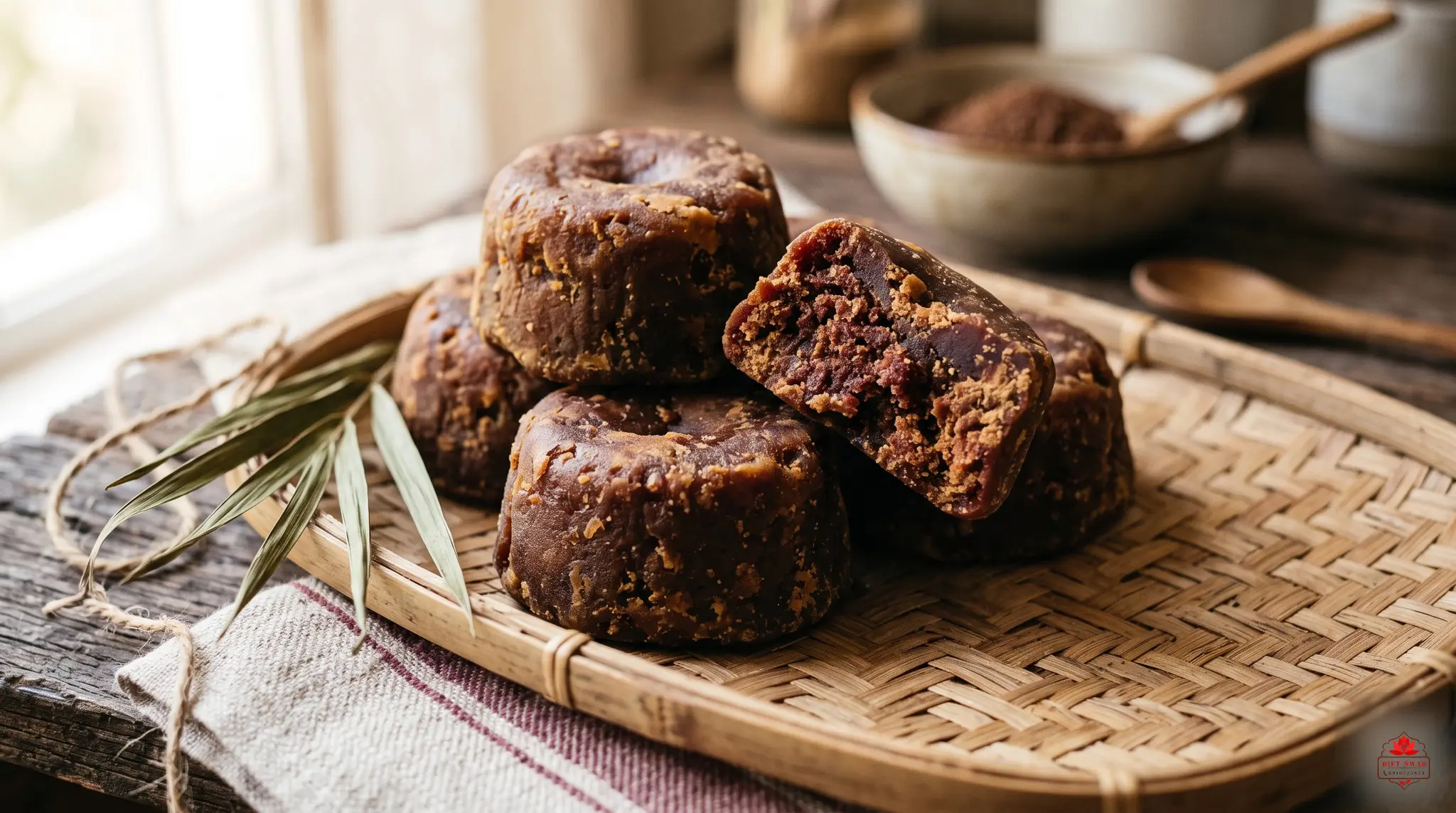
- It is reduced. Hours of boiling drive off the water. Stop early and you get pourable jhola gur. Carry on and it sets into the solid patali cakes.
The smokiness that people love is not an additive. It comes from the wood fire and from the caramelising sugars during that long open-pan boil.
Why the season is so short. The palm only gives good sap in the cold, roughly November to February. The sap ferments within hours of collection. Put those two facts together and you have a product that cannot be stockpiled, shipped slowly, or made in June, however much anyone would like to.
The history is older than you would guess
Date-palm sap tapping in Bengal is not a recent tradition. It is recorded back to around the 4th century BCE in the Pundra region, and the historian Niharranjan Roy traces nolen gur through early Bengali texts.
There is a nice piece of etymology attached: the sweetness of the region is one proposed origin of the name Gour, or Gauda, for this part of Bengal. Whether or not you find that convincing, the tapping itself is very old, and the technique a shiuli uses today would be recognisable to someone doing it two thousand years ago.
Is it healthier than white sugar?
Here is the honest answer, and it is the same answer that applies to every unrefined sugar.
Nolen gur is less processed than white sugar and it keeps small amounts of minerals that refining strips out. Around 100 g of khejurer gur gives roughly 355 kcal and about 87 g of carbohydrate. Which is to say: it is sugar. Your body treats it as sugar.
So the reason to choose nolen gur is not that it is a health food. It is that it tastes of something specific, it is made by hand in a way that is disappearing, and it exists for about eight weeks a year. Those are excellent reasons. "It is good for you" is not one of them, and we would rather say so than sell you a story. We go into the wider comparison in our piece on jaggery versus refined sugar versus desi khand.
How to buy the real thing
Nolen gur is widely adulterated, usually by stretching it with cheap cane sugar or cane jaggery. Four checks:
- Smell it before anything else. Real nolen gur has a smoky, almost woody caramel aroma. Added sugar cannot reproduce it. If it smells of nothing much, it is probably mostly cane.
- Feel the texture. Genuine patali is soft and yields slightly. Hard, glassy and brittle usually means a high proportion of cane sugar.
- Look at the colour. Deep brown with some variation across the cake. A uniform pale gold is a warning sign.
- Mind the season and the price. Peak season is roughly December and January. Cheap nolen gur in April is a story about something, and the story is rarely date palms.
Buying from a source that can tell you which district it came from beats buying a pretty box. Achha gur apne aap bol deta hai.
Unrefined sweeteners we actually use
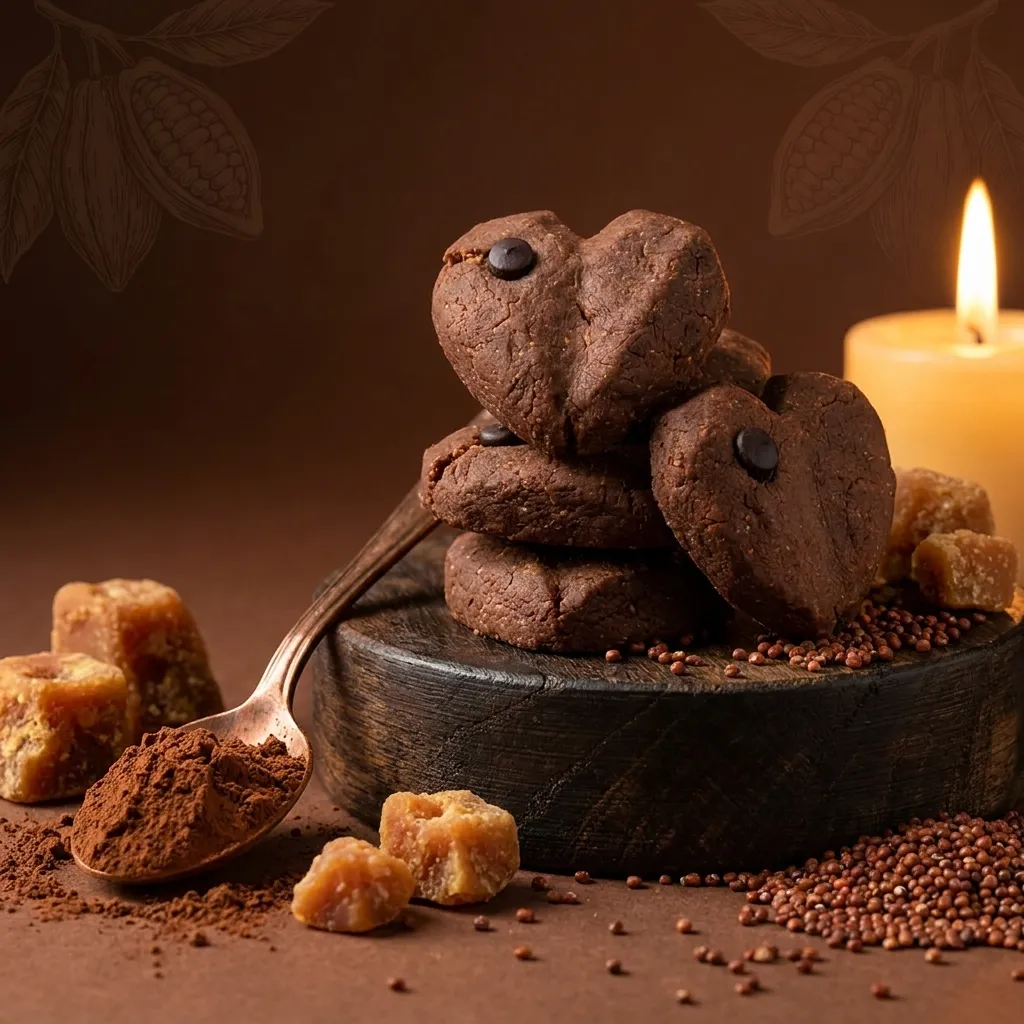
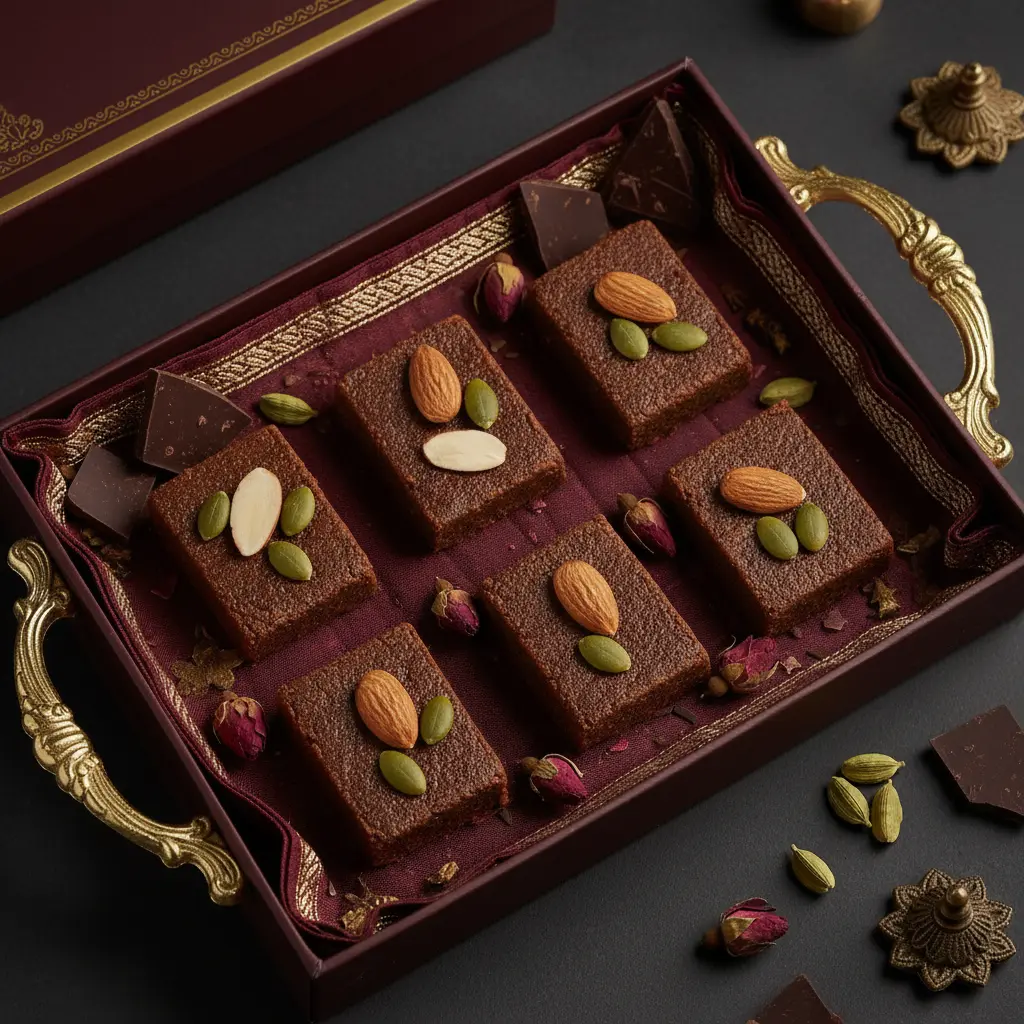
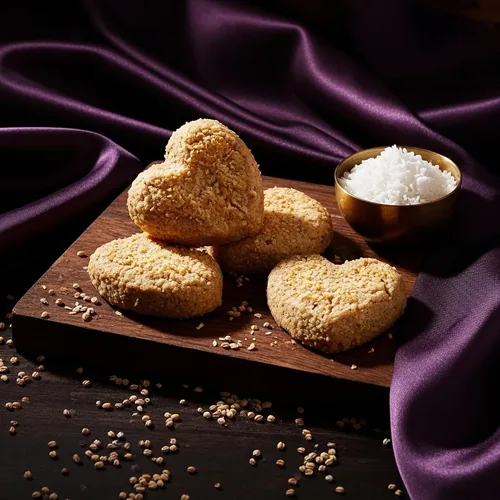
To be straight about it: we use cane jaggery and desi khand, not nolen gur. A sweetener with an eight-week season and a raw material that ferments by morning is a hard thing to build a year-round product on. We would rather tell you what is in the pack than borrow the romance of something we do not use.
Frequently asked questions
What is nolen gur?
Nolen gur, also called khejur gur, is jaggery made from the sap of the date palm rather than from sugarcane. The sap is tapped from the tree in winter, collected overnight and boiled down the same day. Nolen means new, so the name refers to the first and freshest gur of the season.
What is the difference between nolen gur and ordinary jaggery?
The plant. Ordinary jaggery is boiled down from sugarcane juice, while nolen gur comes from date-palm sap. That gives nolen gur its distinctive smoky caramel aroma and a softer, more liquid texture. Nutritionally both are unrefined sugars and behave as sugar in the body.
Why is nolen gur only available in winter?
The date palm only yields good sap in the cold months, roughly from November to February in Bengal. The sap also ferments within hours of being collected, so it has to be boiled almost immediately. Both facts together mean the season is short and cannot be extended.
Is nolen gur healthier than white sugar?
It is less refined and retains small amounts of minerals that white sugar has had removed, but it is still sugar and should be counted as sugar. Around 100 g of khejurer gur supplies roughly 355 kcal and about 87 g of carbohydrate. Choose it for its flavour and its craft, not as a health food.
How can I tell if nolen gur is real?
Smell it first, because the genuine article has an unmistakable smoky, almost woody caramel aroma that added sugar cannot fake. Real nolen gur is soft and slightly sticky rather than hard and glassy, and its colour is a deep brown rather than a uniform pale gold. A suspiciously cheap price late in the season is worth questioning.
Eight weeks a year
Almost nothing in a modern kitchen is still governed by a season. Nolen gur is, because the tree and the fermenting sap refuse to negotiate.
That is the actual argument for buying it in December and not worrying about it in July. Not nutrition. Just that some things are only themselves at a particular time, and this is one of them.
Related reading: why date sweets satisfy where syrup sweets do not, and how seasonal eating survives a modern week.
Sources
- Khejurer Gur: history of date-palm sap tapping in Bengal, the shiuli tappers, and composition figures. en.wikipedia.org/wiki/Khejurer_Gur
- The Better India. History of nolen gur: the Bengali winter jaggery. thebetterindia.com
- Value Addition and Fortification in Non-Centrifugal Sugar (Jaggery). pmc.ncbi.nlm.nih.gov/articles/PMC8314846
- Study of traditional Indian sweetener 'Jaggery' and its storage behaviour. chemijournal.com
Historical dating of Bengali sap tapping draws on accounts including the work of historian Niharranjan Roy. Nutrition figures for khejurer gur are widely published approximations rather than a single lab analysis.