
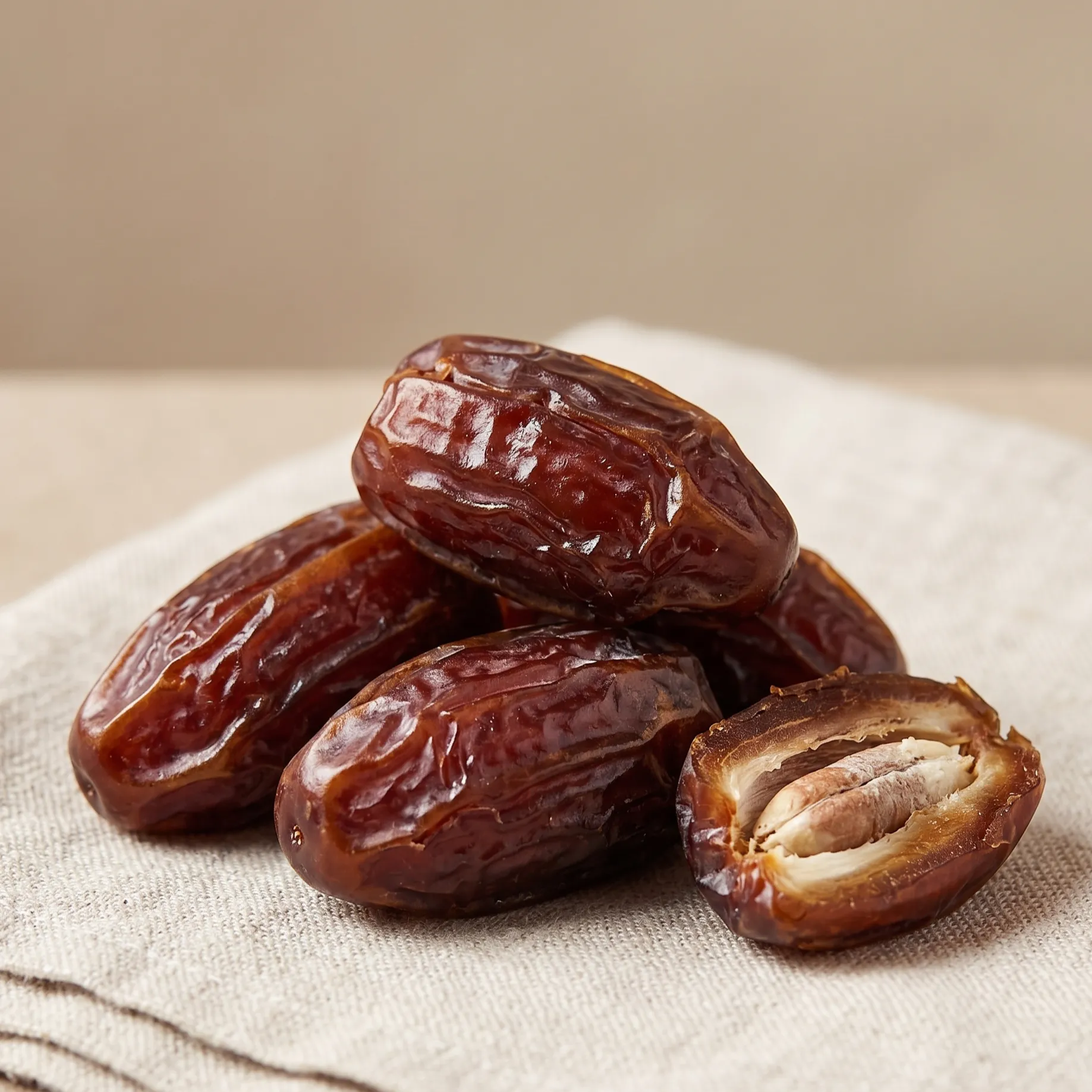
You have probably noticed this without naming it. Two dates, or two good date-and-nut bites, and you are genuinely done. Six pieces of syrup-soaked mithai and you are somehow still reaching.
That is not willpower and it is certainly not virtue. It is fibre, chewing and time, doing something that a sugar syrup cannot do. Here is the actual mechanism, in plain language.
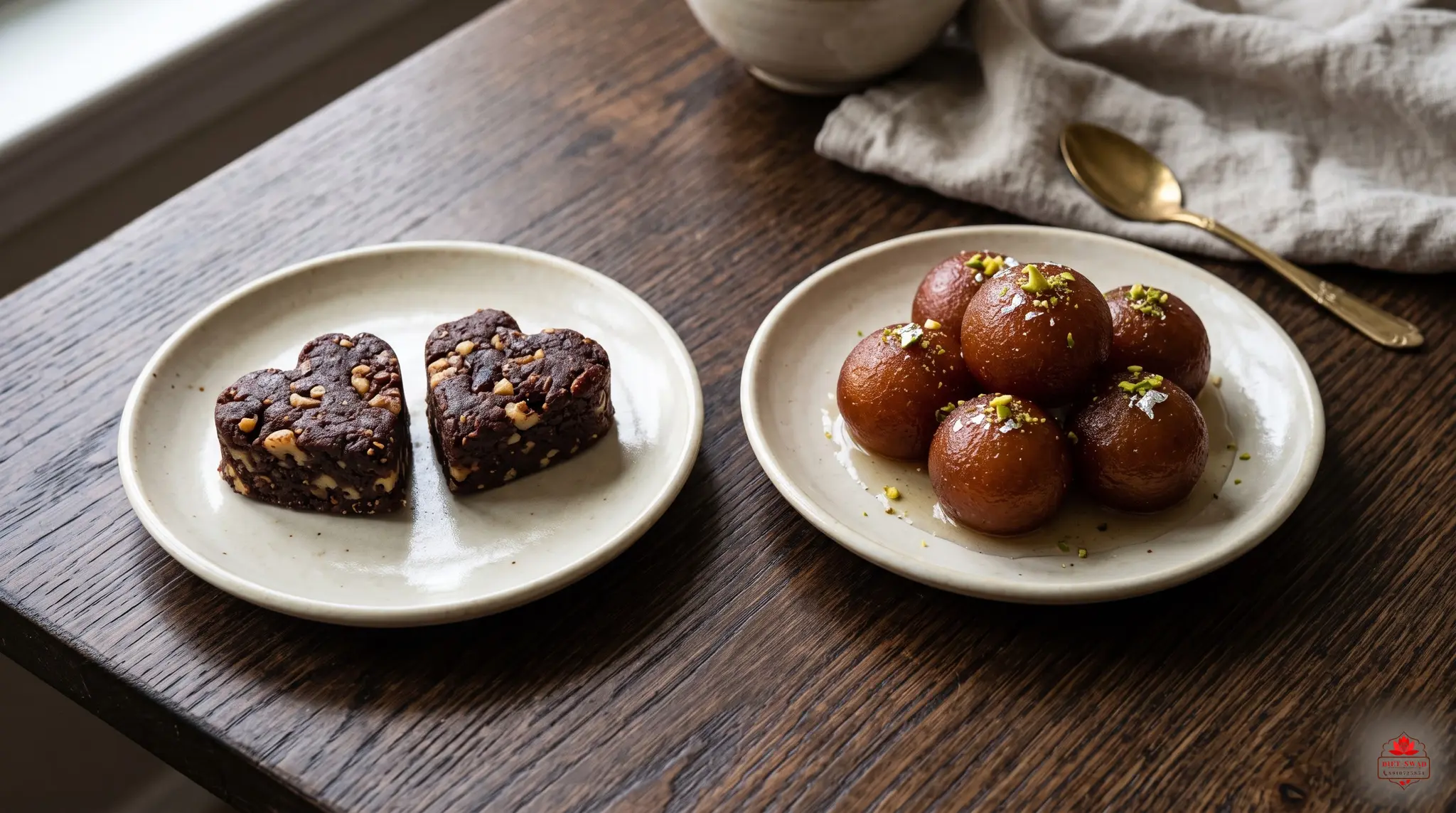
Meetha Bhi Khao, Healthy Bhi Raho
The full sweetener line-up compared side by side, dates, jaggery, desi khand, honey and refined sugar, what each one brings with it, an honest note on every option, and a practical upgrade table for your own kitchen.
Download the guide (PDF)Free, no sign-up, opens straight away.
Sweetness with brakes, and sweetness without
Refined sugar is sugarcane with everything removed except the sucrose crystals. No fibre, no minerals, nothing left to slow it down. It arrives in the bloodstream fast, the body releases insulin to clear it, and the correction often overshoots, which is the tired, slightly irritable, wanting-more feeling an hour later. The problem was never sweetness. It was sweetness with nothing attached to it.
A date is a whole fruit. The same sugars are there, but they come wrapped in fibre, and fibre is a brake. Digestion has to work through the structure of the fruit, so the sugar is released more gradually rather than all at once.
Jargon buster: glycaemic index. A measure of how fast and how high a food raises blood sugar compared with a reference. Fibre, protein and fat all act as brakes on it. One point worth being honest about: glycaemic index is measured food by food in a laboratory, so it applies to the specific item that was tested. It is not something a company can claim for a product it has not had tested, and we have not tested ours.
The part that actually stops you at two
Blood sugar is only half the story. The other half is satiety, the signal that says enough.
Three things generate that signal, and a syrup-based sweet supplies almost none of them:
- Chewing. A dense date-and-nut bite takes real work to eat. Chewing time is one of the ways your brain registers that a meal happened at all.
- Bulk. Fibre takes up physical space and slows how quickly the stomach empties.
- Fat and protein. If there are nuts or seeds in there, both are present, and both extend fullness considerably.
A sweet made mostly of sugar syrup and refined flour delivers a great deal of sweetness with very little of any of that. It goes down quickly, registers weakly, and leaves the reward without the signal that the reward has been collected. Which is precisely why the next one seems reasonable.
Dates specifically
Dates are the only common sweetener that is a complete food rather than an extract. They bring fibre, potassium, magnesium and small amounts of iron along with their sugar.
On the blood-sugar question there is actual research. A study published in Nutrition Journal in 2011 tested five varieties of dates in both healthy participants and participants with type 2 diabetes and found their glycaemic indices to be in the low range. It was a small study, as most GI studies are, and it examined whole dates, not any product made from them. Both of those caveats matter, and they are the reason we describe the fruit and not our own products here.
The honest part: natural is not unlimited
This is where most articles on the subject quietly stop, so let us not.
Dates, jaggery and desi khand are all still sugar in your body. Under India's food rules they count as added sugars when they are used to sweeten something, and no amount of framing changes that. They are a genuine upgrade, they arrive with fibre or minerals instead of nothing, but an upgrade is not a free pass.
A sensible daily sweet window looks roughly like this: two to four dates, or one to two pieces of a date or jaggery-based sweet, or two or three naturally sweetened cookies. Not all of them at once. And sweetness sits better alongside a meal, or before a workout, than on an empty stomach at midnight.
Upgrading, practically
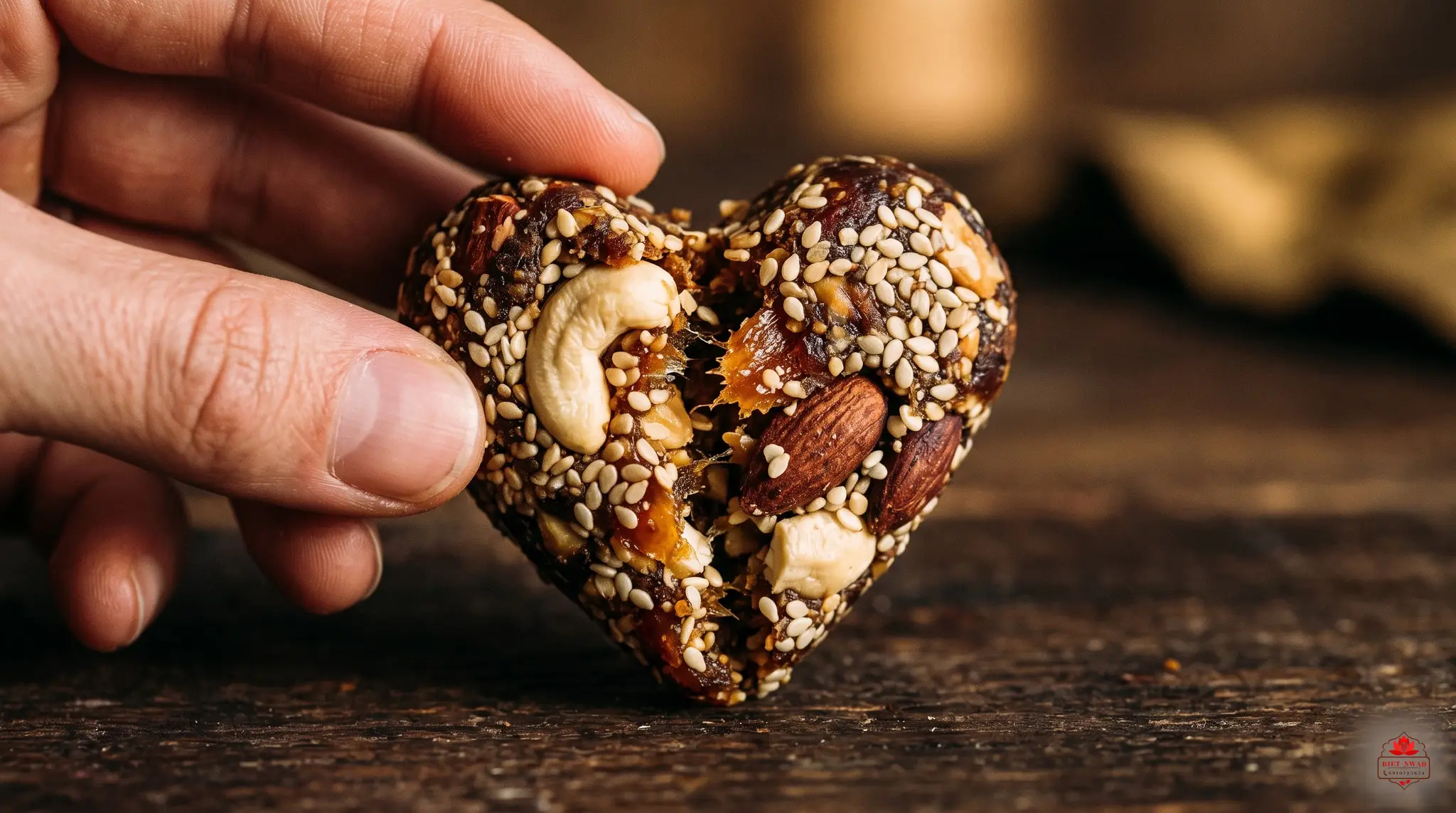
- Instead of syrup-soaked mithai: sweets built on dates and nuts.
- Instead of cream biscuits with chai: cookies sweetened with jaggery or desi khand.
- Instead of a chocolate bar with sugar first on the list: something cocoa-rich sweetened with jaggery.
- Instead of a spoon of sugar in kheer or halwa: date paste or jaggery, and slightly less of it than you think.
How ours are sweetened (a composition note)

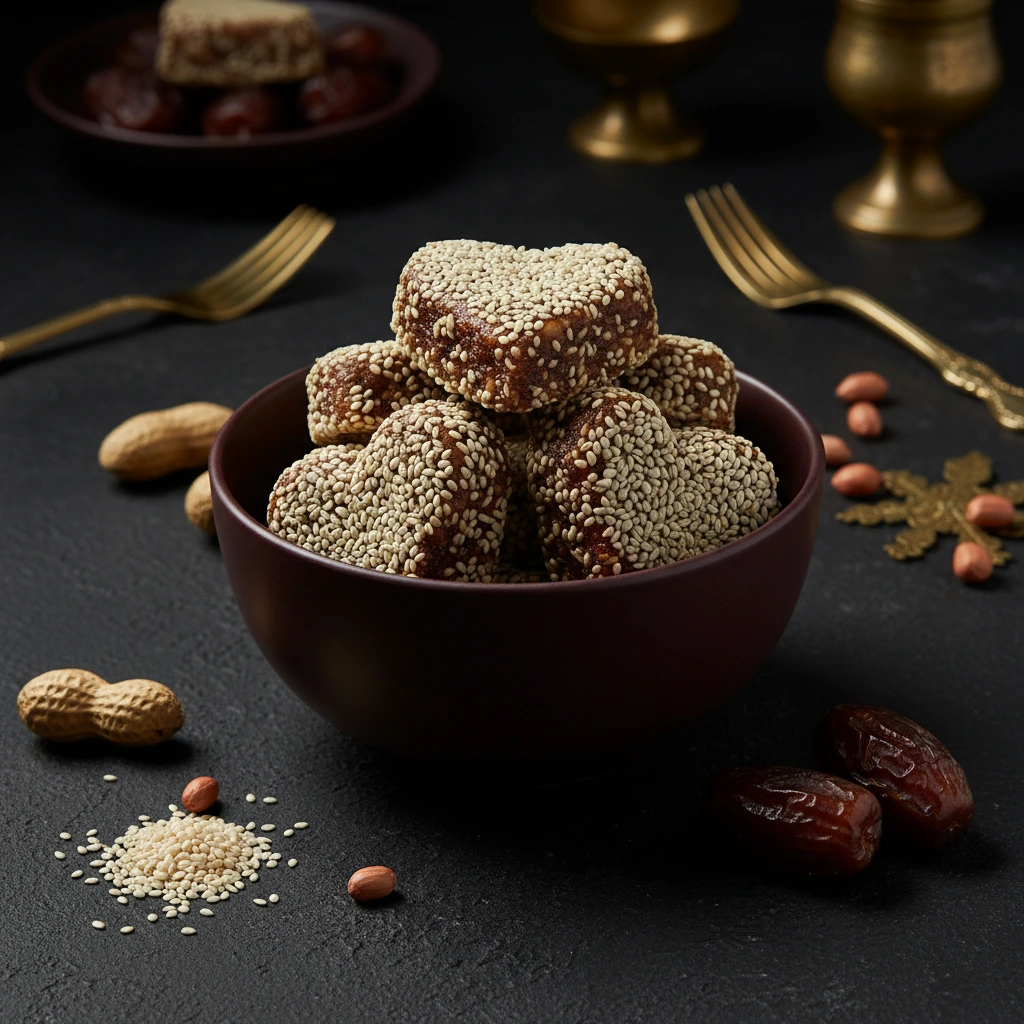
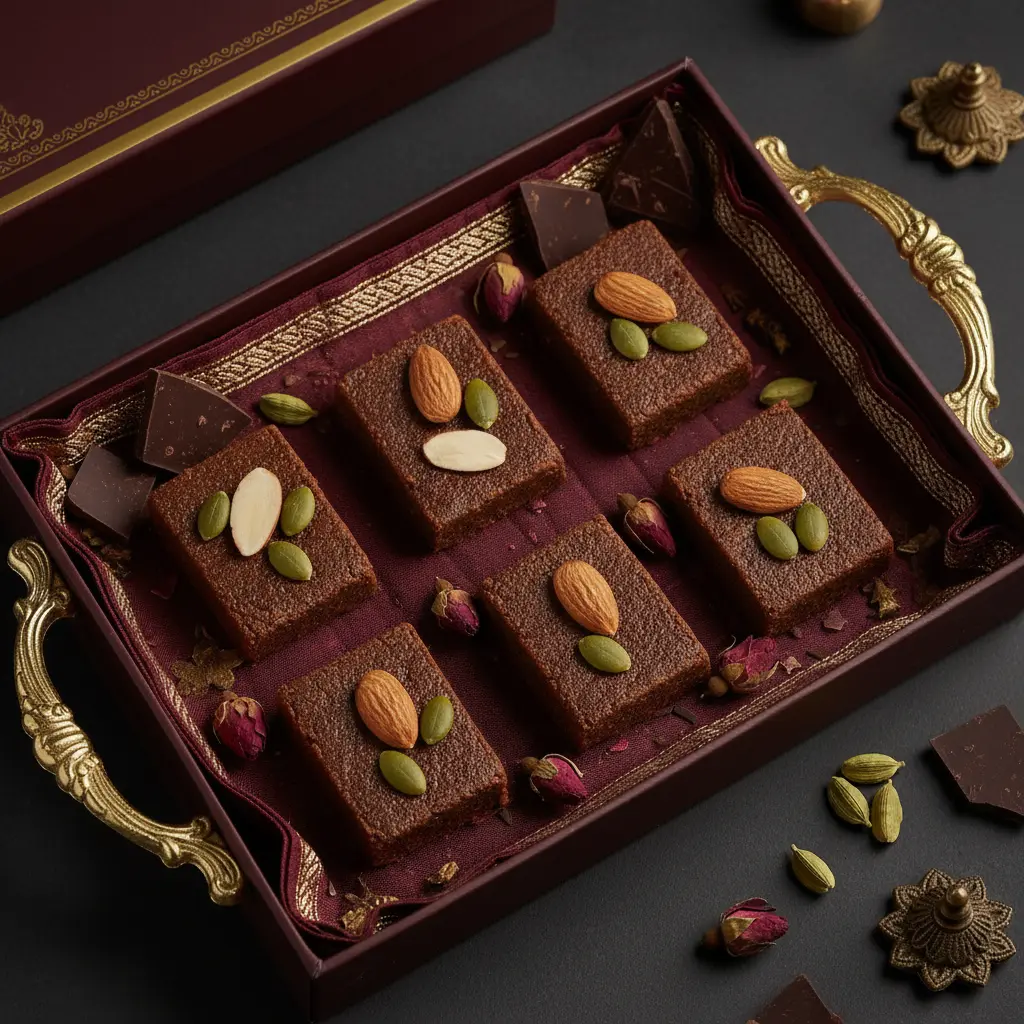

To be exact about ours, since precision is the point of this article: Power Bites and Peanut-Sesame Delights are sweetened by dates alone. Royal Bites use jaggery. The Millet Coconut and Millet Butter Cookies use desi khand. None of them contain refined sugar or artificial sweeteners, and all of them still count towards the daily sweet window above.
For how these sweeteners differ at the processing level, the jaggery, sugar and khand comparison traces all three from the same cane. And this piece on dates and blood sugar goes deeper into the research above.
Frequently asked questions
Why do date-based sweets fill you up faster than sugar-based ones?
Because they supply the signals that produce fullness. Dense date and nut sweets require real chewing, their fibre adds bulk and slows stomach emptying, and any nuts present add fat and protein. A sweet made mainly of sugar syrup and refined flour delivers sweetness with very little of that, so it registers weakly and the next piece feels reasonable.
Are dates and jaggery healthier than refined sugar?
They are an upgrade, not a health food. Dates arrive as a whole fruit with fibre, potassium and magnesium, and jaggery retains molasses and trace minerals, whereas refined sugar is essentially sucrose alone. All three are still sugars in the body, and under Indian food rules they count as added sugars when used to sweeten a product.
How many dates can I eat in a day?
As a general guide for an adult, two to four dates makes a reasonable daily sweet portion, or one to two pieces of a date-based sweet, or two to three naturally sweetened cookies. Dates are energy dense, so they are best counted as your sweet for the day rather than as unlimited fruit. If you are managing diabetes, portion advice should come from your doctor.
Do dates raise blood sugar?
They contain sugar, so they do raise it, but research suggests more gently than refined sugar does. A study in Nutrition Journal in 2011 measured five date varieties in healthy participants and in participants with type 2 diabetes and found glycaemic indices in the low range. It was a small study on whole dates, and it does not extend automatically to products made with them.
What is the best time to eat something sweet?
Alongside or shortly after a meal, or before physical activity, tends to work better than on an empty stomach, because the rest of the meal slows absorption and activity uses the energy. Late at night on an empty stomach is the least useful timing for most people, both for blood sugar and for how much you end up eating.
You do not have to quit meetha
Almost nobody manages quitting sweetness, because it is not a weakness to be corrected. It is a hardwired human taste and the advice to eliminate it has a spectacular failure rate.
Upgrading works far better than quitting. Move to sweets that bring something with them, keep the portion honest, and stop apologising for the rest. Meetha bhi khao, bas thoda soch ke.
Sources
- Alkaabi JM, et al. Glycemic indices of five varieties of dates in healthy and diabetic subjects. Nutrition Journal, 2011;10:59. pmc.ncbi.nlm.nih.gov/articles/PMC3112406
- USDA FoodData Central: reference figures for dates, including fibre and potassium. fdc.nal.usda.gov
- World Health Organization. Healthy diet fact sheet: free sugars below 10% of total energy intake, and under 5% for additional benefit. who.int
- ICMR-NIN. Dietary Guidelines for Indians, 2024. nin.res.in/dietaryguidelines
- FSSAI. Food Safety and Standards (Labelling and Display) Regulations, 2020: ingredient order, declared percentages and the nutrition panel. fssai.gov.in
General nutrition information, not medical or dietary advice, and not a claim about any product's effect on blood sugar. If you are managing diabetes or another condition, please follow your doctor's or dietitian's guidance on portions.