
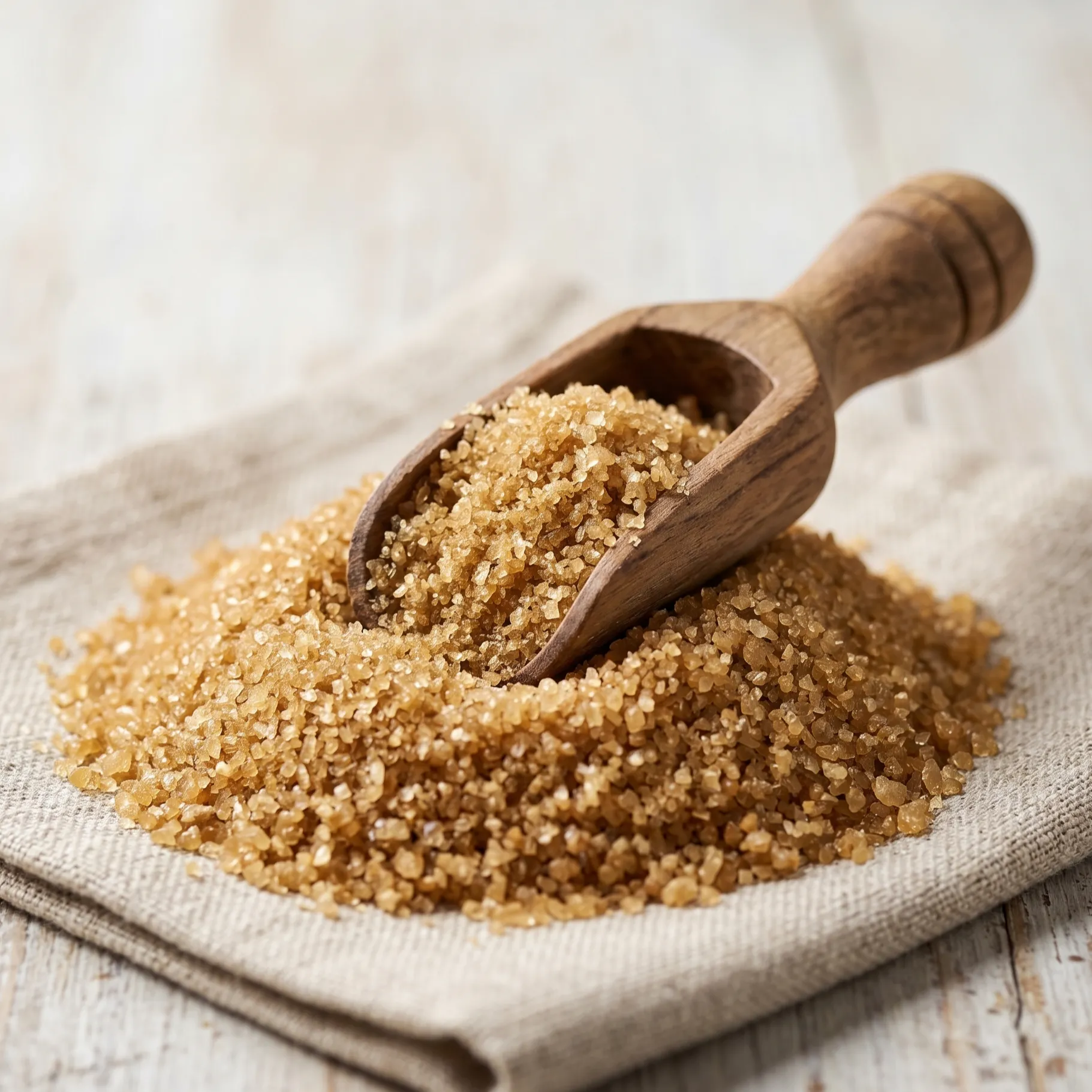
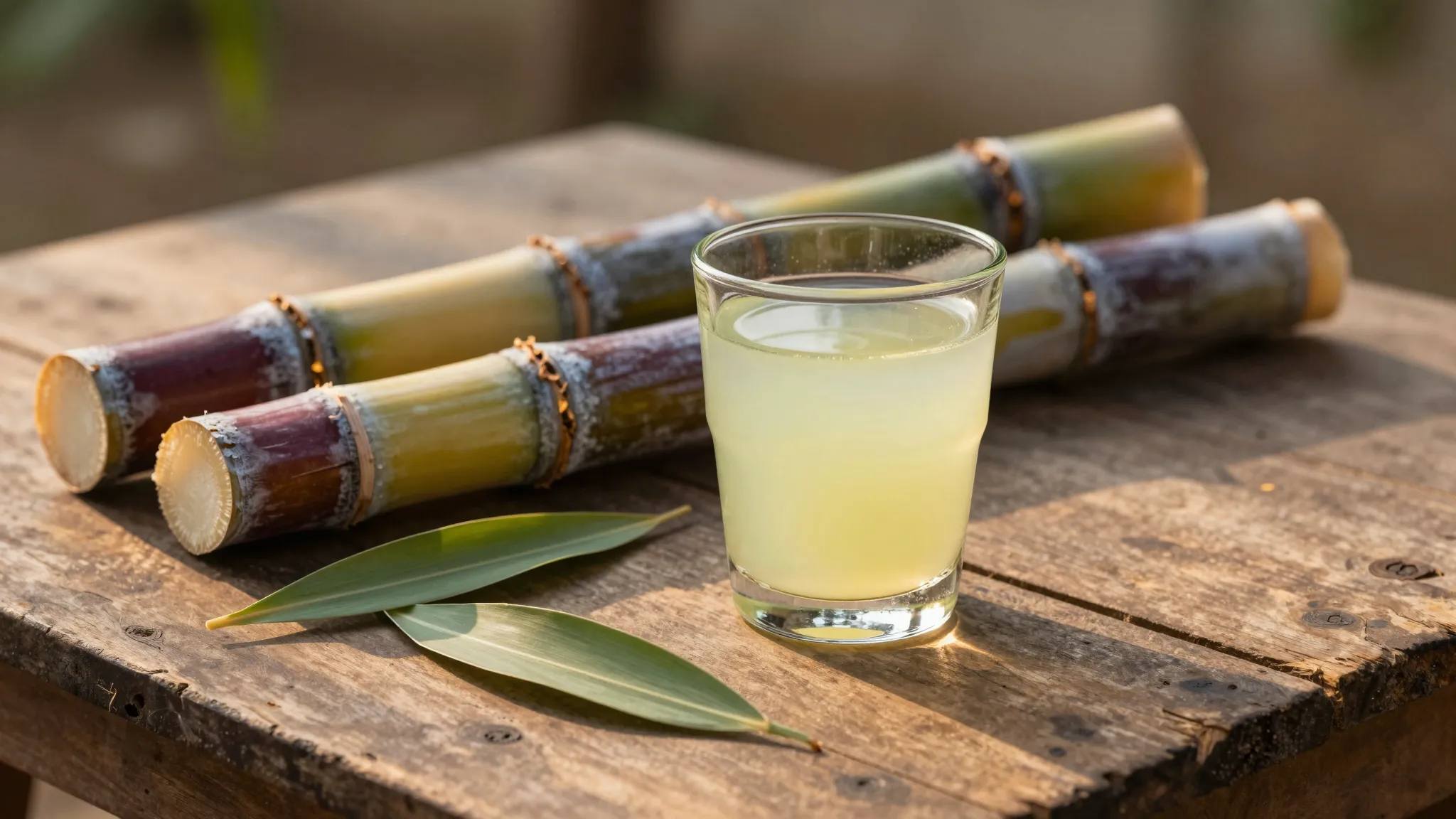
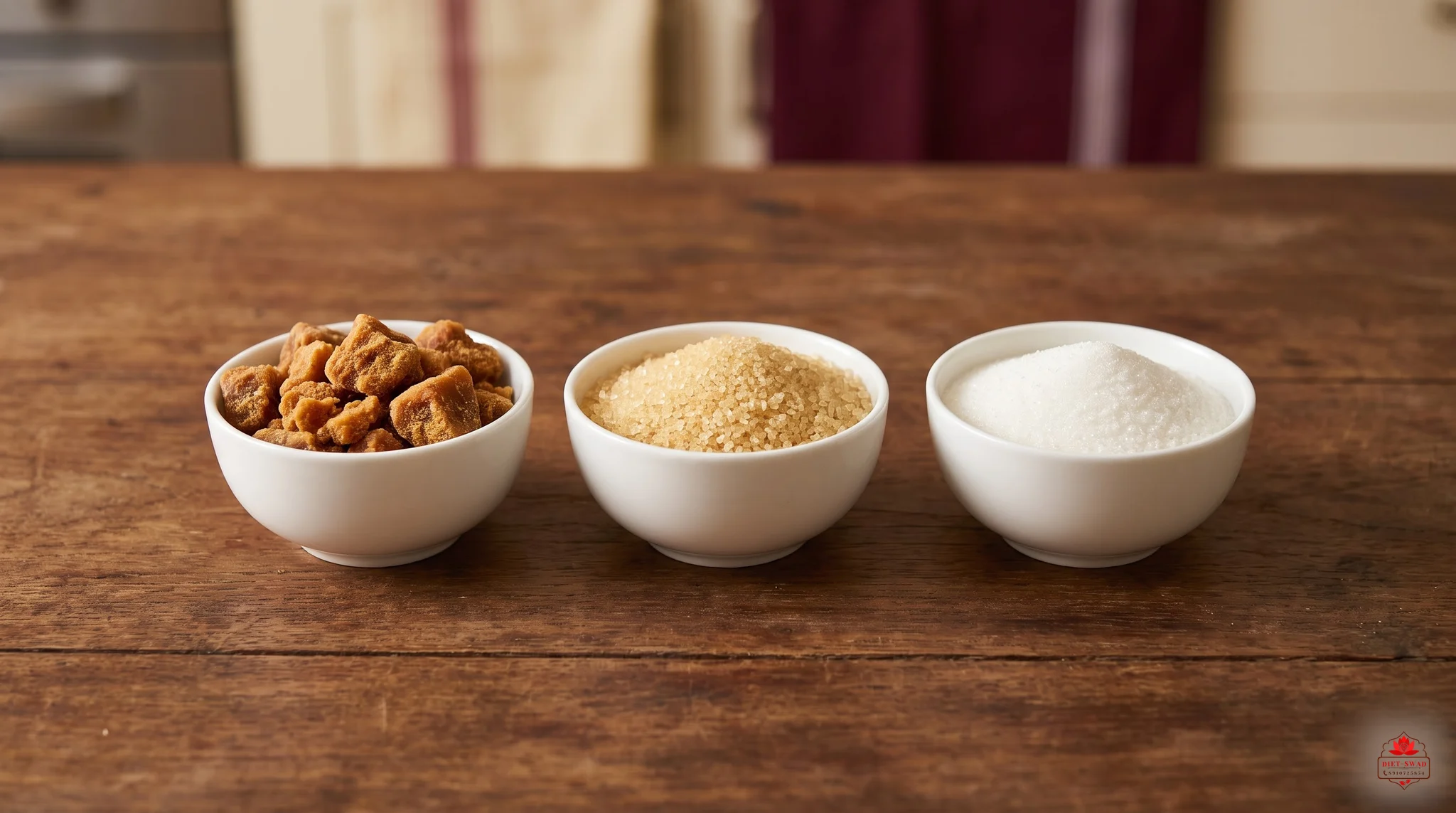
Gur, desi khand and chini all come from the same ganna. The only thing separating them is how far each one gets pushed before it reaches your kitchen. Jaggery is the least processed and keeps its molasses, which is where those small amounts of iron, potassium and magnesium sit. Desi khand stops halfway: properly crystallised, never bleached. White sugar goes all the way, and what is left at the end is more or less pure sucrose.
That is the honest answer. Now the part the internet usually skips: jaggery is not a health food. It is better sugar, which is worth something real, but it is still sugar. Here is what actually changes between the three, and what that means when you are standing at the kirana counter turning a packet over in your hand.
White Sugar vs Jaggery vs Desi Khand
The three sweeteners side by side on one page, what each one keeps and loses during processing, four home tests for spotting adulterated gur, and sensible daily portions.
Download the guide (PDF)Free, no sign-up, opens straight away.
All three start as the same ganna
The cane gets crushed. The juice gets cleaned, then boiled. Everything after that is one decision taken again and again: how much of the original cane do we keep, and how much do we throw away?
Chini (refined sugar)
The juice is clarified, filtered, crystallised, then spun hard enough to fling the molasses out completely, and finally whitened. Taking out the molasses is what takes out the colour, and the trace minerals leave along with it. What remains is close to pure sucrose and almost nothing else. It is cheap, it behaves identically every single time, and it tastes of nothing except sweet. Isi liye the entire packaged food industry runs on it.
Gur (jaggery)
The juice gets boiled down and poured into moulds with the molasses still sitting in it. Bas, that is the whole difference. It is why gur is brown, why it tastes of caramel and earth instead of flat sweetness, and why it carries small amounts of iron, potassium, magnesium and calcium that chini simply does not. Har batch thoda alag hota hai, region to region, because it is farm produce and not a factory-standard powder.
Desi khand
Desi khand is crystallised like sugar but stops before that last stage. It is not bleached, and it is not stripped of everything the cane gave it. It stays pale gold, tastes softer and rounder, and it behaves in baking the way sugar does, which gur does not always agree to do. That is exactly why it exists: sugar ka texture, without the harshest step at the end.
Seedhi baat: gur is the least processed, desi khand is partly refined, chini is fully refined. The gap between them is real, but it is a gap in processing and trace minerals. Not in calories. And not a reason to eat more of any of them.
So is jaggery actually healthier than sugar?
Thoda sa. And not for the reason most people believe.
The minerals in gur are real, but there is very little of each one. To get a meaningful amount of iron from jaggery alone, you would have to eat far more gur than any sensible person should, and by then the sugar has more than cancelled whatever you were chasing. Anyone selling gur to you as a good source of iron is quietly leaving that bit out.
What gur actually gives you is a less processed ingredient with far more flavour, made the way it has been made here for generations. That is a perfectly good reason to choose it. "It is basically healthy, toh thoda aur le lo" is not.
Same story with desi khand. Choosing it over chini means choosing a shorter, gentler process and a better taste. Nothing more dramatic than that, and nothing less useful either.
One thing we would rather say straight. If you are managing diabetes, or your doctor has told you to watch your sugar, treat all three as sugar. Gur and khand are not free passes. And this is a blog, not medical advice: aapke doctor ki baat sabse upar, including anything we write here.
Where khajoor comes in
Dates sit in a different category altogether, and they deserve their own paragraph.
With gur, khand and chini, the sweetness has been pulled out of the plant and concentrated. In a whole date, the sugar is still sitting inside the fruit, arriving with the fibre and everything else it grew alongside. Kuch nikala nahi gaya. That is a genuine structural difference, not a marketing line. Having said that, dates are high in sugar, and a date-based snack will show a big number on the label. It is simply sugar that never left the fruit.
What we use at Diet Swad, and why
We use all three across the range. The choice is made per product, based on what that particular recipe actually needs.
- Jaggery in Royal Bites (13.1%) and Millet Choco Cookies (13.4%). Cocoa needs a sweetener with some depth behind it. Gur ka caramel note is what stops the chocolate tasting flat. Neither carries refined sugar.
- Desi khand in Millet Butter Cookies (15.4%) and Millet Coconut Cookies (11.1%). A butter or coconut cookie needs a clean sweetness so the butter and the jowar come through, and it has to crystallise properly for the right crumb. Desi khand does both. Gur would take over the entire cookie.
- Whole dates in Power Bites (53.8%) and Peanut-Sesame Delights (50%). Here dates are not a sweetener sitting on top of the recipe. They are the body of the bite, holding the whole thing together.
- Kuch bhi nahi in our Roasted Cashews. Cashews and salt. No added sugar in them at all.
Across all seven products there are no artificial sweeteners, and there never have been.
The products in this article
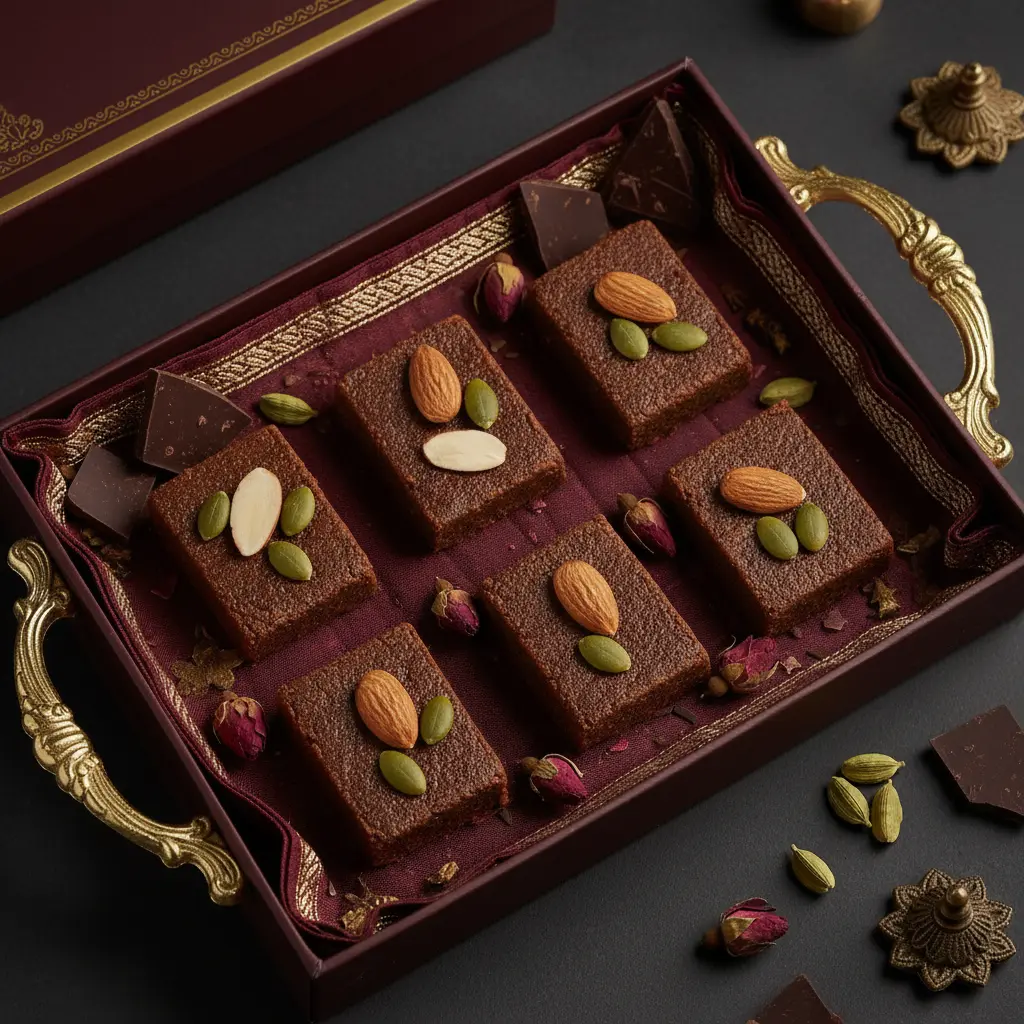
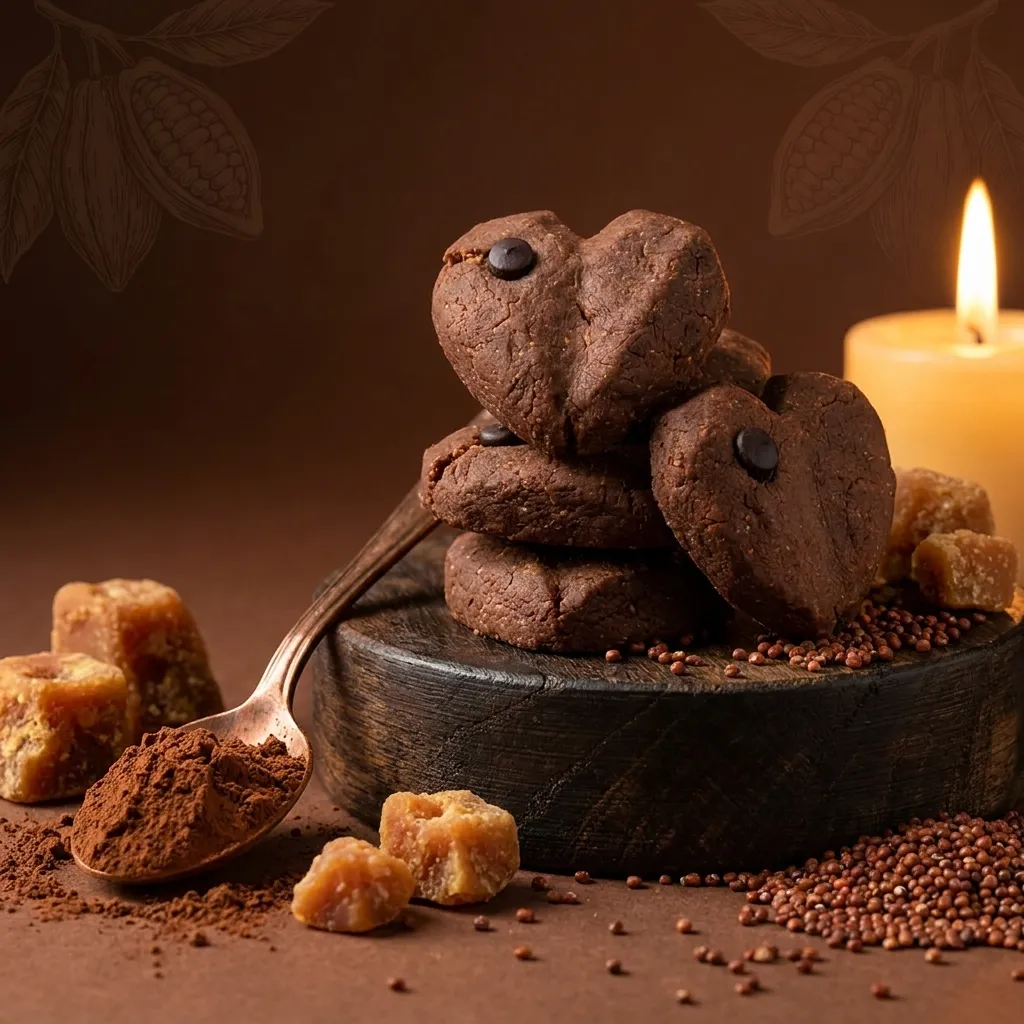
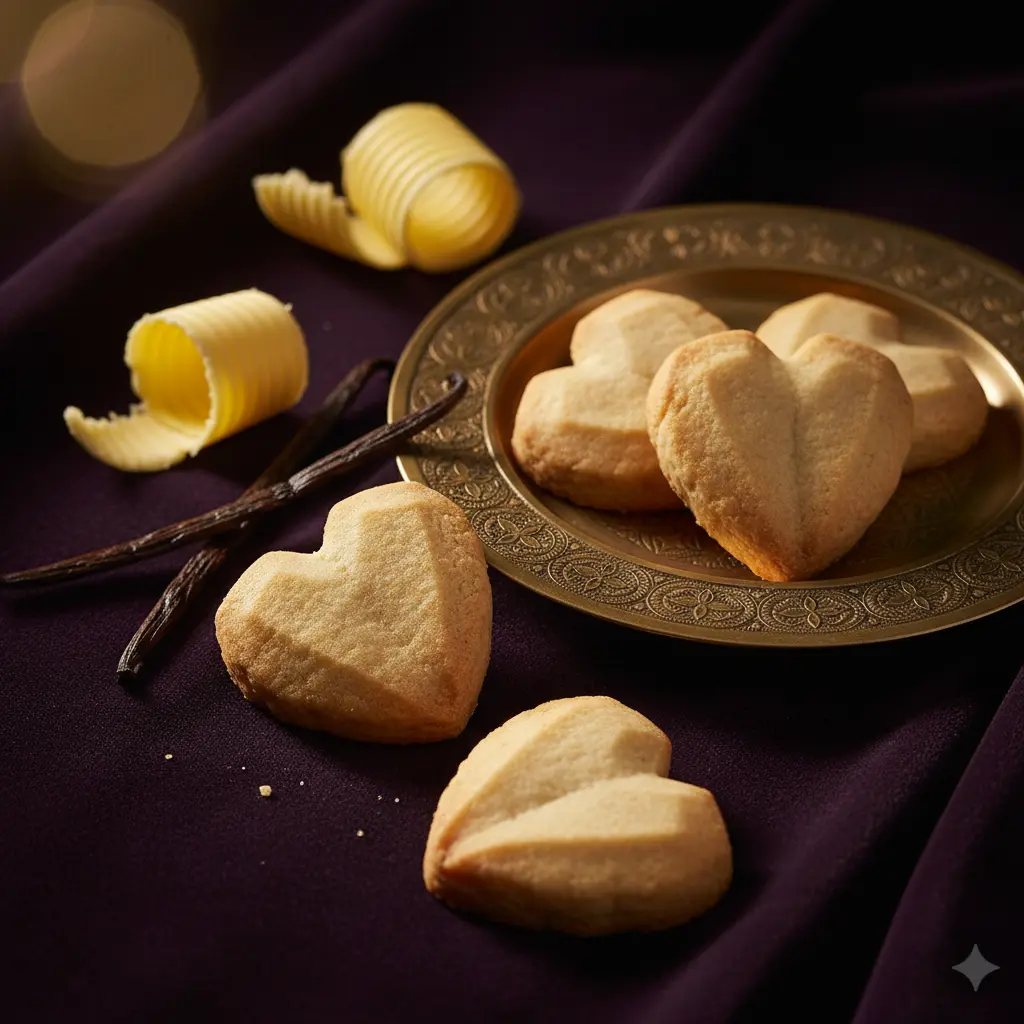
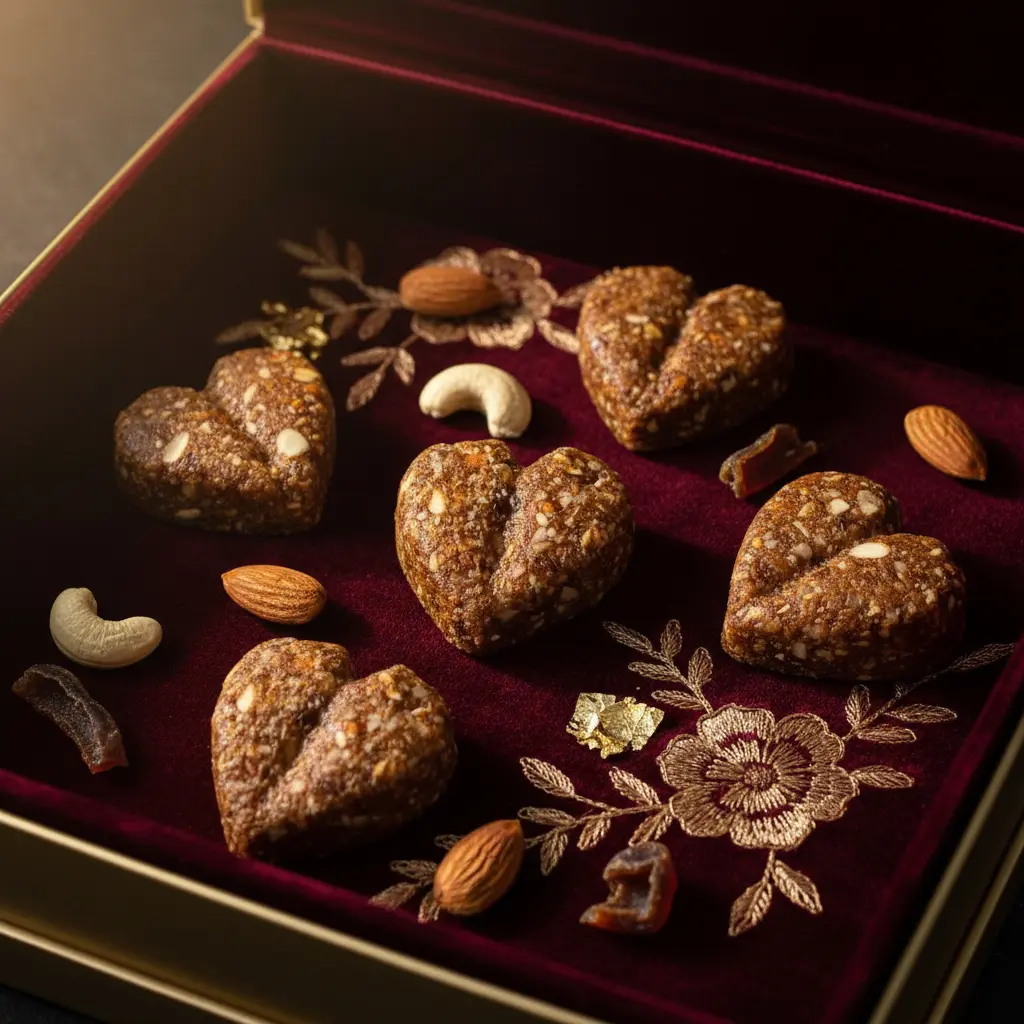
Our sugar figures, per 100g, including the ones we are not proud of. Roasted Cashews 5.9g · Millet Coconut Cookies 14.8g · Royal Bites 15.5g · Millet Butter Cookies 16.2g · Millet Choco Cookies 21.5g · Peanut-Sesame Delights 34.2g · Power Bites 36.8g.
The two date-based bites are the highest in the range, and we would rather tell you ourselves than have you find out. That sugar comes from whole dates, but it is still sugar and it still counts. Koi bhi brand jo sirf apna sabse chhota number dikhata hai is not being straight with you.
How to read the label yourself
You do not have to take anyone's word for this, ours included. Teen aadatein and you are mostly covered:
- Read the ingredient list, not the front of the pack. Ingredients are listed by weight, heaviest first. If a sweetener shows up first or second, the product is mostly sweetener, chahe front pe kuch bhi likha ho.
- Check whether the sweetener is even named. "Natural sweetener" is not an ingredient. Jaggery, desi khand, dates: those are ingredients. A brand that is proud of what it uses will name it, and these days will often give you the percentage too.
- Look past the sweetener. Gur written on the front means very little if the same list also carries maida, palm oil and a row of chemical names. The sweetener is one line out of many.
Frequently asked questions
Is jaggery better than refined sugar?
It is less processed and keeps small amounts of iron, potassium and magnesium that refined sugar has had removed. But it is comparable in calories and is still sugar, so count it as sugar in your daily intake. It is a better quality choice, not a health food.
What is desi khand?
Desi khand is partially refined cane sugar. It is crystallised like white sugar but is not bleached or fully stripped of molasses, so it keeps a golden colour and a softer flavour while still behaving like sugar in baking.
Is desi khand the same as jaggery?
No. Jaggery is boiled down cane juice set into blocks with the molasses left in, so it is darker and stronger tasting. Desi khand is crystallised and paler, sitting between jaggery and refined sugar in how far it has been processed.
Are date-sweetened snacks low in sugar?
Usually not. Dates are naturally high in sugar, so a date-based snack will often show a high figure on the label. The difference is that the sugar is still held inside the whole fruit along with its fibre, rather than having been extracted and concentrated.
Which sweetener does Diet Swad use?
All three natural options, chosen per product: jaggery in Royal Bites and Millet Choco Cookies, desi khand in Millet Butter and Millet Coconut Cookies, and whole dates in Power Bites and Peanut-Sesame Delights. Roasted Cashews contain no added sugar. No product contains artificial sweeteners.
Seedhi baat, no lecture
Gur is the least processed. Desi khand is partly refined. Chini is fully refined and gives you nothing except sweet. Choosing the first two over the third is a small, real improvement, and it is why we make the choices we do in our own kitchen.
But the sweetener is never the big question. The big question is what the other ten ingredients on that list are. That is where the difference between a clean snack and a dressed-up one actually shows up, and it is the one part of the packet most people never turn over to read.
Related reading: nolen gur, Bengal's date-palm jaggery, and why dates measure low on the glycaemic index.
Sources
- Value Addition and Fortification in Non-Centrifugal Sugar (Jaggery): A Potential Source of Functional and Nutraceutical Foods. pmc.ncbi.nlm.nih.gov/articles/PMC8314846
- Study of traditional Indian sweetener 'Jaggery' and its storage behaviour. chemijournal.com
- ICMR-NIN. Dietary Guidelines for Indians, 2024: sugar intake guidance. nin.res.in/dietaryguidelines
- USDA FoodData Central: comparative sugar composition. fdc.nal.usda.gov
General information about food, not medical or dietary advice. All three of these are sugar and should be counted as sugar.