
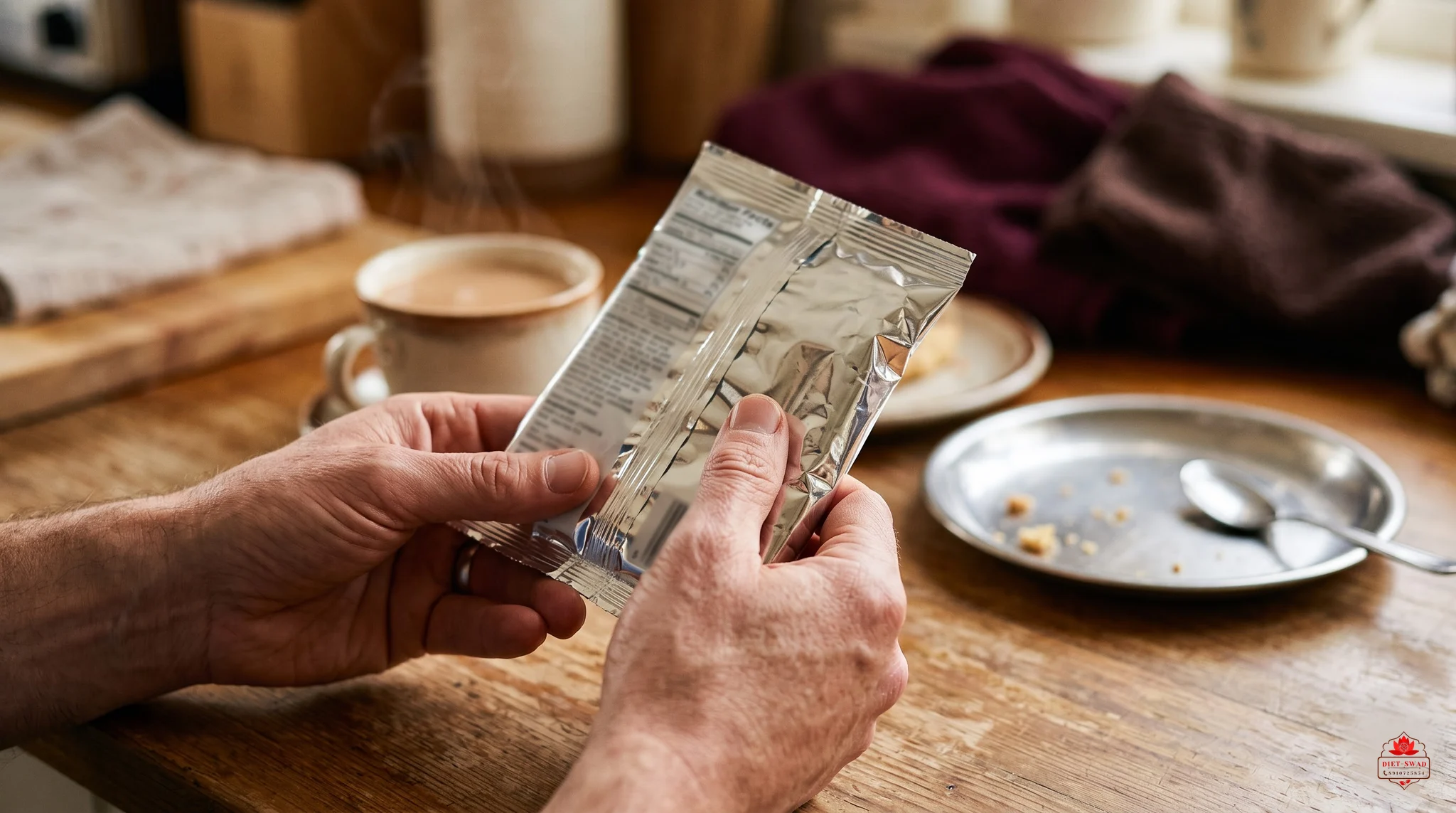
If you want to know what is really inside a packaged snack, turn the packet over and read the first three ingredients. That is the whole method. Ingredients are printed heaviest first, so those three are most of what you are about to eat, and everything on the front of the pack is marketing until the back agrees with it.
This guide assumes you know nothing about nutrition labels. No background needed, koi jargon nahi. By the end you will be able to size up a packet in about thirty seconds.
Packaged Snacks: What's Really Inside
Twenty common packaged snack types and what their labels typically reveal, the four code-words to watch for, a plain-English decoder for the INS numbers, and the 30-second label routine as a printable page.
Download the guide (PDF)Free, no sign-up, opens straight away.
Rule one: the order is the information
Every ingredient list in India is printed in descending order by weight. The first ingredient is the one there is most of. The last one is the one there is least of.
This single rule does most of the work. A biscuit that shows almonds on the front but lists almonds ninth is a flour biscuit with a few almonds in it. Not a scam, exactly. Just a picture that is doing more talking than the recipe.
Try it right now. Pick up any packet in your kitchen and read only the first three ingredients. If they are a refined flour, an oil and a sugar, you already know what the snack is, and nothing further down the list is going to change that.
Rule two: sugar travels under many names
Here is the trick that follows directly from rule one. If a company uses one sweetener, it has to sit high in the list. If it splits the same sweetness across four different forms, each one is lighter on its own, so each one drops further down. The total is unchanged. The list just looks calmer.
Words that all mean sugar, in one form or another:
- Syrups of any kind, including glucose syrup, corn syrup and invert syrup
- Anything ending in "ose": dextrose, fructose, maltose, sucrose
- Maltodextrin
- Fruit juice concentrate, which is fruit with the fibre and water taken out
- Honey, jaggery, khand and molasses, which are less processed but are still sugar
When you read a list, mentally add these together into one entry. Do it once and some labels rearrange themselves in front of you.
The "of which sugars" line
Under Total Carbohydrate you will usually see a smaller line saying of which sugars. That is the honest number, in grams per 100 g. It counts every sugar in the food regardless of what the ingredient list called it. A teaspoon is about 4 g, if you want a picture for it.
One fair warning, because it cuts both ways: this line does not care whether the sugar was added or grew in the fruit. A date-based snack will show a high sugar number and be telling the truth. So read the number and the ingredient list, not one alone.
Rule three: the four words that hide the most
These four turn up constantly, and each one is doing a job.
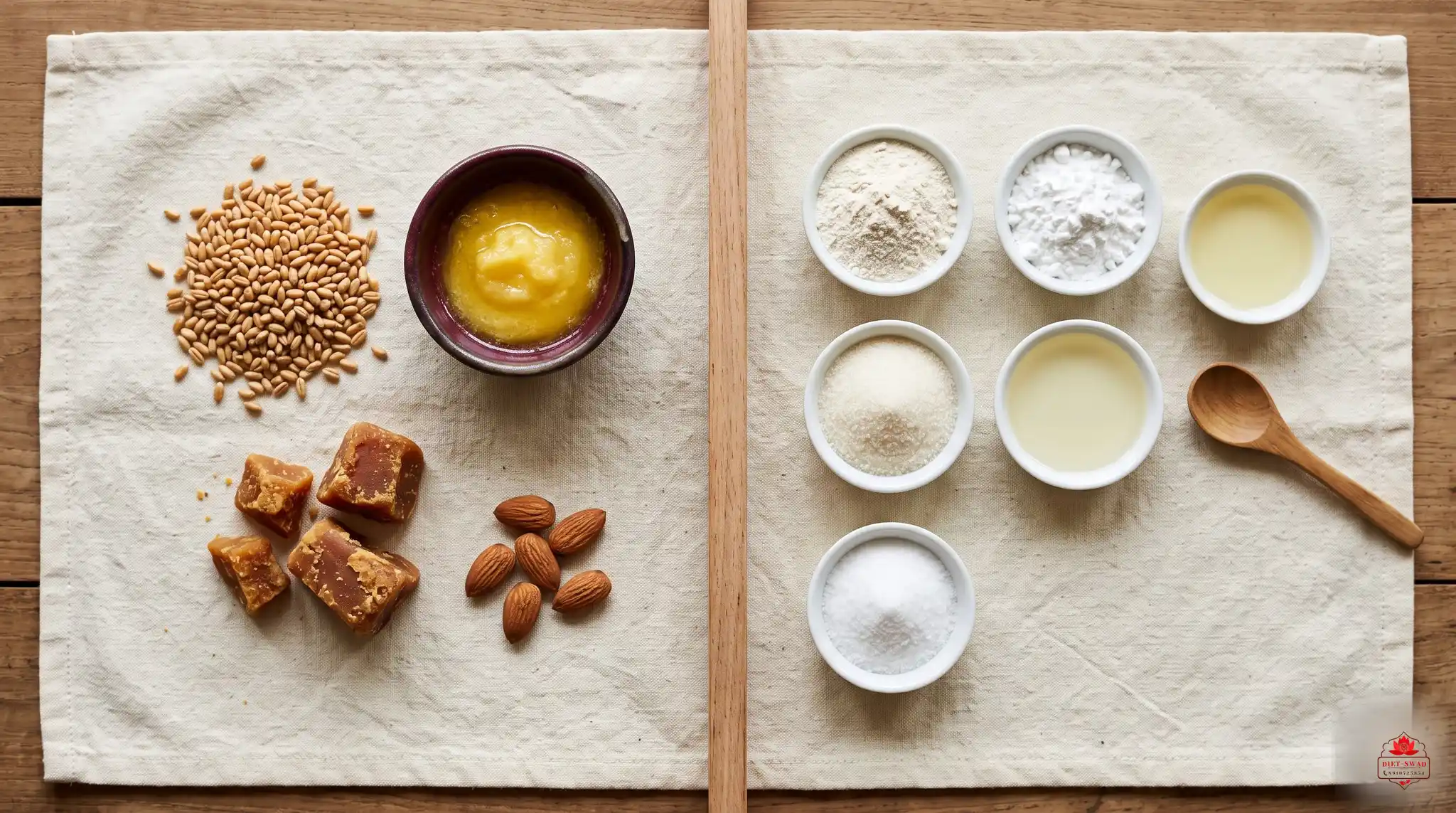
- Refined wheat flour. This is maida. It is the same thing, written formally. It is not poison, but it is the cheapest bulk in the packet, and when it is first on the list the snack is essentially maida.
- Edible vegetable oil. A category, not an ingredient. It lets the maker swap between oils depending on price without reprinting the pack. If a label is proud of its oil, it names it.
- Natural flavour. This sounds like the food. It means a flavouring compound that started somewhere in nature. It is there because the food itself does not taste of enough.
- Emulsifier, stabiliser, humectant, raising agent. Job titles, not names. Usually followed by an INS number in brackets, which is the actual identity.
So what is an INS number?
INS stands for International Numbering System. It is simply a code for a food additive so that every country can refer to the same substance without arguing about names. INS 500 is baking soda. It is not a scary list by definition.
What the numbers tell you is how much engineering the food needs. One or two is ordinary. A run of six or seven means the product needs a lot of help to stay soft, stay bright, stay stable and taste like something for the next nine months. Ye jaanna kaafi hai. You do not need to memorise the codes to take the point.
Rule four: front-of-pack words are not regulated the way you think
Some words on the front carry a legal definition. Many do not. "Made with real fruit" is satisfied by a very small amount of real fruit. "No cholesterol" is true of nearly every plant food, including a deep-fried one. "Multigrain" means more than one grain, in any proportion at all.
The rule that never fails: the front of the pack is written by marketing, the back is written under regulation. Read the back.
The 30-second routine
This is the whole article compressed into something you can do while standing in a shop.
- Turn it over. Ignore the front entirely for now.
- Read the first three ingredients. That is the food.
- Add up the sugars. Count every syrup and every "ose" as one entry, then check the "of which sugars" line.
- Count the INS numbers. Not to judge them individually, just to see how much scaffolding is holding the product up.
- Check whether the hero is real. If the front says almond, find the almond and see where it sits.
That is it. Five looks, half a minute, and you will never read a packet the same way again.
Short lists, percentages printed on the pack
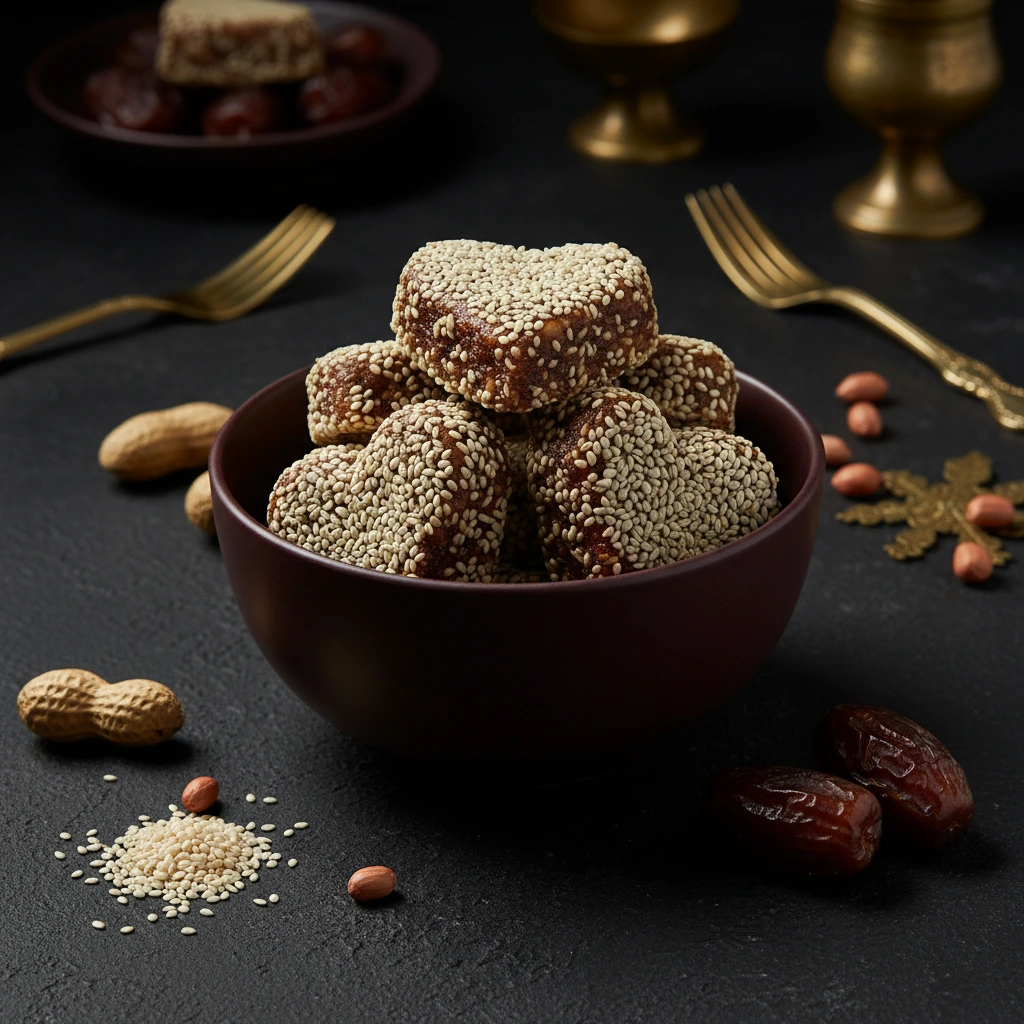
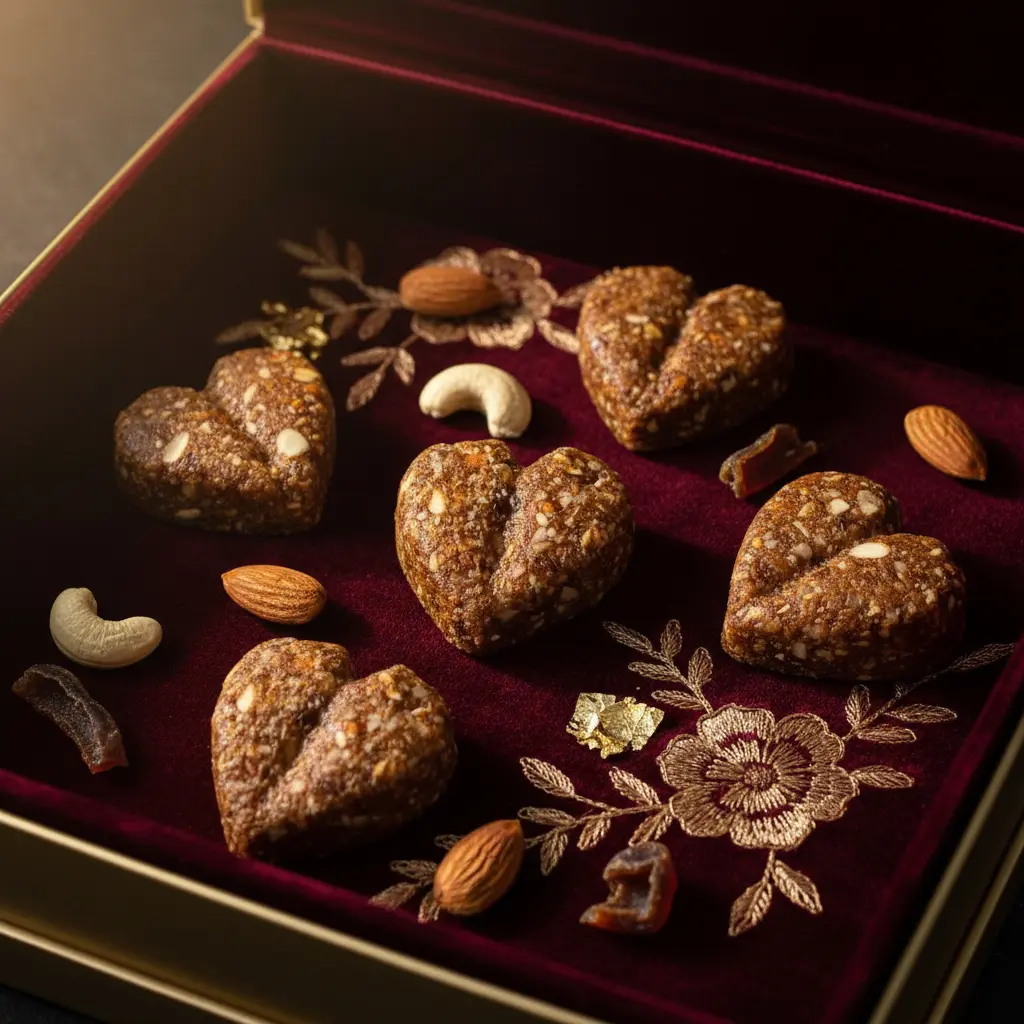

We print percentages on our packs for exactly this reason. Once you start reading ingredient lists properly, a brand that will not tell you how much of the hero ingredient is actually in there starts to look like it has decided not to.
Frequently asked questions
How do I read a snack label if I know nothing about nutrition?
Ignore the front of the pack and read the ingredient list on the back. Ingredients are listed heaviest first, so the first three tell you what the snack mostly is. If those three are a refined flour, an oil and a sugar, the rest of the label does not change much.
What does the ingredient order on a food label actually mean?
Ingredients are printed in descending order by weight. The first one is present in the largest quantity and the last one in the smallest. This is why an ingredient sitting at the end of a long list cannot be the main thing in the product, however large it appears on the front of the pack.
What are the INS numbers on Indian food packets?
INS stands for International Numbering System. It is a code for a food additive, used so that manufacturers worldwide can name the same substance the same way. A number is not automatically harmful, but a long run of them usually means the food needs a lot of help to look, taste and last the way it does.
Why does sugar appear under so many different names?
Because ingredients are ranked by weight, splitting one sweetener into several named forms pushes each one further down the list. Syrups, concentrates, maltodextrin, dextrose and invert sugar are all sugars. Read them as one entry rather than four small ones.
Is a shorter ingredient list always better?
Not always, but it is a useful signal. A short list is easier to verify and leaves fewer places for cheap fillers to hide. What matters more is what the first three ingredients are and whether you recognise them as food.
You only have to learn this once
Nobody enjoys standing in an aisle doing homework. The good news is that this is not a habit you have to keep up forever. You read labels properly for a couple of weeks, you work out which four or five things in your kitchen are worth changing, and then you are mostly done.
After that it becomes a glance. Pehla teen ingredient, sugar ka total, INS ki ginti. Bas.
If you want to go further, what "ultra-processed" actually means explains the category the worst offenders belong to, and why packaged food is so cheap explains why those ingredients get chosen.
Sources
- FSSAI. Advisory on the use of "100%" claims on food labels and advertisements, May 2025. fssai.gov.in
- FSSAI press release, 2021. Industrial trans fat capped at 2% of total oils and fats. fssai.gov.in
- ICMR-NIN. Dietary Guidelines for Indians, 2024: Guideline 15, on foods high in fat, sugar and salt. nin.res.in/dietaryguidelines
- Monteiro CA, et al. Ultra-processed foods: what they are and how to identify them. Public Health Nutrition, 2019: the additive markers listed above. pubmed.ncbi.nlm.nih.gov/30744710