
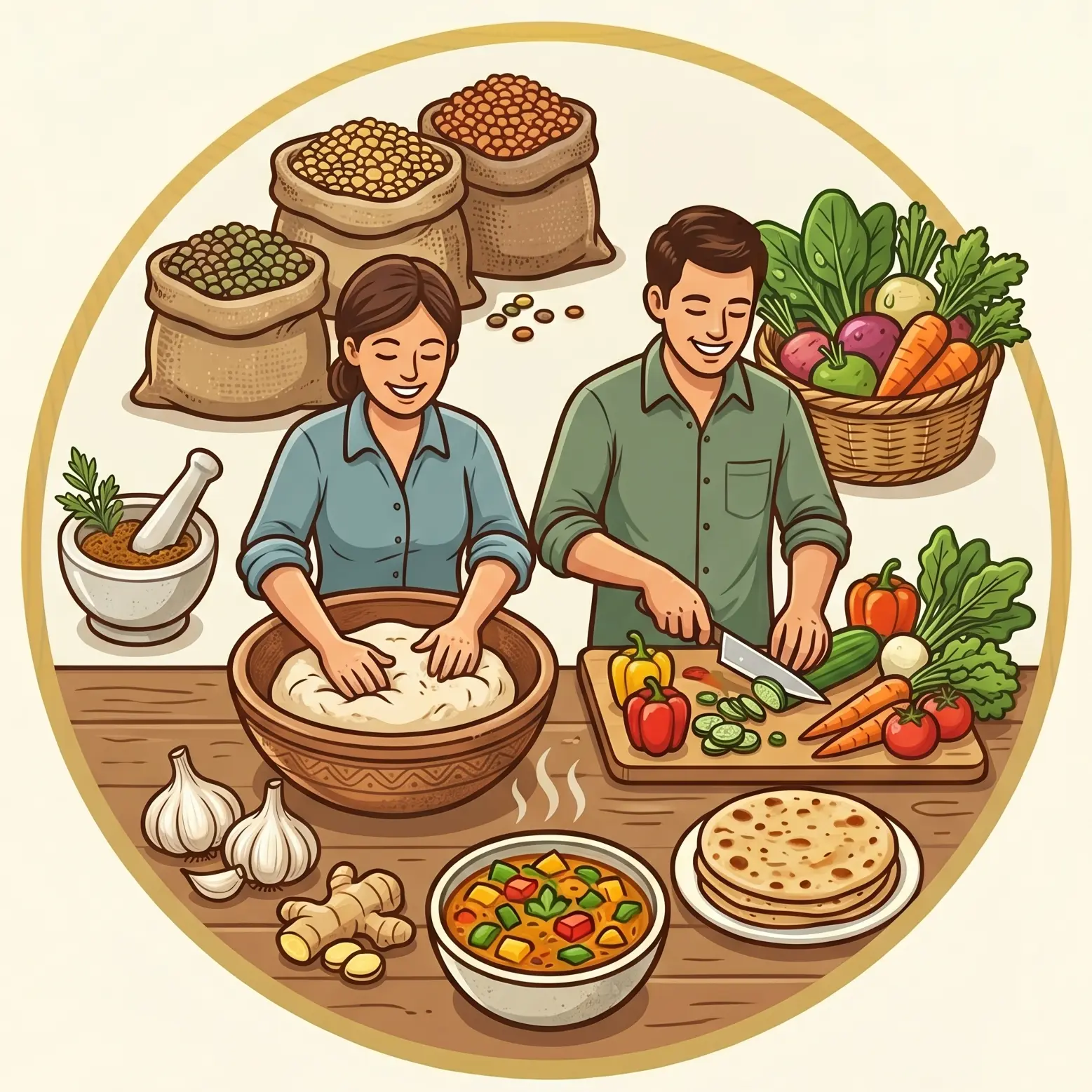
Most founder stories are written backwards, with the doubt edited out and every decision made to look inevitable. This is an attempt at the other version: seven questions that were genuinely hard while we were in them, and what we actually decided.
It started in a kitchen in Kolkata, which is not a metaphor. It was a kitchen.
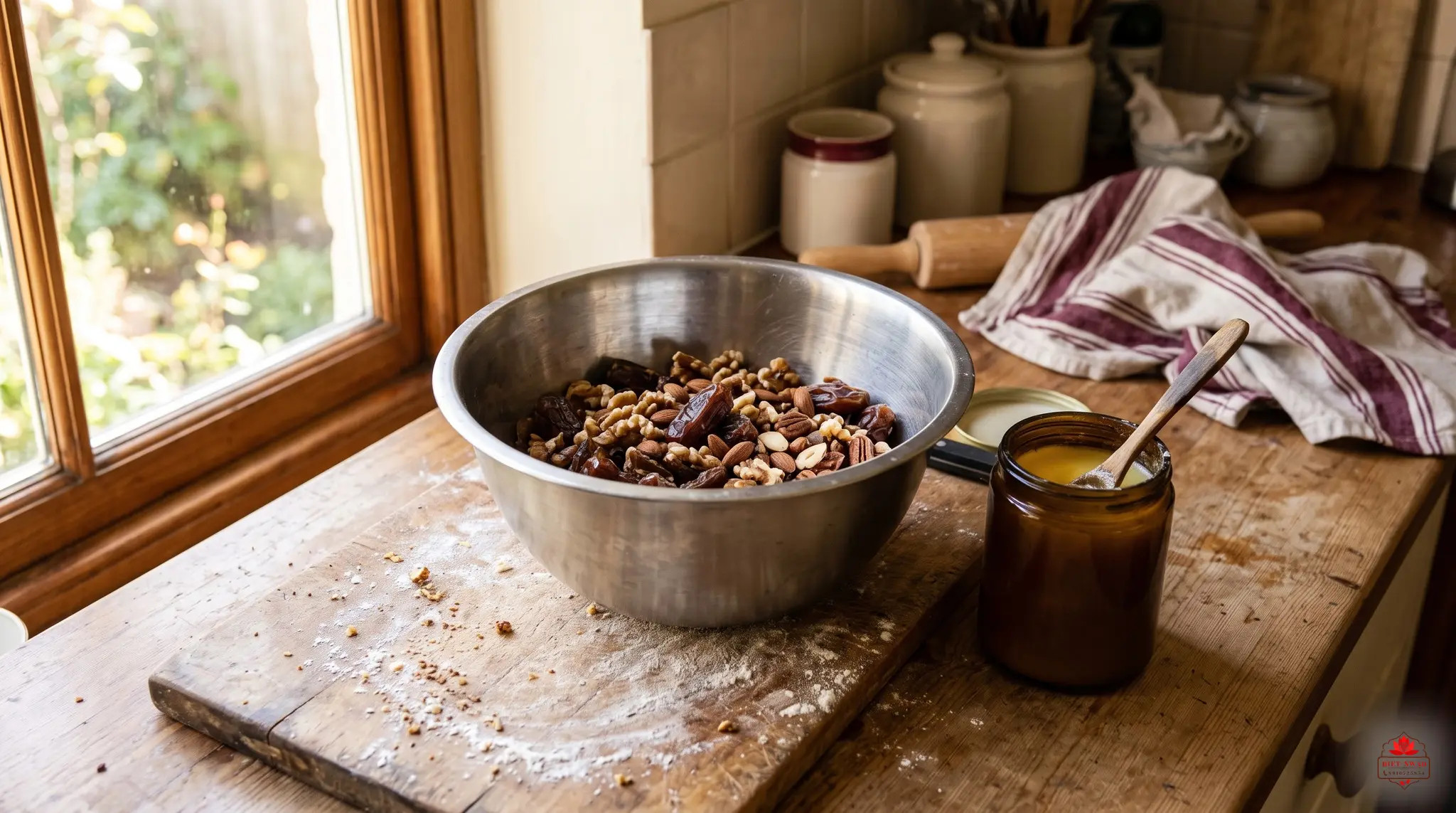
Ghar Se Brand Tak: 7 Honest Lessons
The longer version of this story: seven honest lessons from going from a home kitchen to a registered brand, including the parts about self-doubt, the first orders, and the shortcuts we were offered and turned down.
Download the guide (PDF)Free, no sign-up, opens straight away.
1. Does the world need another snack brand?
Honestly, probably not. India has no shortage of packaged snacks and adding one more to the shelf is not obviously a service to anybody.
What kept the question open was a narrower one. Reading the back of packet after packet, the same three ingredients kept leading the list: refined flour, cheap oil, refined sugar. Not because anyone was being dishonest, but because that is what the economics of a ₹10 pack demand, as we set out in why packaged food is so cheap.
So the question stopped being "another brand?" and became "what would it cost to just not do that?" That turned out to be answerable.
2. What do you do when the shortcut is offered?
This is the lesson nobody warns you about, because the shortcut is never presented as a shortcut. It arrives as ordinary professional advice from people being genuinely helpful.
Use palm oil instead of ghee and the cost drops by roughly a sixth. Add an antioxidant and the shelf life goes from weeks to months. Swap some jowar for maida and the texture improves and the price falls. Every one of these is legal, normal, and what most of the shelf does.
We said no to each, and it is worth being clear that saying no is not a moral achievement. It is a positioning decision with a cost attached, and the cost is the ₹499 price and the shorter shelf life. Anyone telling you their integrity was free is skipping a step.
What we actually decided: ghee not palm oil, dates and jaggery and desi khand not refined sugar, jowar and ragi not maida, and no preservatives at all. Those four choices set the price, and the price then had to be defended rather than apologised for.
3. How do you price something honestly?
₹499 for everything, including shipping anywhere in India.
One price across the range does two things. It means nobody has to work out which product is the good-value one, and more usefully, it removes our own temptation to quietly cheapen a recipe to defend a lower price point. If the price cannot move, the recipe has to hold.
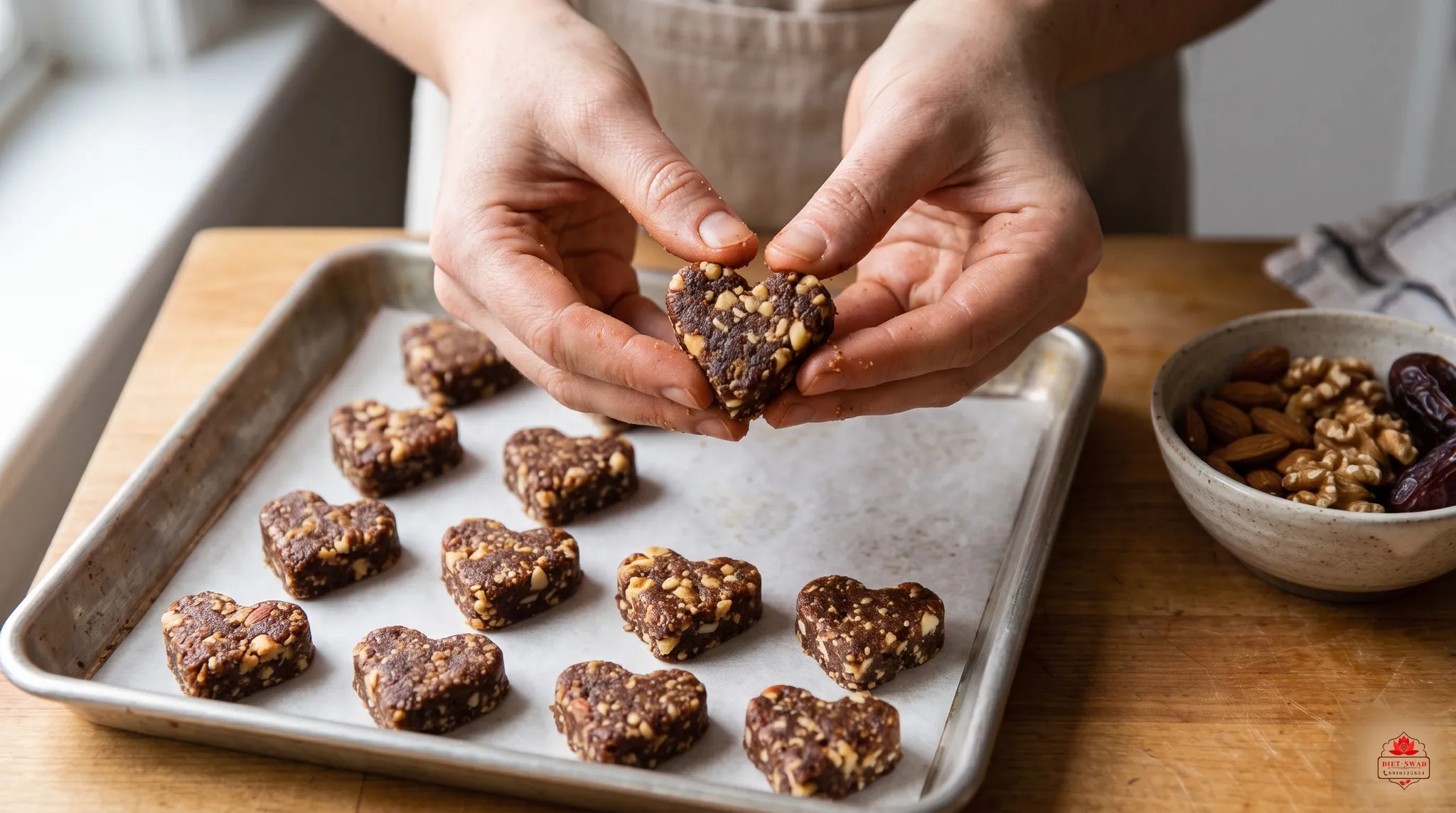
The pack sizes differ, because the products differ. Bites come as 180 g and cookies as 240 g and cashews as 250 g. That is real and it is printed.
4. Do you tell people the awkward numbers?
Our Power Bites are 53.8% dates. Dates are largely sugar. That means the sugar figure on the nutrition panel is high, and it is high for a good reason, but a number on a panel does not come with an explanation attached.
The temptation is to bury it. We print it instead, along with the percentage of every ingredient, which is not required by law in that form. The reasoning is simple: if the whole proposition is that you should read labels, we do not get to be an exception. It is also why we have written a whole article on why dates measure low on the glycaemic index despite the sugar rather than just hoping nobody asks.
5. What happens when you cannot fake shelf life?
Packaged snacks last months because they are engineered to. Remove the preservatives and the synthetic antioxidants and you are back to what the food can do on its own.
So the operation had to change shape: small batches, faster turnover, tighter storage, and accepting that stock cannot sit. That is a genuinely harder business than the alternative, and it is the single most underestimated consequence of a "clean label". The label is the easy part. The logistics are the price.
6. Does family make it easier or harder?
Both, and not in the ways people assume.
Easier because the recipes came from a family kitchen and had been eaten and adjusted for years before anyone thought about selling them. Harder because a family business has no clean line between a work disagreement and a personal one, and because "we have always made it this way" is both the source of the quality and the hardest thing to change when it needs changing.
7. How do you earn trust with no track record?
You cannot claim it, so the only remaining option is to be checkable.
Percentages on every pack. The FSSAI number printed. Real reviews, never invented ones. Articles that say when the evidence is weak or when a study is small. None of that is dramatic, and none of it converts anyone on the spot. It just accumulates, slowly, and it is the only version that survives being looked into.
What came out of all that
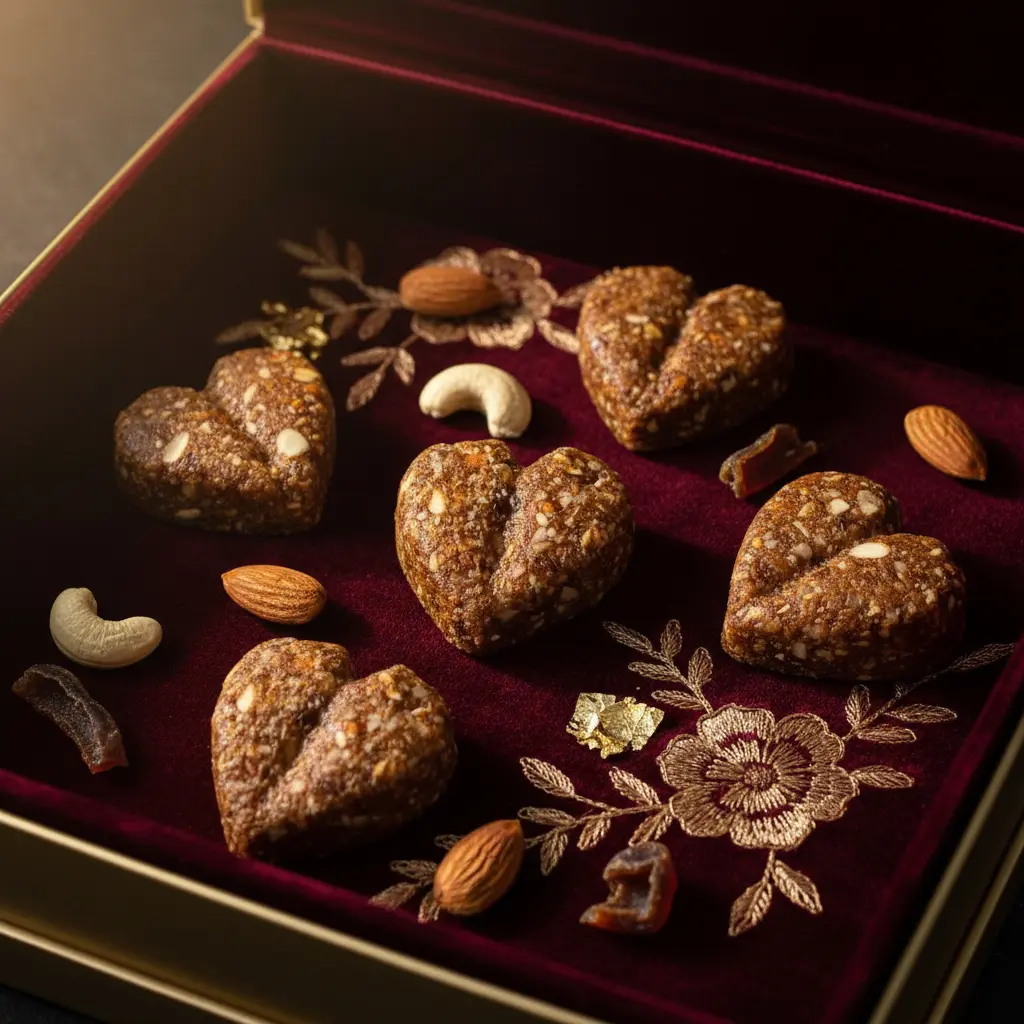
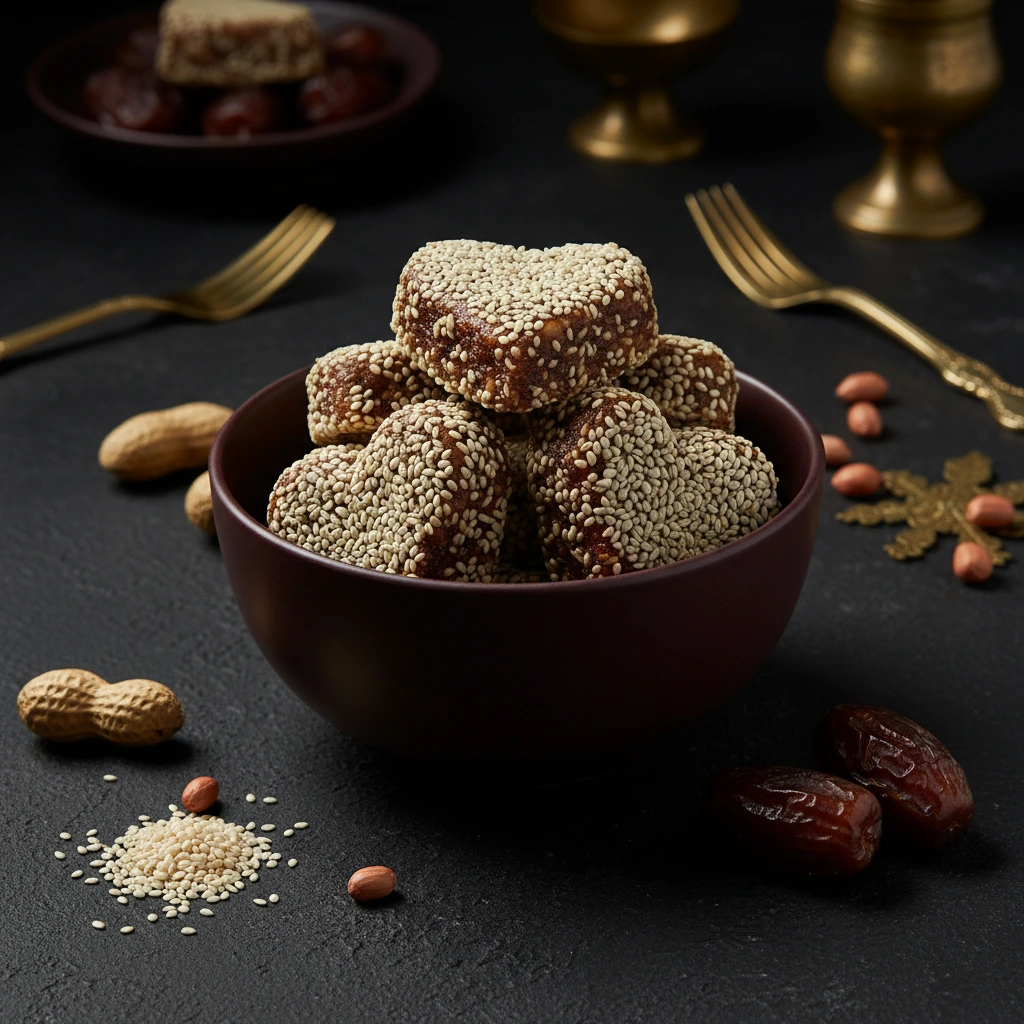
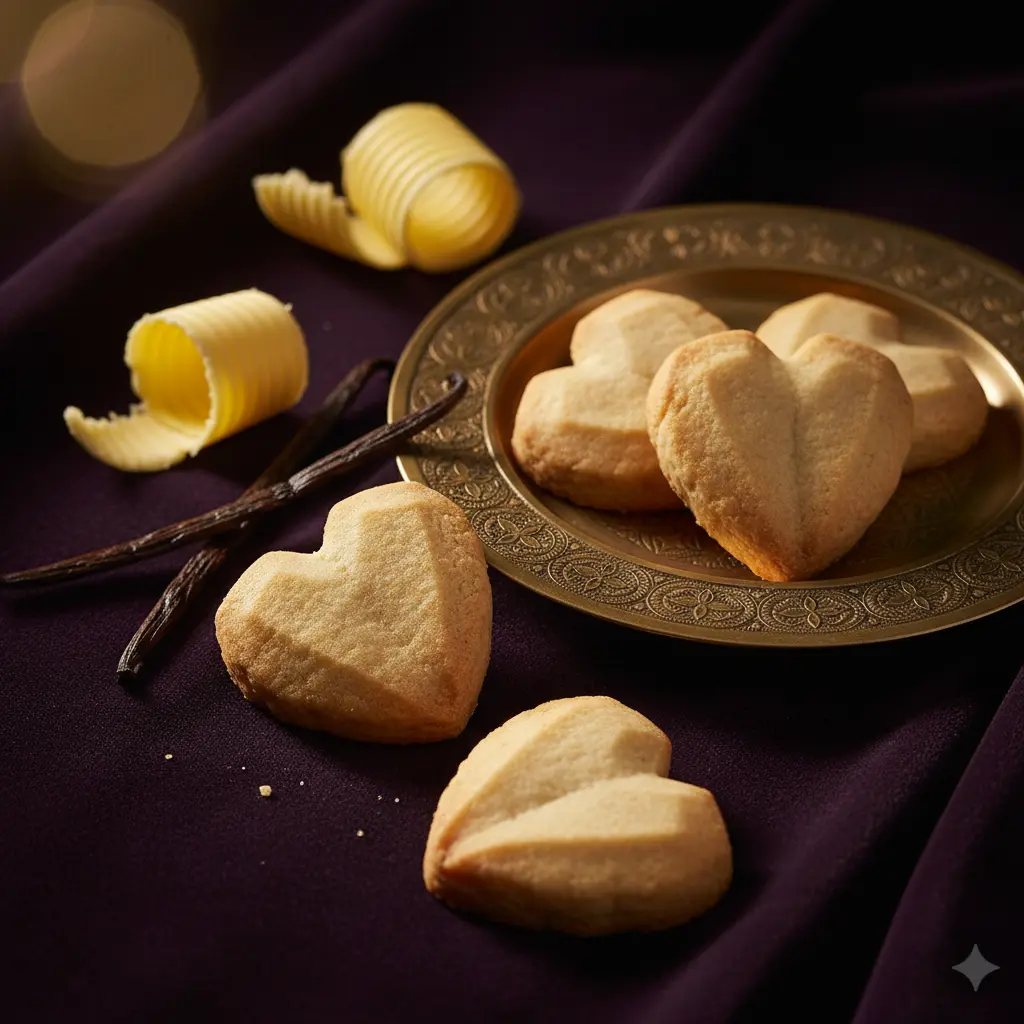
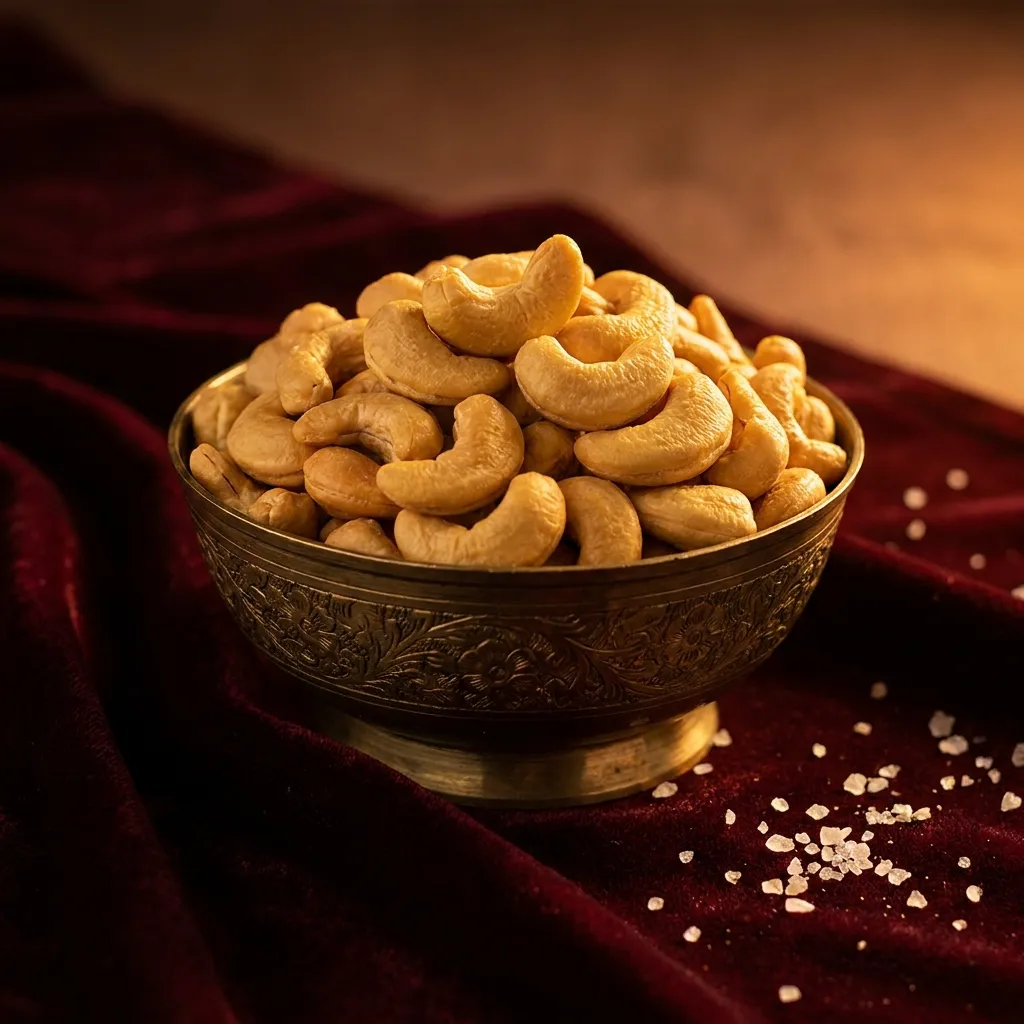
Seven products, made in Kolkata by Radiant Twins Enterprise, FSSAI 22825041000300. That is the whole operation. It is smaller than the website probably makes it look.
Frequently asked questions
Who makes Diet Swad?
Diet Swad is a small D2C healthy-snacks brand run by Radiant Twins Enterprise in Kolkata, West Bengal. Everything is handmade in small batches and sold direct, with pan-India shipping. The FSSAI registration number is 22825041000300.
Why does everything cost ₹499?
One price across the range means nobody has to work out which product is the good-value one, and it removes the temptation to quietly cheapen a recipe to hit a lower price point. Pack sizes differ by product because the products differ, and the price includes free shipping anywhere in India.
Why is the shelf life shorter than other packaged snacks?
Because nothing in the range uses preservatives or synthetic antioxidants. Long shelf life in packaged snacks is engineered, usually with stable fats and added antioxidants. Leaving those out means smaller batches, faster turnover and more careful storage, which is a real trade-off rather than a marketing line.
Are the ingredient percentages on the pack real?
Yes. Every product lists each ingredient with its percentage share, in descending order by weight, as required for Indian labels. Printing the exact share is a choice, not a requirement, and it exists so a buyer can check whether the headline ingredient is actually the main one.
Where is Diet Swad made?
In Kolkata, West Bengal, in small handmade batches, not on a continuous production line. Orders ship across India, and the brand sells direct instead of through retail distribution.
The part that has not changed
The recipes are still the ones from that kitchen. What changed is that they now have a registration number, a label with percentages on it, and a shipping problem.
Ghar se shuru hua tha. Recipe wahi hai.
If you want to check the thinking rather than the story, how to read a snack label is the article we would point a sceptical reader at first.
Sources
- FSSAI. Licensing and registration of food businesses: Diet Swad operates under FSSAI registration 22825041000300. fssai.gov.in
- FSSAI press release, 2021. Industrial trans fat capped at 2% of total oils and fats. fssai.gov.in
- ICMR-NIN. Dietary Guidelines for Indians, 2024. nin.res.in/dietaryguidelines
Product composition figures come from the current product labels. General information about food, not medical or dietary advice.