
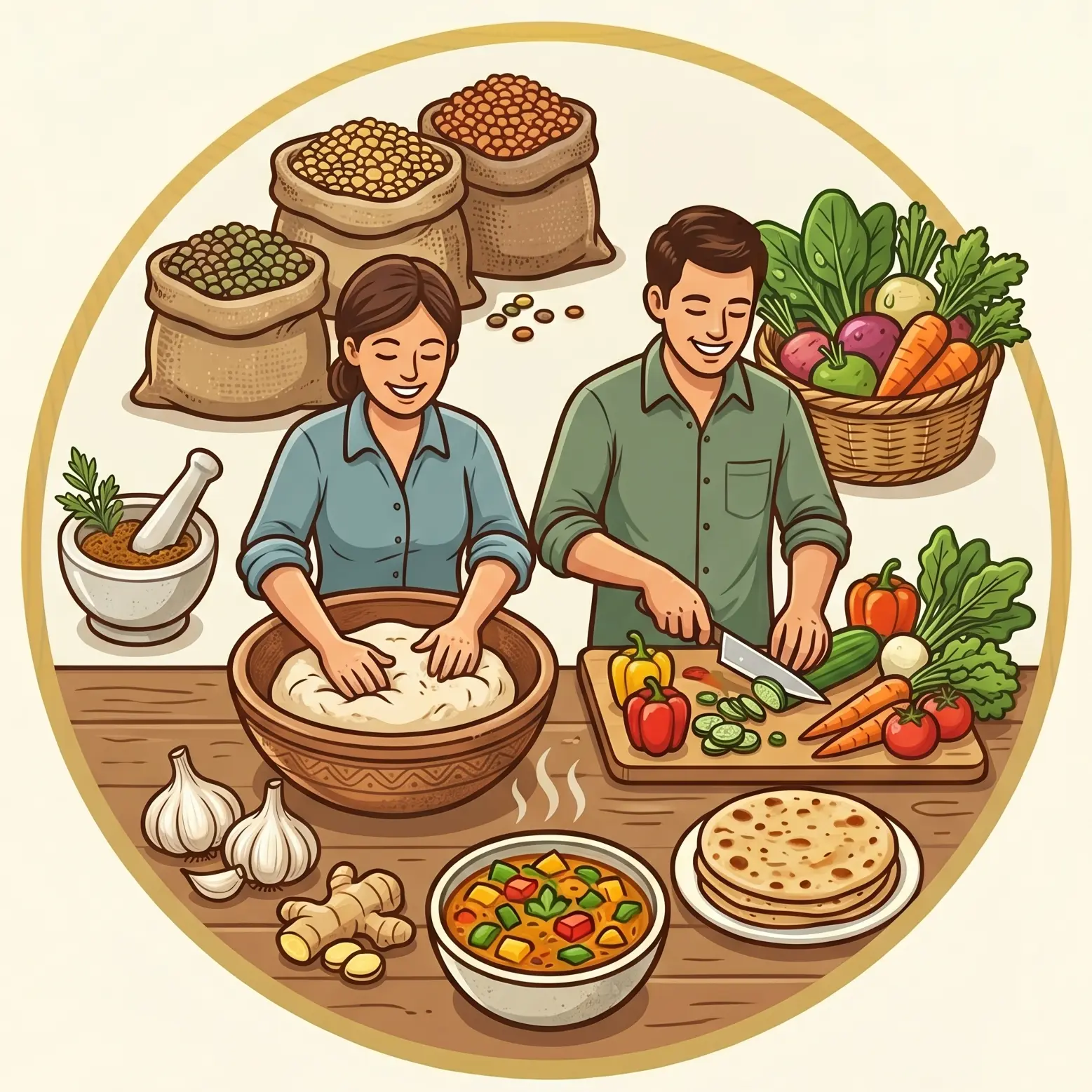
A ₹10 biscuit packet is not a miracle of efficiency. It is arithmetic. The recipe is built from the three cheapest bulk ingredients available to Indian food manufacturing, which are refined wheat flour, palm oil, and refined sugar or syrup. Everything else follows from that one decision.
This is not an accusation. It is genuinely how the economics work, and it is worth understanding, because it explains why "real ingredient" snacks cost what they cost. Paisa kahan jaata hai, dekhte hain.
Start with what things cost per kilogram
These are rough Indian market figures from 2026. Commodity prices move constantly, so read them as a snapshot rather than a price list.
The cheap end:
- Maida (refined wheat flour): about ₹30 to ₹40 per kg
- Palm oil, bulk industrial grade: roughly ₹90 to ₹120 per kg
- Refined white sugar: about ₹44 to ₹47 per kg
- Jaggery: about ₹41 per kg
The expensive end:
- Cow ghee: about ₹600 to ₹780 per kg
- Cashew kernels: about ₹360 per kg average, and considerably more for larger grades
- Sesame: about ₹93 to ₹103 per kg
- Groundnuts: about ₹70 per kg
- Jowar around ₹43 and ragi around ₹38 per kg
Look at just one line of that. Ghee costs roughly six times what bulk palm oil costs. In a recipe where fat is a fifth of the weight, that single swap moves the cost of the whole product more than any other decision a manufacturer makes.
An illustrative comparison, clearly labelled as an estimate. Take 100 g of cookie. A commodity recipe of roughly 55 g maida, 20 g palm oil and 20 g sugar comes to about ₹5 in core ingredients. A real-ingredient recipe of roughly 30 g millet flour, 20 g ghee, 25 g jaggery and 15 g nuts or dates comes to about ₹17. Same weight, roughly three times the raw material cost, and almost all of the difference is the ghee.
Why palm oil is the pivot
Palm oil is not in everything because of a conspiracy. It is in everything because it solves several problems at once, cheaply.
- It is inexpensive. Roughly a sixth of ghee's price in bulk.
- It is stable. It resists going rancid, so products survive months on a shelf in Indian heat without refrigeration.
- It is productive. Oil palm yields more oil per hectare than any competing crop, which is why it dominates global supply.
- It behaves well. Semi-solid at room temperature, which gives biscuits and cream fillings their texture without hydrogenation.
India is the world's largest edible oil importer, bringing in around 16 million tonnes worth roughly ₹1.61 trillion in 2024-25. Palm oil is more than half of that import volume. On composition, USDA data puts palm oil at about 49 g of saturated fat per 100 g, which is simply what it is made of.
Then scale does the rest
Cheap ingredients alone do not get you to ₹10. The other half is volume.
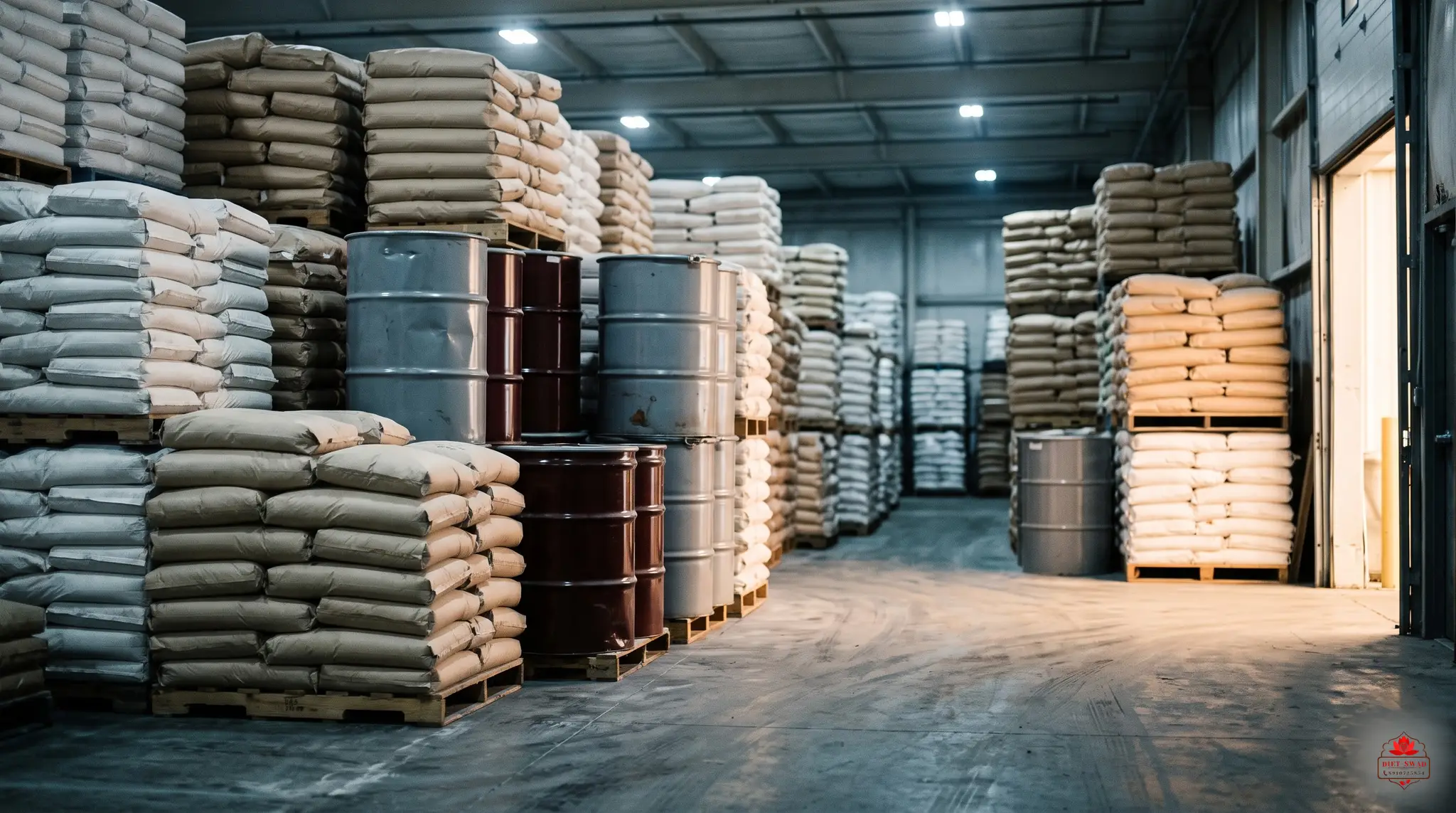
A continuous industrial line runs dough in at one end and packs biscuits at the other, all day, with very few people involved. Ingredients are bought by the container-load rather than the sack. Distribution reaches hundreds of thousands of shops, so the fixed costs spread across an enormous number of units. For India's largest biscuit maker, raw materials and stock-in-trade have run at roughly 59% of goods revenue in recent years, going by analyst computations from published results.
Put those together and a ₹10 pack can carry ₹5 or ₹6 of the cheapest commodity inputs and still fund everyone in the chain. Nothing improper is happening. It is just what optimising hard for cost produces.
The part of the trade-off nobody advertises
Cheap and long-lasting are the same decision viewed from two angles.
A product made without synthetic antioxidants and without highly stable fats will not last nine months on a shelf. So a short shelf life is not a defect in a handmade product, it is the direct consequence of leaving certain things out. It means smaller batches, faster stock turnover, and more attention to storage, all of which cost money that the ₹10 pack has specifically engineered away.
There is also a quality-control dimension worth knowing. FSSAI's RUCO programme exists because cooking oil becomes unsafe once its total polar compounds exceed 25%, and reused frying oil is a documented issue in Indian snack manufacturing. That is a reason to care who makes your food, quite apart from the ingredient list.
So what should you actually do with this?
Not "never buy anything cheap". That is neither realistic nor necessary, and plenty of inexpensive food is perfectly good.
The useful conclusion is narrower: price tells you almost nothing on its own, and the ingredient list tells you nearly everything. An expensive snack built on maida and palm oil is still a maida and palm oil snack, just with better packaging. A cheap packet of roasted peanuts is excellent food. Daam nahi, list dekho.
Where our own money goes

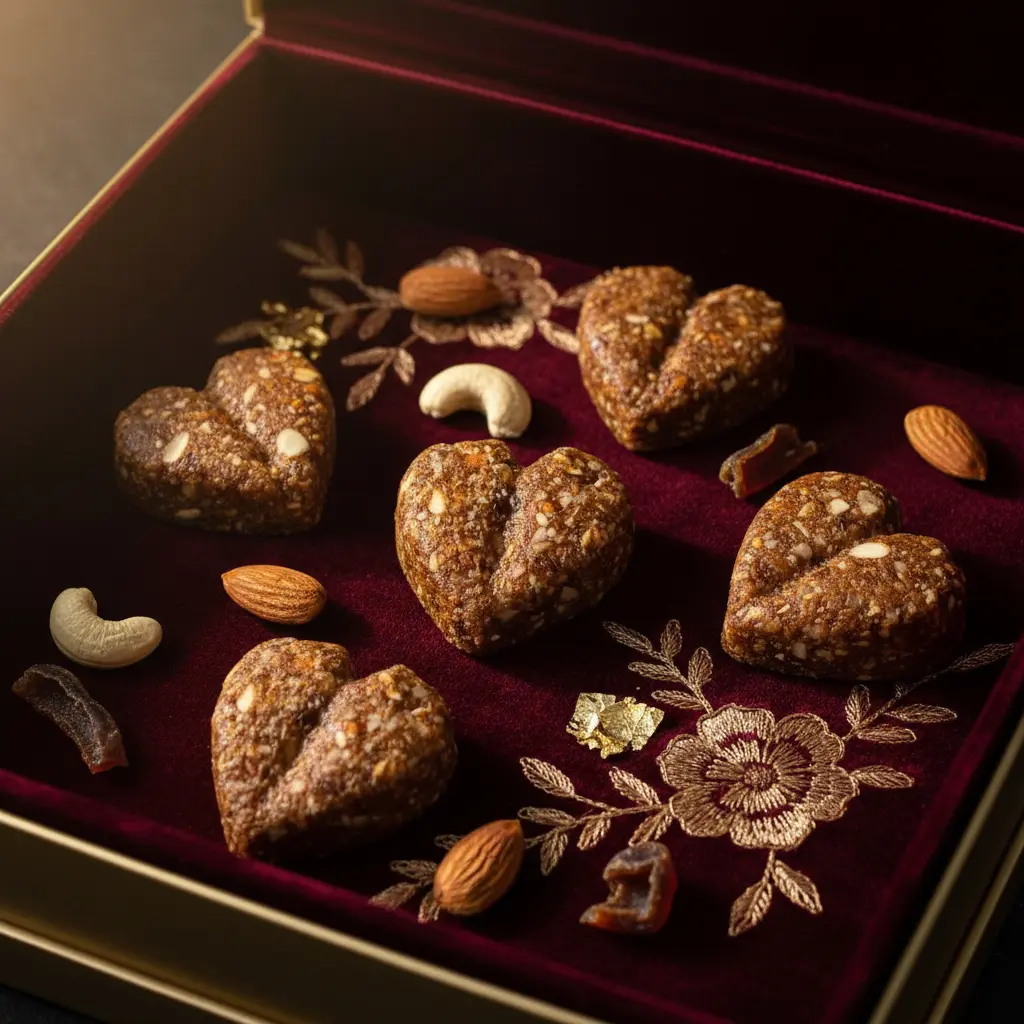
This is also the straightforward answer to why our packs are ₹499 rather than ₹49. Ghee instead of palm oil, dates and jaggery instead of refined sugar, jowar and ragi instead of maida, and small batches instead of a continuous line. Whether that trade is worth it to you is genuinely your call, and you should make it with the numbers in front of you.
Frequently asked questions
Why is packaged food so much cheaper than homemade?
Mostly because of which ingredients are used, not because factories are magical. The cheapest bulk ingredients in Indian food manufacturing are refined wheat flour, palm oil and refined sugar or syrup, and a recipe built on those costs a fraction of one built on ghee, nuts, dates or millet. Scale, continuous baking lines and distribution efficiency then do the rest.
Why is palm oil used in so many packaged foods?
Because it is cheap, stable and long-lasting. Bulk palm oil costs roughly a sixth of what ghee costs per kilogram, it resists going rancid, and it gives products a long shelf life without refrigeration. India imports around 9 million tonnes a year, and palm oil makes up more than half of the country's edible oil import volume.
How much do snack ingredients actually cost in India?
As rough 2026 market figures: maida is around ₹30 to ₹40 per kg, bulk palm oil around ₹90 to ₹120, refined sugar around ₹44 to ₹47, and jaggery around ₹41. Against that, cow ghee runs around ₹600 to ₹780 per kg, groundnuts around ₹70, sesame around ₹93 to ₹103, and cashew kernels around ₹360 and upwards. Commodity prices move constantly, so treat these as a snapshot.
Does a higher price mean better food?
Not by itself. Price can reflect packaging, marketing or margin just as easily as ingredients. The ingredient list is the honest signal, because it tells you what you are paying for. A costly product with maida and palm oil at the top of its list is still a maida and palm oil product.
Why do handmade snacks have a shorter shelf life?
Long shelf life in packaged snacks is engineered, usually through synthetic antioxidants and highly stable fats such as palm oil. A product made without those will not last as long, which is a genuine trade-off, not a flaw. It means smaller batches, faster turnover and more careful storage.
Cheap is a recipe decision
Every ₹10 packet is the result of someone answering a question: what is the least this can cost and still taste like something? That is a legitimate question, and millions of people are glad it gets asked.
It is just worth knowing that it was asked, and what the answer required leaving out.
Related reading: what is really inside your daily biscuit follows the same economics into one product, and the 60-second label routine shows where the answer is written down.
Sources
- USDA FoodData Central. Oil, palm (FDC 171015): saturated fat composition. fdc.nal.usda.gov (search: palm oil)
- Department of Consumer Affairs retail price data, via CEIC: palm oil ₹/kg. ceicdata.com
- Business Standard, Nov 2025. Edible oil imports up 22% to ₹1.61 trillion in 2024-25 (Solvent Extractors' Association data). business-standard.com
- FSSAI. RUCO (Repurpose Used Cooking Oil) booklet: the 25% total polar compounds threshold. eatrightindia.gov.in/ruco
- FSSAI press release, 2021. Industrial trans fat capped at 2%. fssai.gov.in
Commodity prices are 2026 snapshots and move daily; non-government figures come from private mandi aggregators. The cost build-ups are illustrative estimates, not any specific company's costs, and the 59% raw-material share is an analyst computation from published results, not a company statement.