
Read this as information, not as a warning about your health. Everything below is about what is in a product and how strong the evidence behind each concern is. It is not medical advice, no food here is being called dangerous, and nothing we sell is offered as protection against anything. If you have a specific health condition or an allergy, your doctor is the right person to ask.
A biscuit is a simple thing. Flour, sugar, fat, and whatever is needed to keep it stable on a shelf for six months. Those first three make up something like 85 to 95% of the packet by weight, which means most of what matters is decided before you ever reach the INS codes.
So let us go in that order. The big three first, then the codes, then the one that appears on no ingredient list at all.
What's Really Inside Your Daily Biscuit
The full eight-page guide, every additive category with its INS code and what it does, the acrylamide explainer, an India-versus-elsewhere comparison table, and a red-flag, yellow-flag, green-signal list for the shop.
Download the guide (PDF)Free, no sign-up, opens straight away.
The big three, which are most of the biscuit
Maida, written as "refined wheat flour"
Maida is wheat with the fibrous outer bran and the nutrient-dense germ removed, leaving fast-digesting white starch. Nothing exotic is happening. It is simply wheat with the slow parts taken out, and it is the first ingredient in most biscuits on an Indian shelf.
The practical consequence is that it digests quickly and brings very little fibre with it. ICMR-NIN's dietary guidelines make the general point plainly enough: refined grains should be the smaller share of what you eat, and whole grains the larger.
Sugar, usually under more than one name
Sugar in a biscuit rarely appears once. It commonly arrives as sugar plus invert syrup, or liquid glucose, or maltodextrin, and because each is weighed separately, none of them has to appear near the top of the list. The nutrition panel is where they get added back up, on the "of which sugars" line.
For scale: the World Health Organization suggests keeping free sugars under 10% of daily energy, and under 5% for additional benefit. A cream-filled biscuit pack can carry a large part of that in one sitting.
Palm oil, or hydrogenated vegetable oil
Palm oil is cheap, solid at room temperature and stable, which is genuinely why it is used, and it is roughly half saturated fat. The one worth treating differently is partially hydrogenated vegetable oil, which is a source of industrial trans fat. India capped industrial trans fat at 2% of total oils and fats in 2021, so this is far less common than it was, but the words are still worth recognising on an older or imported pack.
Why palm oil instead of ghee or butter? Cost, mostly, plus shelf stability. It is a business decision, not a nutrition one, and it runs through a great deal of the supermarket. Knowing that is more useful than being frightened of it.
The codes: what they are for, and how worried to be
INS numbers are additive identities, not danger ratings. Here are the ones you will actually meet on a biscuit, grouped by what they are doing, with the honest state of the evidence for each.
Antioxidants: they stop the fat going rancid
- BHA (INS 320) and BHT (INS 321) keep fat from oxidising. IARC lists BHA in Group 2B, which means the evidence is limited enough that it is described as possibly carcinogenic. That phrase is about how much evidence exists, not about how much risk sits in one biscuit.
- TBHQ (INS 319) does the same job and is permitted at limited levels.
Colours: the group with the clearest human evidence
This is the part of the label where the research is strongest and least ambiguous.
A randomised, double-blind, placebo-controlled trial published in The Lancet in 2007, run at the University of Southampton, tested mixes of synthetic azo colours together with the preservative sodium benzoate in children aged three and eight to nine. It found increased hyperactive behaviour in the children who received the mixes. On the strength of that trial, the European Union requires products containing several of these colours to carry a printed warning that they "may have an adverse effect on activity and attention in children".
The colours involved include tartrazine (INS 102), sunset yellow (INS 110) and carmoisine (INS 122). India permits them and requires no such warning on the pack. That is a genuine difference in labelling rules between two places, and it is the sort of thing worth knowing when you are choosing a biscuit for a child.
Separately, caramel colour class IV (INS 150d) can contain 4-methylimidazole, which IARC also places in Group 2B.
Emulsifiers: real research, and all of it so far in mice
Emulsifiers such as soy lecithin (INS 322), mono- and diglycerides (INS 471) and polysorbate 80 (INS 433) hold fat and water together and keep texture soft. They have long been treated as safe, and this is the category where that assumption is being actively re-examined.
Three studies, in order:
- 2015, Nature. Two emulsifiers, including polysorbate 80, altered the gut bacteria of mice and promoted inflammation and metabolic syndrome.
- 2024, Communications Biology. A separate team found that common dietary emulsifiers promoted metabolic disorders and disturbed gut bacteria in mice, which reopened the question instead of settling it.
- 2025, Nature Communications. A group at the Institut Pasteur reported that emulsifier consumption by the mother altered the offspring's early-life gut bacteria and the function of the cells that produce protective gut mucus, with effects that persisted.
Now the part that usually gets left off: every one of those was done in mice, at doses chosen for a mouse experiment. None of them shows the same thing happening in people eating biscuits. That does not make them worthless, because this is how a safety question gets reopened, and it is a genuine reason regulators are looking again. It does mean anyone telling you emulsifiers are proven to harm human gut health is going further than the evidence goes.
Acrylamide: the one that is on no ingredient list
Acrylamide is not added to anything. It forms by itself when starchy food is baked, roasted or fried above roughly 120 °C, through a reaction between sugars and an amino acid called asparagine that is naturally present in grain. The same browning that makes a biscuit taste like a biscuit is the reaction that produces it.
IARC classifies acrylamide in Group 2A, probably carcinogenic to humans. Worth being precise about what that means: Group 2A reflects strong evidence in animals with more limited evidence in humans. It is a statement about the weight of evidence, not a measure of how much risk any particular packet carries.
It is found in bread, toast, chips, roasted coffee and biscuits alike, anything browned.
What has actually been measured in Indian biscuits
There is one published Indian measurement worth knowing about. Researchers at the University of Allahabad bought 43 samples from local shops and ran them through HPLC, a standard laboratory method for measuring how much of a substance is present. Published in Current Research in Food Science in 2022, they found:
- Branded biscuits: 144 to 781 micrograms per kilogram.
- Local bakery biscuits: 126 to 665 micrograms per kilogram.
- French fries: 826 to 1,143 micrograms per kilogram, comfortably the highest of the three.
For comparison, the European Union sets a benchmark level of 350 micrograms per kilogram for biscuits and wafers. A benchmark is not a legal limit: it is the number that obliges a manufacturer to review its process and try to reduce it. India has set no equivalent benchmark, which is a genuine gap in the rules rather than an accusation about any particular product.
Read that study honestly. It is 43 samples from shops in one city, which is a small, single-location snapshot rather than a national survey. It tells you the levels are real and that some sit well above the European benchmark. It does not tell you what is in the specific packet in your hand, and no study currently does, because nobody in India is required to measure or publish it.
Two further pieces of evidence, both worth stating with their limits attached. A 2024 Italian risk assessment modelling dietary acrylamide across six age groups found the youngest groups, infants and toddlers, carry the highest exposure relative to body weight, which is simply what happens when a small body eats biscuits. And a large French prospective study, the E3N cohort, reported an association between dietary acrylamide intake and increased mortality in women. That one is observational: it can show that two things occur together, but it cannot by itself prove one caused the other.
The sensible reading. Acrylamide is not a reason to fear toast. It is a reason that "browned starchy food, every day, in quantity" is a different proposition from "browned starchy food, sometimes", which is roughly what your grandmother would have said about biscuits anyway.
Why any of this is worth knowing
Not because a biscuit is dangerous. Because of how many of them there are. Chai twice a day, two biscuits a time, is around 120 biscuits a month, and it is the daily things, not the occasional ones, that add up to a diet.
For context on why that matters at a national scale, the ICMR-INDIAB study published in 2023 reported considerably higher levels of diabetes and other metabolic conditions across India than earlier estimates had suggested. No single food explains that, and nobody serious claims one does. But what the everyday default is does matter.
What to look for instead
- Put it back if the first ingredient is refined wheat flour, if hydrogenated vegetable oil appears anywhere, or if sugar shows up two or three times under different names.
- Look twice if you see INS 102, 110 or 122 and you are buying for a child, given the labelling difference described above.
- Good signs: a short list, a whole food first (oats, jowar, dates, nuts), no artificial colours, and a named sweetener instead of three anonymous syrups.
What a short list looks like (a composition note)
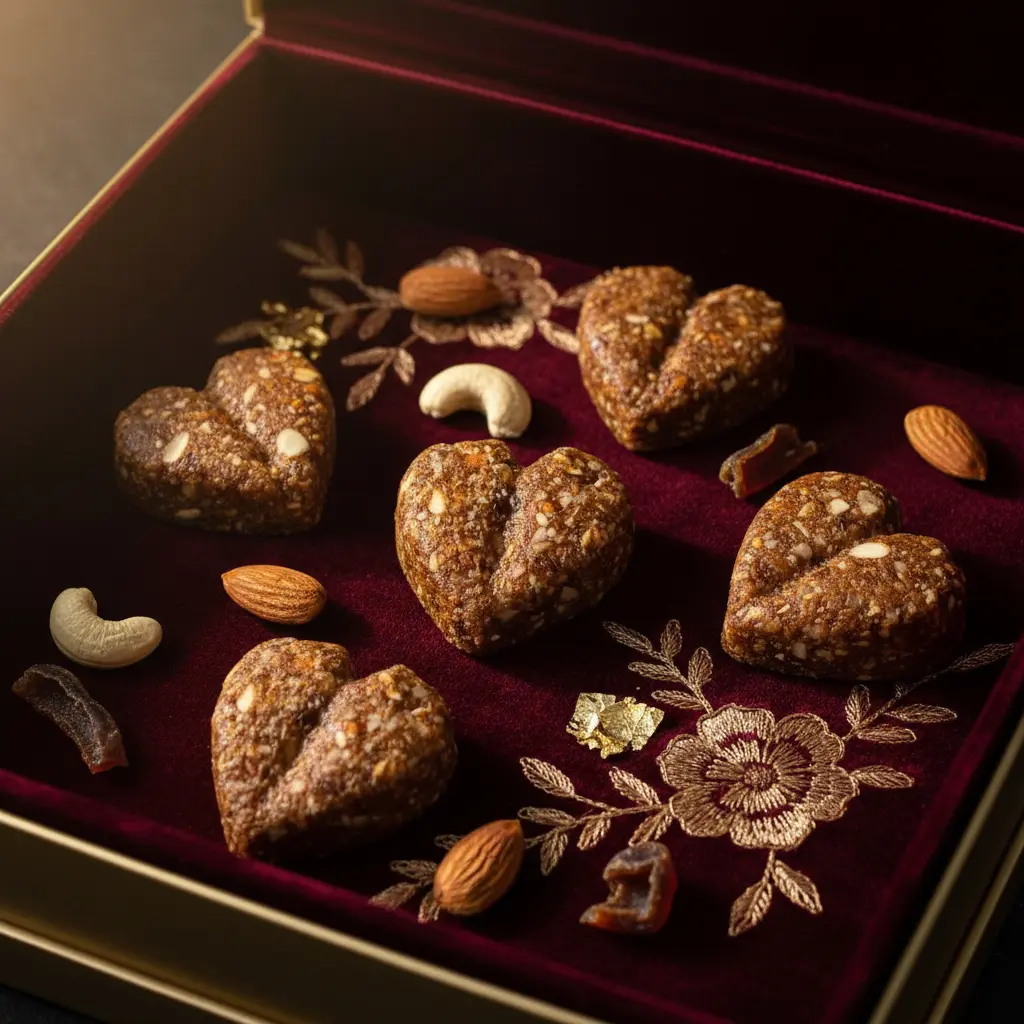
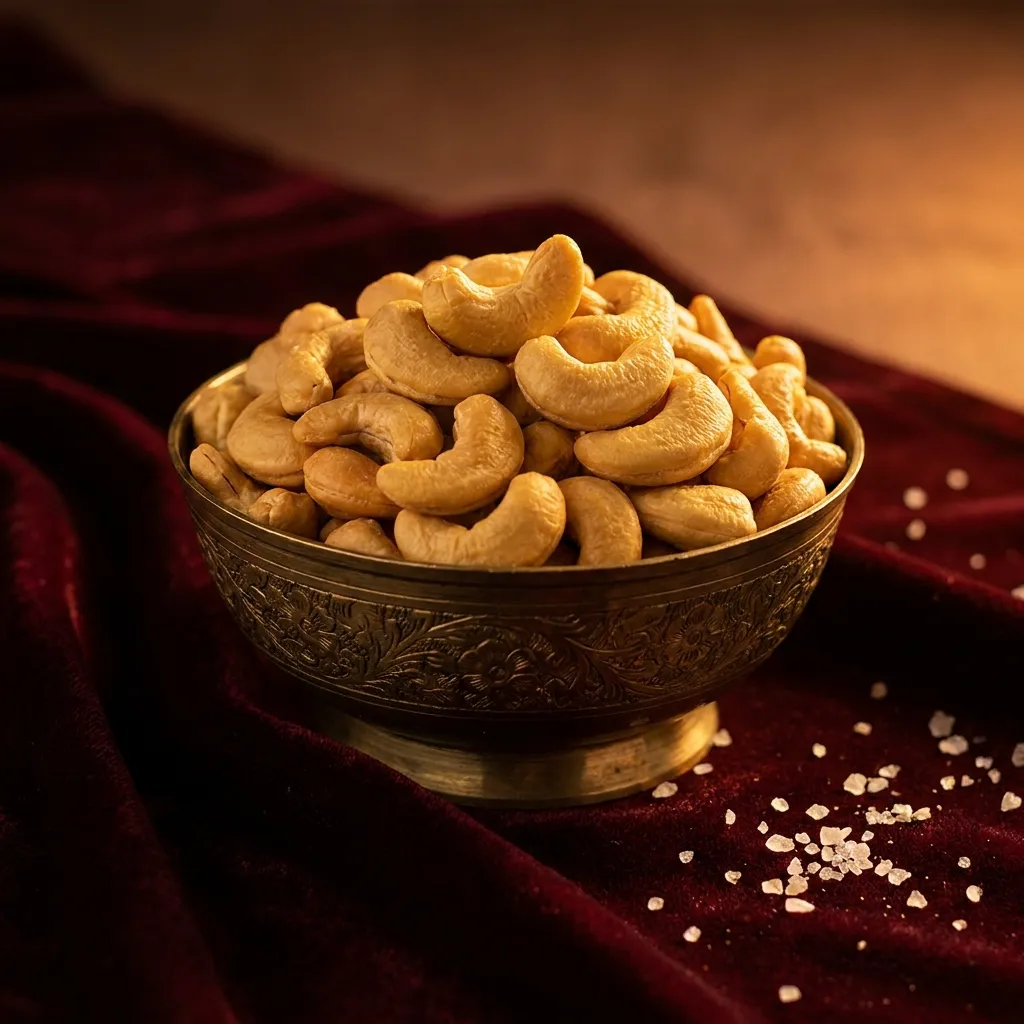
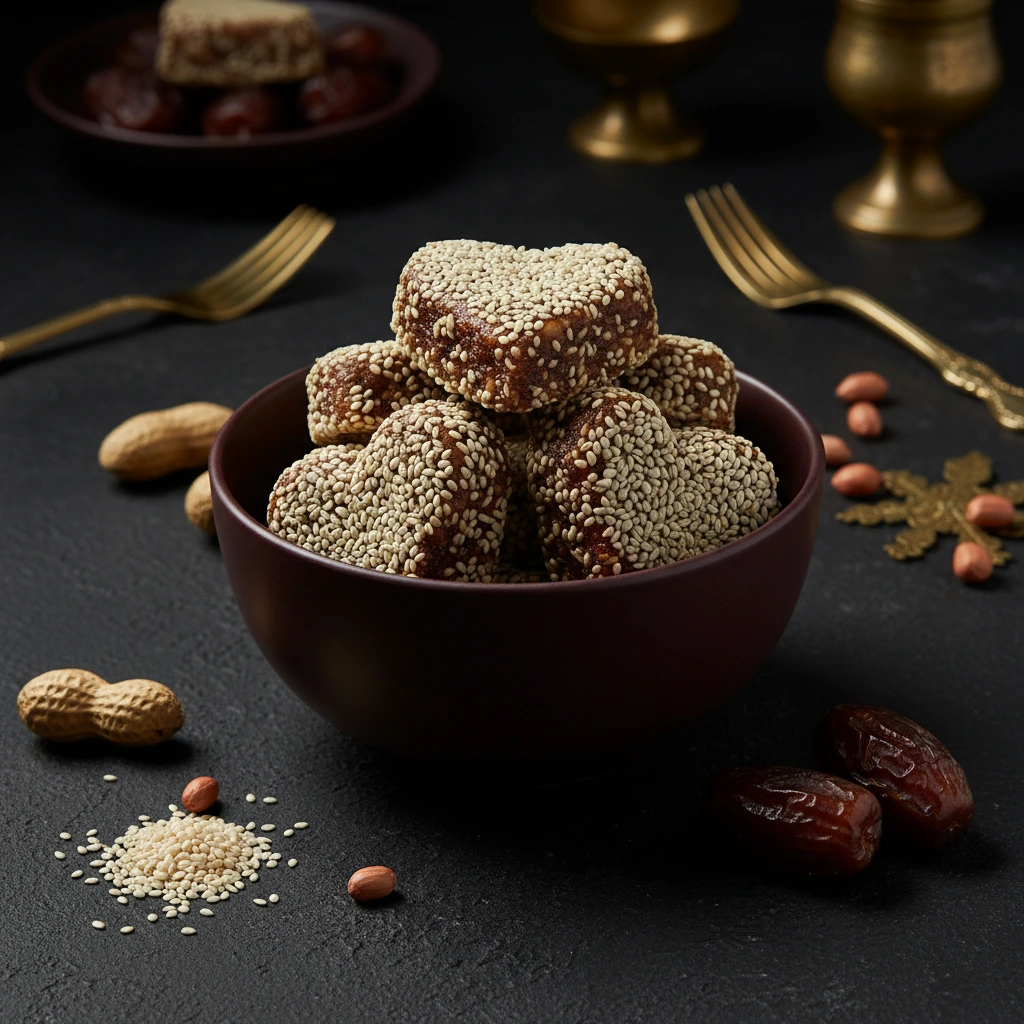

The strip above is a note on composition, nothing more. Our cookies are baked, so the same browning chemistry applies to them as to any baked good, we are not claiming an exemption from it. The differences that are real are the ones you can read on the pack: jowar not maida, desi khand or jaggery not three syrups, real butter or ghee not palm oil, and no added colours.
If you want the method rather than the chemistry, the 60-second label routine gets you most of this in a single flip of the pack. And the preservative decoder covers the rest of the code numbers.
Frequently asked questions
What are biscuits actually made of?
Roughly 85 to 95% of a typical biscuit by weight is three things: refined wheat flour, sugar and a fat, usually palm oil. Everything else on the label, including the INS codes, is present in much smaller amounts and exists to manage colour, texture, flavour and shelf life.
What is acrylamide and should I worry about it in biscuits?
Acrylamide is not added to food. It forms naturally when starchy foods are baked, roasted or fried above about 120 degrees Celsius. IARC classifies it in Group 2A, probably carcinogenic to humans, which describes the strength of the evidence rather than the size of the risk in any one packet. It occurs in bread, toast, chips and coffee too, so frequency matters more than any single food.
How much acrylamide is in Indian biscuits?
One published Indian measurement exists. Researchers at the University of Allahabad tested 43 shop-bought samples and reported 144 to 781 micrograms per kilogram in branded biscuits and 126 to 665 in local bakery biscuits, published in Current Research in Food Science in 2022. The European Union sets a benchmark of 350 micrograms per kilogram for biscuits. That study is a single-city snapshot, not a national survey.
Which food colours require a warning label in Europe?
Several synthetic azo colours, including tartrazine (INS 102), sunset yellow (INS 110) and carmoisine (INS 122), must carry a printed statement in the European Union that they may have an adverse effect on activity and attention in children. The requirement followed a randomised controlled trial published in The Lancet in 2007. India permits these colours and does not require the warning.
Are emulsifiers in biscuits bad for your gut?
The honest answer is that the research is active and incomplete. A 2015 study in Nature found that certain emulsifiers, including polysorbate 80, changed gut bacteria and promoted inflammation in mice. That is a genuine finding, but it was carried out in mice at experimental doses, and it has not been shown to produce the same effect in people eating ordinary amounts.
Is palm oil in biscuits harmful?
Palm oil is about half saturated fat. It is used because it is cheap and stable, and it is there to keep the cost down. The ingredient that deserves more attention is partially hydrogenated vegetable oil, a source of industrial trans fat. India capped industrial trans fat at 2% of total oils and fats in 2021, which has made it far less common than it once was.
Count them, do not fear them
None of this makes a biscuit a villain. A biscuit with chai is one of the genuinely nice things about an Indian afternoon and we are not about to argue against it.
What is worth changing is only the default, the one you buy every week without looking, twice a day, for years. Flip that packet over once. Ek baar palat ke dekh lo. If the first three ingredients are ones you would have used yourself, carry on.
Sources
- International Agency for Research on Cancer. Agents Classified by the IARC Monographs: acrylamide is listed in Group 2A, and 4-methylimidazole and BHA in Group 2B. monographs.iarc.who.int
- Verma V, Yadav N. Acrylamide content in starch based commercial foods by using high performance liquid chromatography and its association with browning index. Current Research in Food Science, 2022: 43 samples bought in Allahabad, India. pubmed.ncbi.nlm.nih.gov/35243358
- European Food Safety Authority. Acrylamide: EU benchmark levels for reduction, set under Regulation (EU) 2017/2158. efsa.europa.eu
- McCann D, et al. Food additives and hyperactive behaviour in 3-year-old and 8/9-year-old children in the community: a randomised, double-blinded, placebo-controlled trial. The Lancet, 2007: the study behind the EU warning requirement. pubmed.ncbi.nlm.nih.gov/17825405
- Chassaing B, et al. Dietary emulsifiers impact the mouse gut microbiota promoting colitis and metabolic syndrome. Nature, 2015: carried out in mice, not people. pubmed.ncbi.nlm.nih.gov/25731162
- Panyod S, et al. Common dietary emulsifiers promote metabolic disorders and intestinal microbiota dysbiosis in mice. Communications Biology, 2024: in mice. pubmed.ncbi.nlm.nih.gov/38902371
- Delaroque C, et al. Maternal emulsifier consumption alters the offspring early-life microbiota and goblet cell function leading to long-lasting diseases susceptibility. Nature Communications, 2025, Institut Pasteur: in mice. pubmed.ncbi.nlm.nih.gov/40730751
- Marques C, et al. Association between dietary intake of acrylamide and increased risk of mortality in women: evidence from the E3N prospective cohort. Science of the Total Environment, 2024: observational, so association not causation. pubmed.ncbi.nlm.nih.gov/37783439
- Mihalache OA, Dall'Asta C. The burden of disease due to dietary exposure to acrylamide in Italy: a risk assessment-based approach. Food and Chemical Toxicology, 2024: modelled across six age groups. pubmed.ncbi.nlm.nih.gov/38697496
- Anjana RM, et al. Metabolic non-communicable disease health report of India: the ICMR-INDIAB national cross-sectional study. Lancet Diabetes & Endocrinology, 2023. pubmed.ncbi.nlm.nih.gov/37301218
- World Health Organization. Healthy diet fact sheet: free sugars below 10% of total energy intake, and under 5% for additional benefit. who.int
- ICMR-NIN. Dietary Guidelines for Indians, 2024. nin.res.in/dietaryguidelines
- FSSAI. Food Safety and Standards (Labelling and Display) Regulations, 2020: ingredient order, declared percentages and the nutrition panel. fssai.gov.in
- Monteiro CA, et al. Ultra-processed foods: what they are and how to identify them. Public Health Nutrition, 2019: the cosmetic-additive marker test. pubmed.ncbi.nlm.nih.gov/30744710
Educational information about food composition and labelling, not medical advice, and not a claim that any product prevents or treats any condition. Research findings are attributed above with the type of study stated; animal studies are identified as such. If you have a health condition or an allergy, speak to your doctor.