
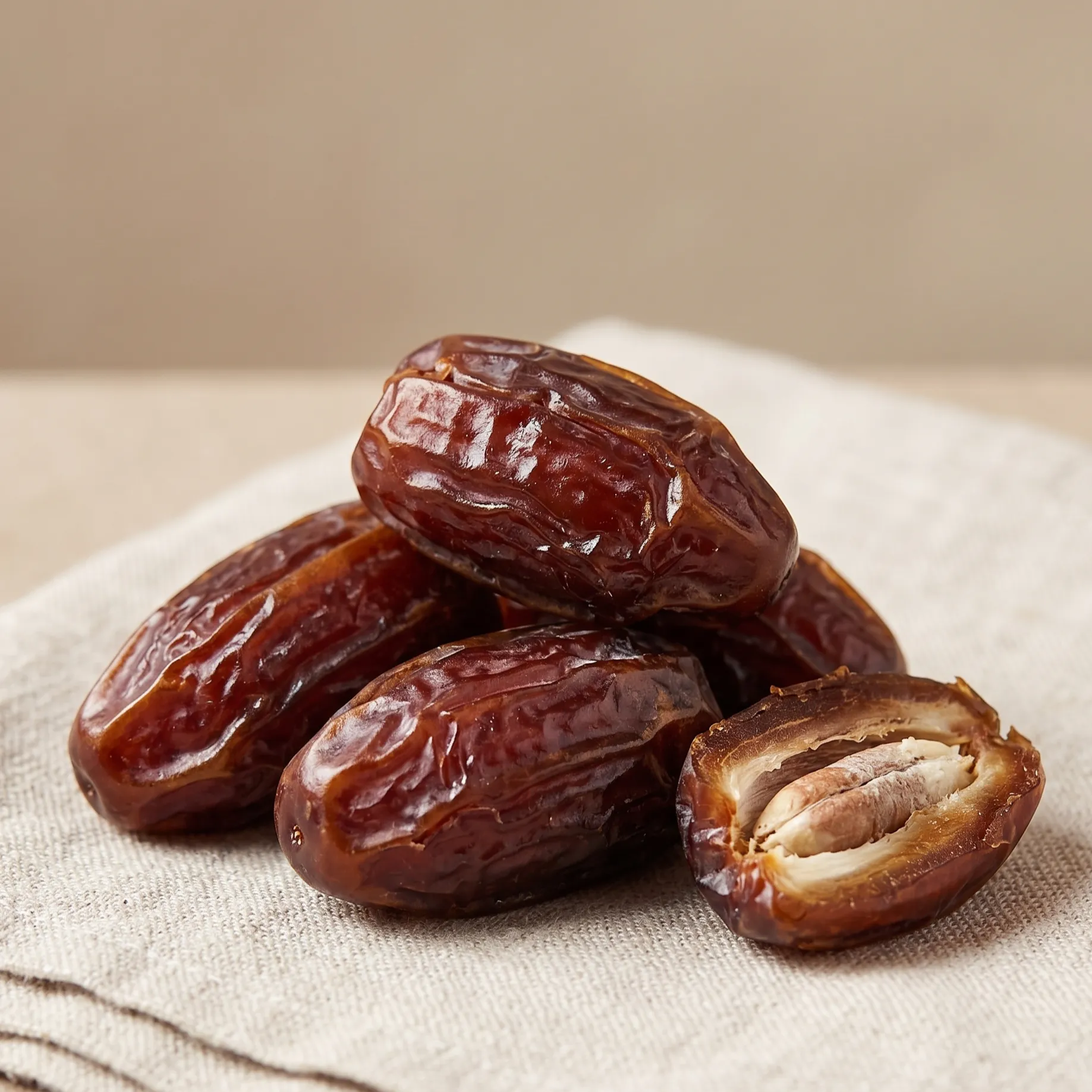
"Dates are healthy" is true. But the word "dates" covers a wide range at the shop, and one practice in particular is worth knowing about before you pay: some of the cheaper, drier stock is given a coating of sugar or glucose syrup.
It matters because if you are buying dates for the fibre and the minerals, a syrup coating quietly moves the product back towards the refined sugar you were trying to avoid.
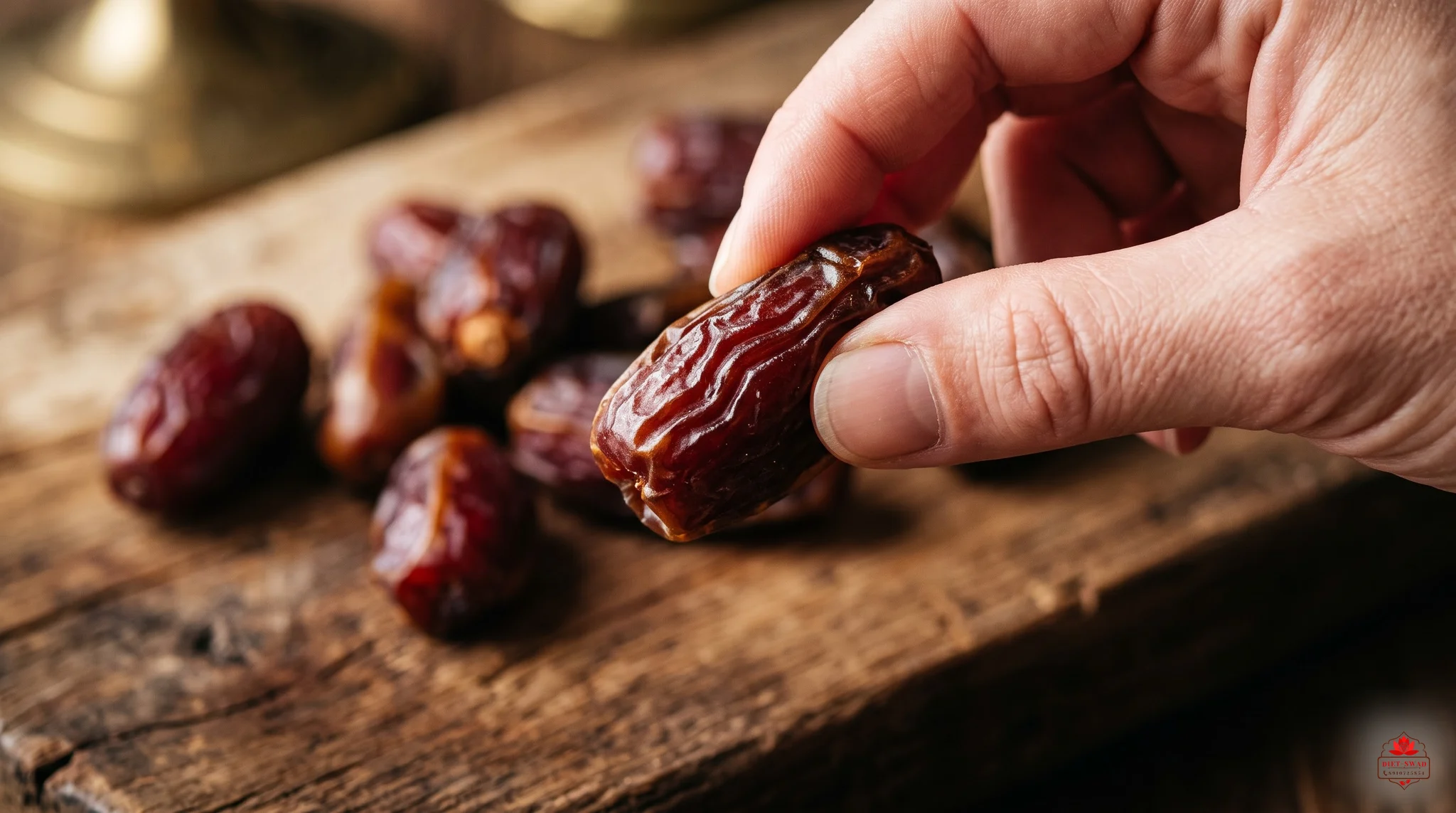
Asli vs Nakli Khajoor
The full side-by-side, look, feel, taste, sweetness source and label, laid out as a comparison table, plus the four buying checks, the honest nutrition picture, and a short FAQ on portions and storage.
Download the guide (PDF)Free, no sign-up, opens straight away.
Why anyone coats a date at all
There is a straightforward commercial logic to it, and it is worth understanding rather than being outraged about.
Dates harvested dry, or of a lower grade, are less sweet and frankly less appealing, wrinkled, dull, hard. A bath in glucose syrup fixes all three problems at once. The fruit comes out glossy, sticky and noticeably sweeter, and it can be sold cheaply. The customer sees plump and shiny and reads that as fresh.
This is a practice associated with cheaper, drier local stock rather than with good imported Arabian dates, which are naturally soft and sweet enough that there is no reason to coat them. The economics only work at the bottom of the market. Which is also why "suspiciously cheap and suspiciously shiny" is a genuinely useful instinct.
The four checks, in the shop
- Squeeze one. A good date gives slightly and springs back. Rock hard means old or dried out. Mushy means over-handled or over-processed.
- Check your fingers. Naturally moist is normal and fine. If a distinctly sticky syrup residue is left on your fingers, that is a coating, not the fruit itself.
- Read the ingredient list. The most reliable check by a distance. It should say one word: dates. Anything reading sugar, glucose syrup, liquid glucose or invert syrup means something was added.
- Look at the pack and the origin. A serious importer states the origin and packs airtight. Loose open bins dry out, attract handling and are where the coated stock most often turns up.
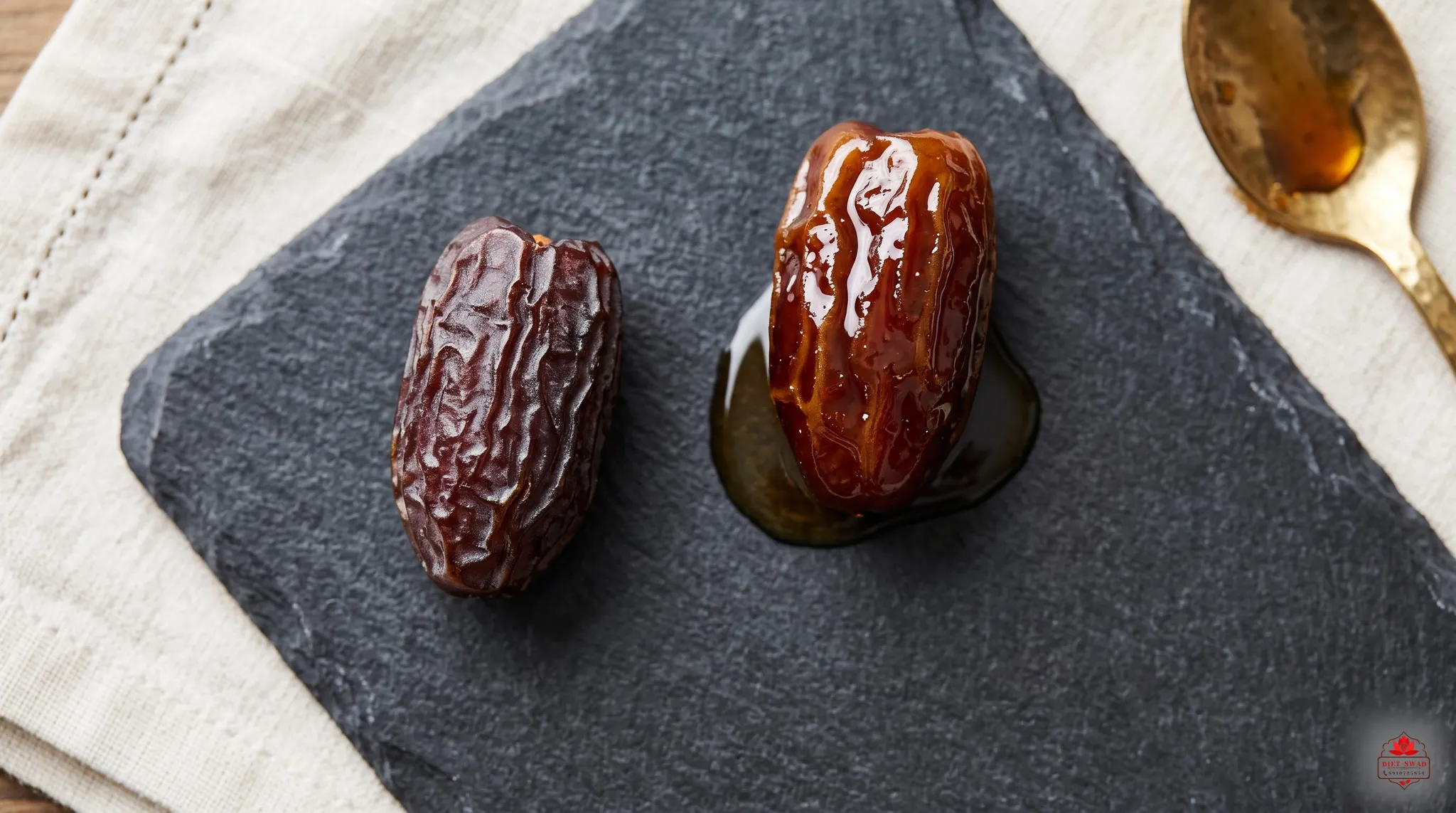
Glossy is not the same as fresh. This is the instinct worth reversing. A natural date has a slight sheen at most and its skin often shows fine wrinkles, which are normal. A uniform, wet-looking shine across every single fruit in the box is the thing to look at twice.
What a good date is actually bringing you
Accuracy matters more than enthusiasm here.
- Sugar, but with fibre attached. A date is sweet, that is not in dispute. The fibre it carries slows how quickly that sugar is absorbed, which is a gentler curve than refined sugar's.
- Minerals. Potassium and magnesium in useful amounts, plus small quantities of iron and some B vitamins.
- Satiety. The chewing and the fibre together make two or three dates genuinely satisfying in a way a spoon of sugar never is.
- An honest caveat. Dates are energy dense. Two to four a day is a portion. They replace worse sweets very well, but they are a sweet food and not a free one.
Storing them so they stay good
Airtight, away from heat and direct sun. In a Kolkata summer the fridge is the sensible choice and it keeps them soft for months. If dates have gone hard in your kitchen they are usually not spoiled, just dried, a few minutes in warm water brings them most of the way back.
Where our dates go (a composition note)

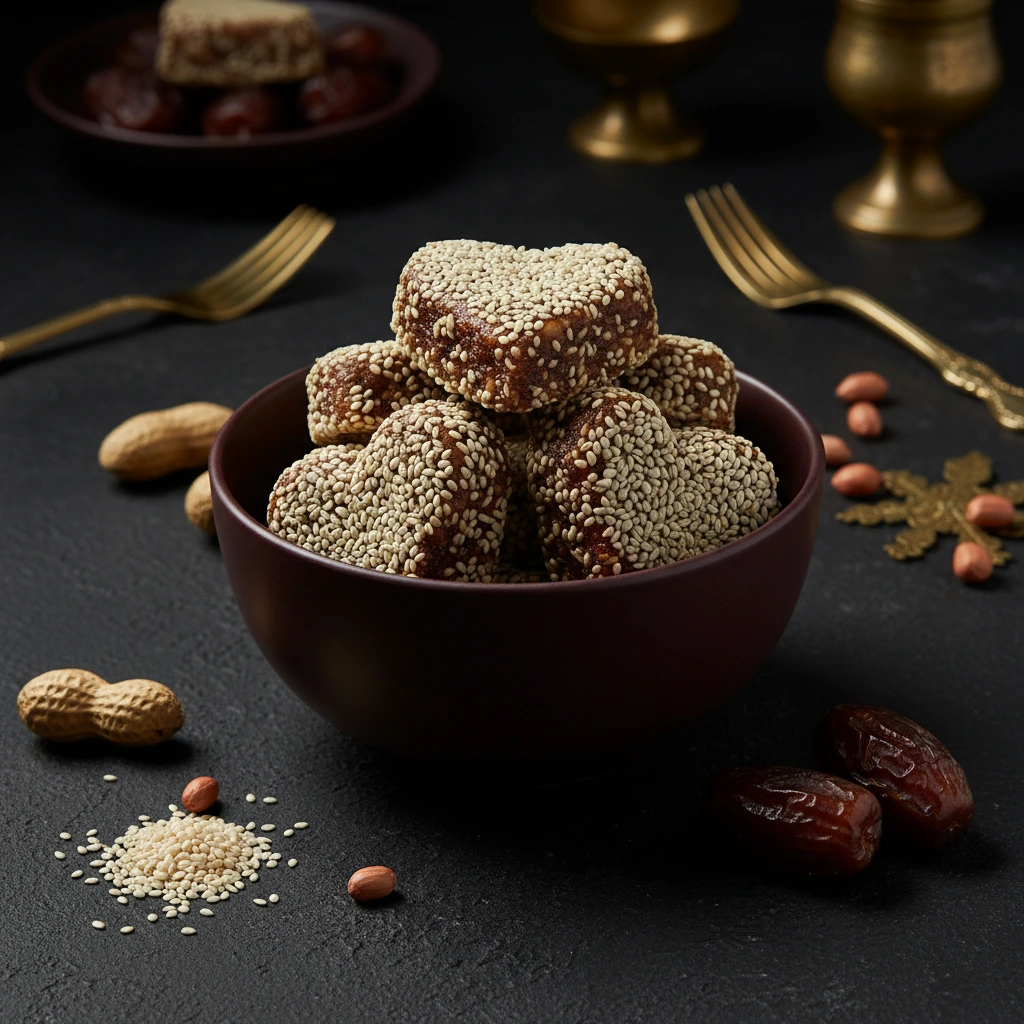
Why we care about this at all: dates are the entire sweetening system in two of our products, at 53.8% in Power Bites and 50% in Peanut-Sesame Delights. That only works with fruit that is genuinely sweet on its own, which is exactly why coated stock would be useless to us. If we were buying dates that needed a syrup bath to taste sweet, we would have to add sugar as well, and then the whole idea collapses.
For how imported and local dates compare more broadly, this piece sets them side by side. And the blood-sugar question is covered properly here.
Frequently asked questions
How can you tell if dates are coated in sugar syrup?
Four checks. Squeeze one, since a good date gives slightly and springs back. Notice whether sticky syrup residue is left on your fingers, as natural moisture does not do that. Read the ingredient list, which should say only dates. And prefer packs stating an origin over loose open bins, where coated stock more often appears.
Why are some dates coated with glucose syrup?
Drier, lower-grade dates are less sweet and less attractive to look at. A glucose syrup coating makes them glossy, sticky and sweeter at low cost, so they sell more easily. The economics only make sense at the cheaper end of the market, which is why it shows up on dry local stock and not on naturally soft imported dates.
What should the ingredient list on a pack of dates say?
Ideally one word: dates. If the list includes sugar, glucose syrup, liquid glucose or invert syrup, then a sweetener has been added to the fruit. Some packs also legitimately list a glazing agent or oil used to prevent sticking, which is different from a sugar coating, so it is worth reading the actual words rather than assuming.
How many dates should I eat in a day?
Two to four is a reasonable daily portion for most adults. Dates are energy dense, so treat them as the day's sweet and not as unlimited fruit. They work well as a replacement for other sweets. Anyone managing diabetes should take portion advice from their doctor, since dates still contain sugar.
How should dates be stored?
Keep them airtight and away from heat and direct sunlight. In a hot or humid climate the refrigerator is the better option and will keep them soft for months. Dates that have gone hard are usually just dried out, not spoiled, and soaking them in warm water for a few minutes softens them again.
Thirty seconds at the counter
Squeeze one, check your fingers, read the list, look at the pack. That is the whole method and it costs you half a minute.
Khajoor achha hai, bas asli wala lena.
Sources
- FSSAI. Food Safety and Standards (Labelling and Display) Regulations, 2020: ingredient order, declared percentages and the nutrition panel. fssai.gov.in
- Alkaabi JM, et al. Glycemic indices of five varieties of dates in healthy and diabetic subjects. Nutrition Journal, 2011;10:59. pmc.ncbi.nlm.nih.gov/articles/PMC3112406
- USDA FoodData Central: reference figures for dates, including fibre and potassium. fdc.nal.usda.gov
- ICMR-NIN. Dietary Guidelines for Indians, 2024. nin.res.in/dietaryguidelines
General information about buying and storing food, not medical or dietary advice. Descriptions of coating practices refer to patterns in the category, not to any particular company's product.