
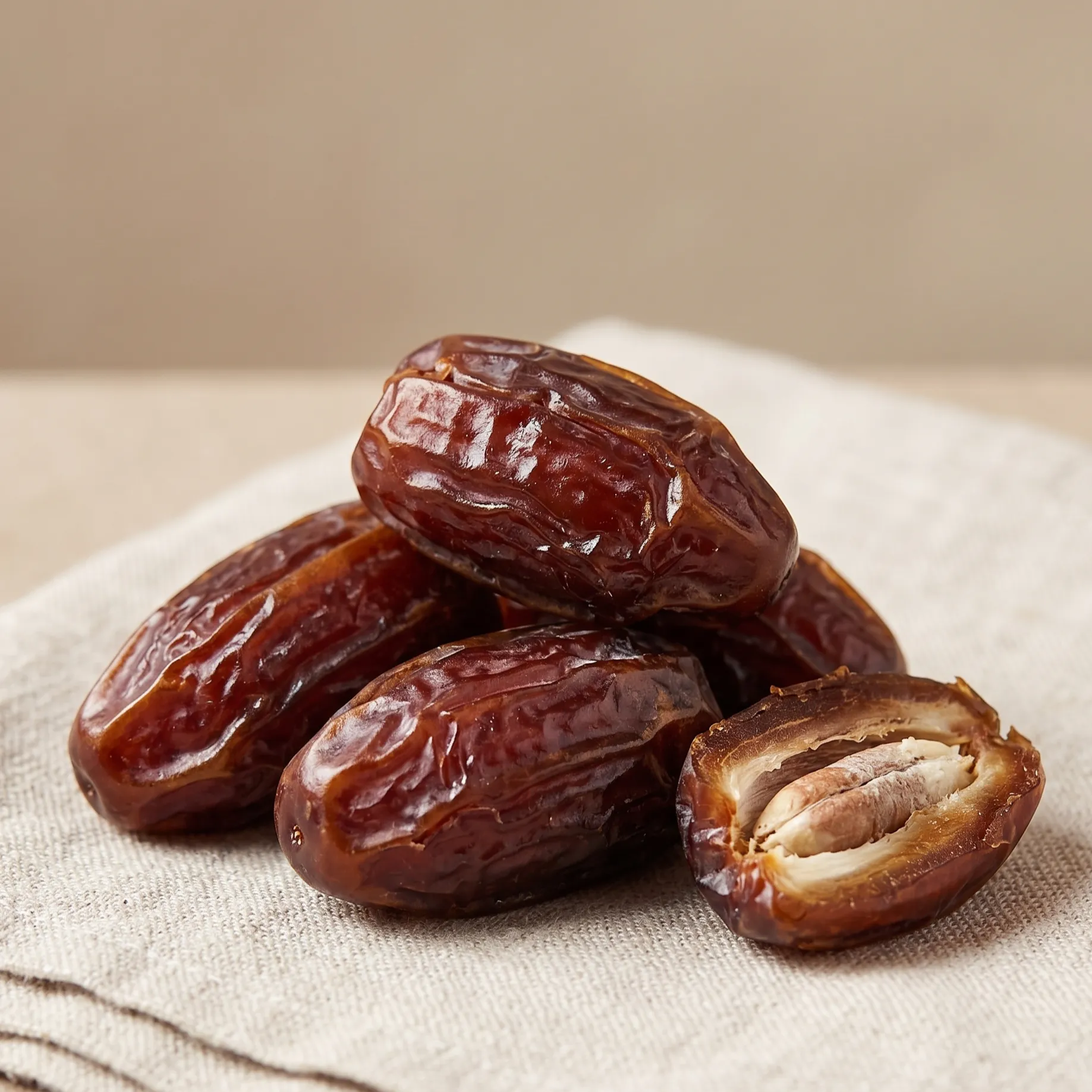
"Dates are healthy" is true, and it is also doing a lot of hiding. The word covers plump Arabian khajoor whose sweetness is its own, and it covers dry local dates given a bath in glucose syrup so they taste of something. Both sit in the same aisle under the same name. Agar aap dates health ke liye kha rahe ho, that difference is the whole story.
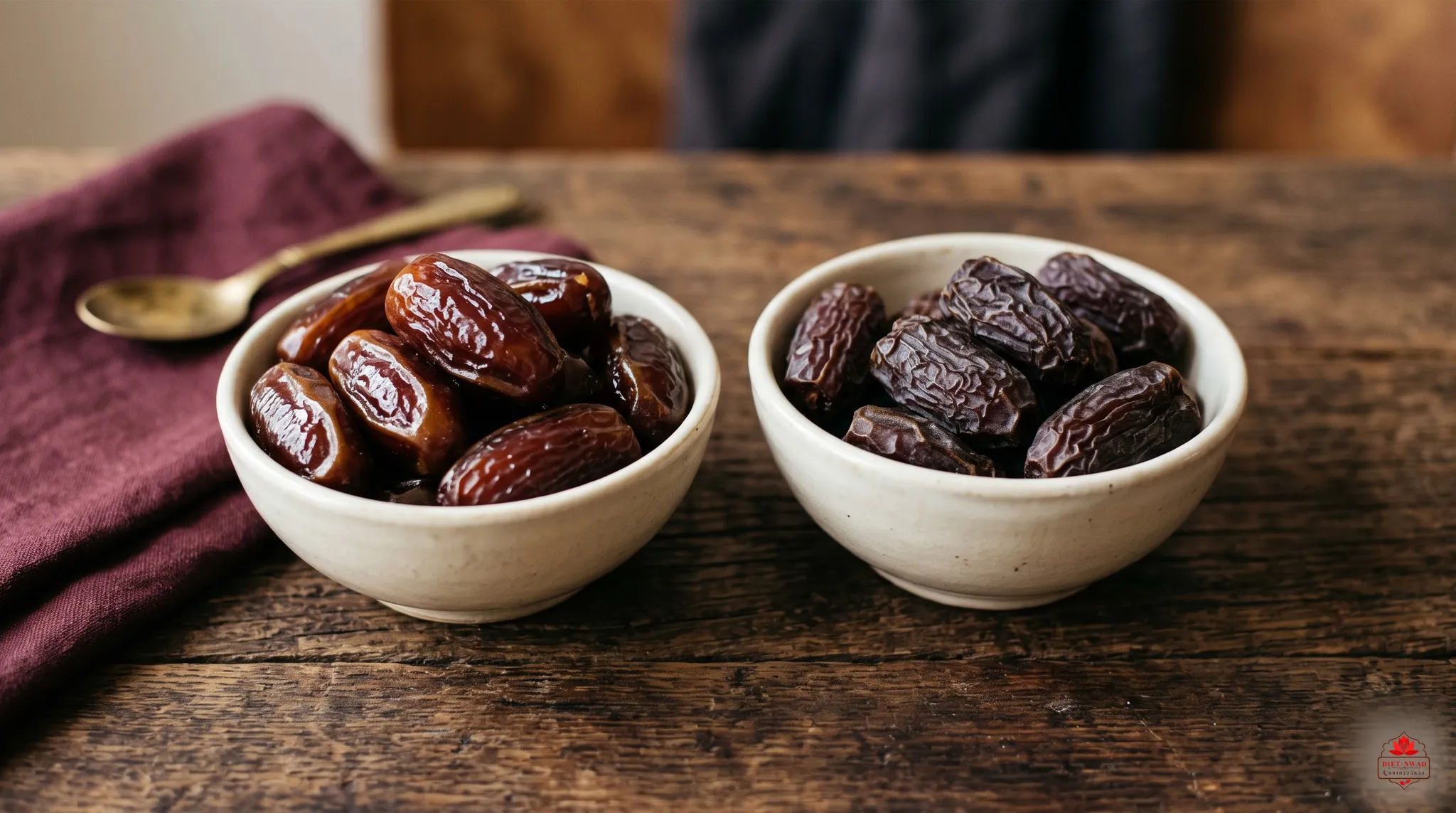
Arabian Dates vs Local Dates
The full side-by-side comparison on look, feel, taste and label, the four buying checks you can run at the shop counter, and a quick FAQ on portions, workouts and using date paste in place of sugar.
Download the guide (PDF)3 pages. Free, no sign-up, opens straight away.
Two very different things, one name
A good Arabian date is plump, glossy and deep brown, with skin still intact. It gives slightly when you press it and springs back. The sweetness tastes deep and caramel-like, and it tastes like it is coming from inside the fruit, because it is.
A cheap coated date is a different object. Dry and wrinkled, or suspiciously shiny and tacky. Hard rather than soft. The sweetness sits flat, on top of the fruit rather than in it, and it leaves your fingers sticky in a way a good date does not.
The label settles it. A good pack of dates has a one-word ingredient list: dates. The moment you read "dates, sugar syrup" or "glucose syrup", you are looking at refined sugar wearing a khajoor costume, and you are paying khajoor prices for it.
Why would anyone coat a date in syrup?
Because it is cheaper than growing a good one. Lower-grade dates are harvested dry, are less sweet, and frankly do not look appetising in a packet. A glucose-syrup bath fixes all three problems at once: shiny, sticky, sweet, and still cheap to sell.
Nobody is doing anything illegal here, as long as the syrup is declared. The trouble is that almost nobody turns the packet over to check, so it is declared to an audience that never reads it.
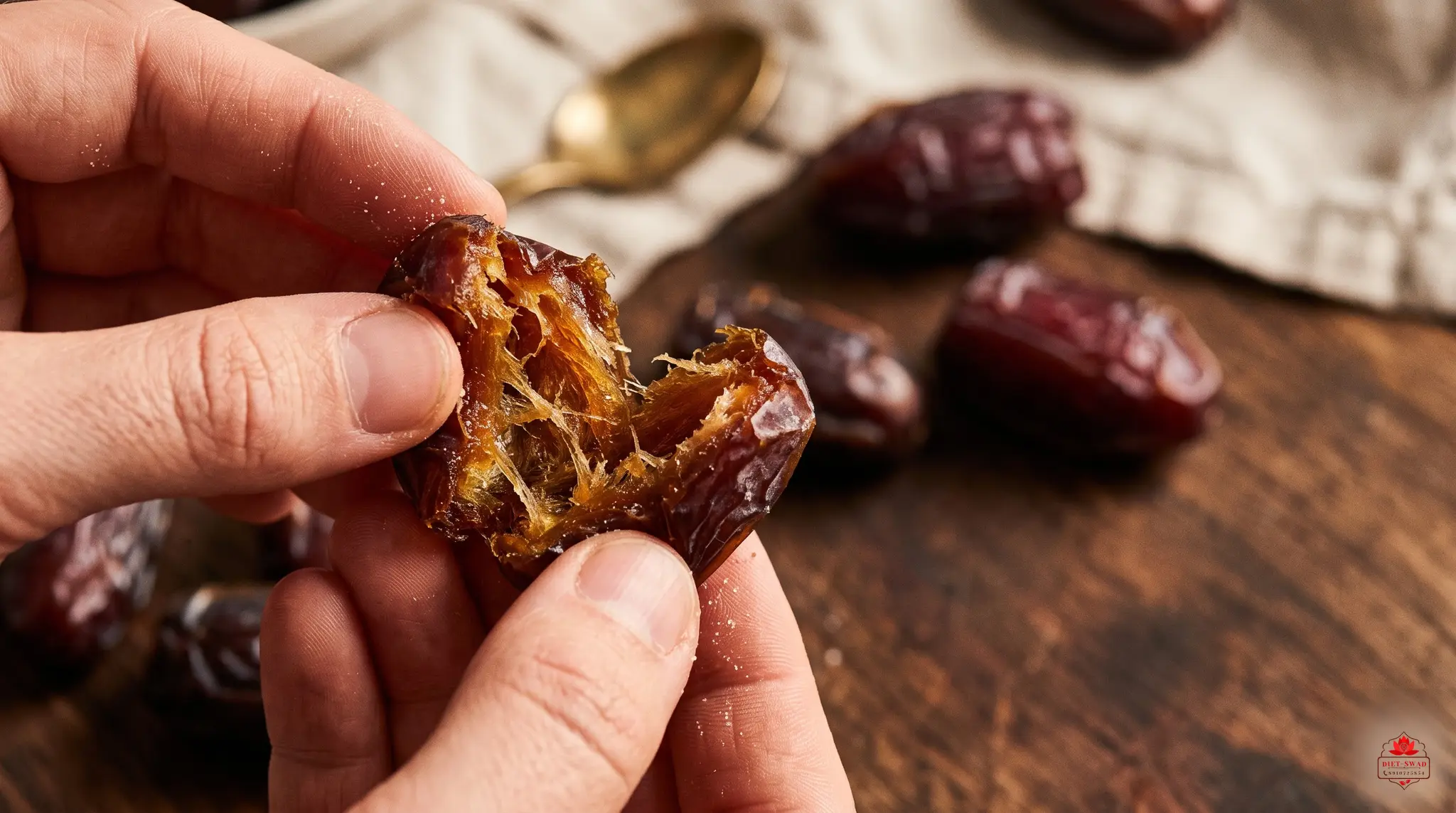
What is actually inside a good date
- Natural sugars, but with fibre. A date is genuinely sweet. The difference is that its fibre slows how fast that sugar is absorbed, so you get a gentler curve than the spike and crash of plain sugar.
- Minerals worth having. Potassium and magnesium, along with some iron and B vitamins.
- It actually fills you up. The chew plus the fibre makes two or three dates satisfying. A spoon of sugar just makes you want another spoon of sugar.
And the honest footnote, because this whole article is useless without it: dates are still an energy-dense sweet food. Do char ek portion hai, poora dabba nahi. If a date-based snack shows a big sugar number on its label, that number is real. It is simply sugar that never left the fruit.
Four checks before you buy
You can do all of these standing at the counter, in less time than it takes to pay.
- Squeeze one. It should give slightly and spring back. Rock-hard or mushy means old or over-processed.
- Check your fingers. Naturally moist is fine. Syrup left behind on your fingers means it was coated.
- Read the ingredient list. One word. Any mention of syrup, sugar or glucose and you have your answer.
- Look at the pack itself. Good importers state the origin and pack airtight. Loose open bins dry the fruit out and invite adulteration.
The downloadable guide lays these out as a proper comparison table you can keep on your phone, which is more use in a shop than a paragraph is.
Why we import Arabian dates
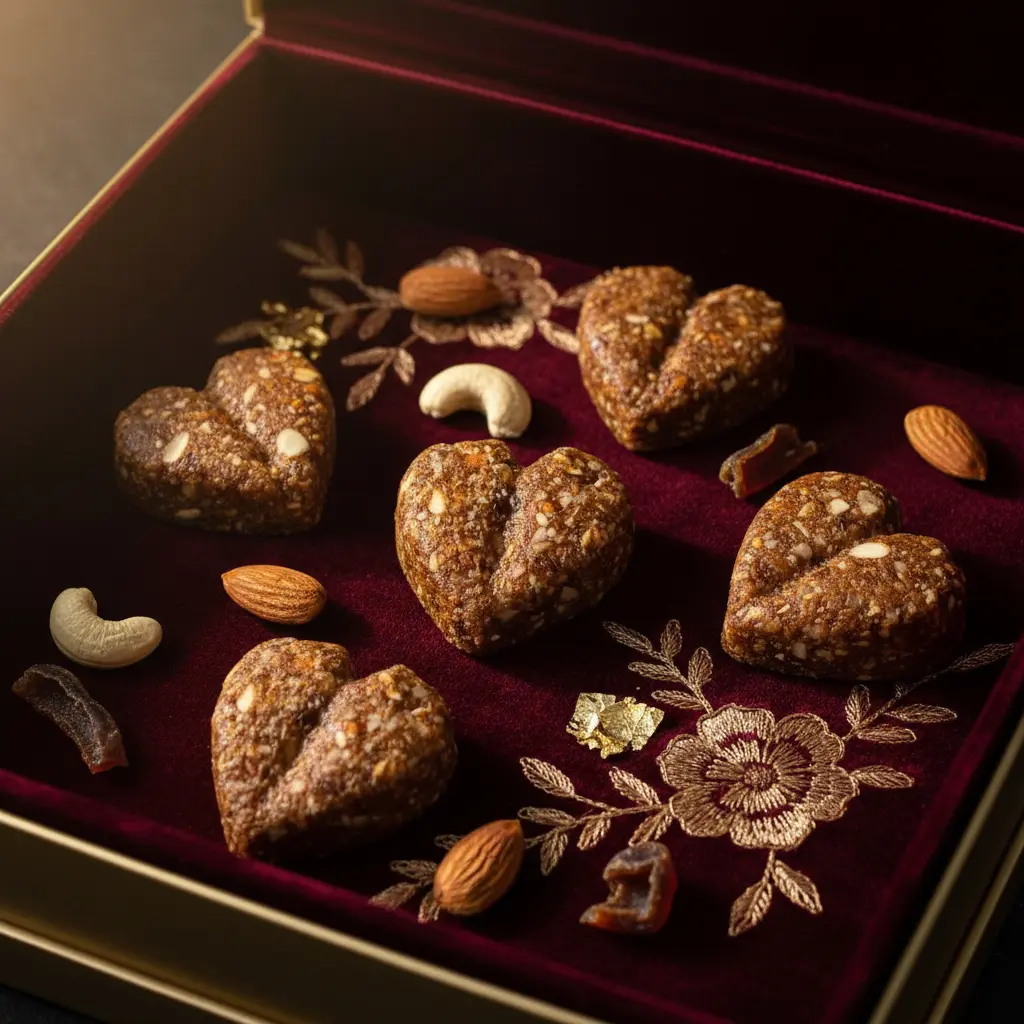
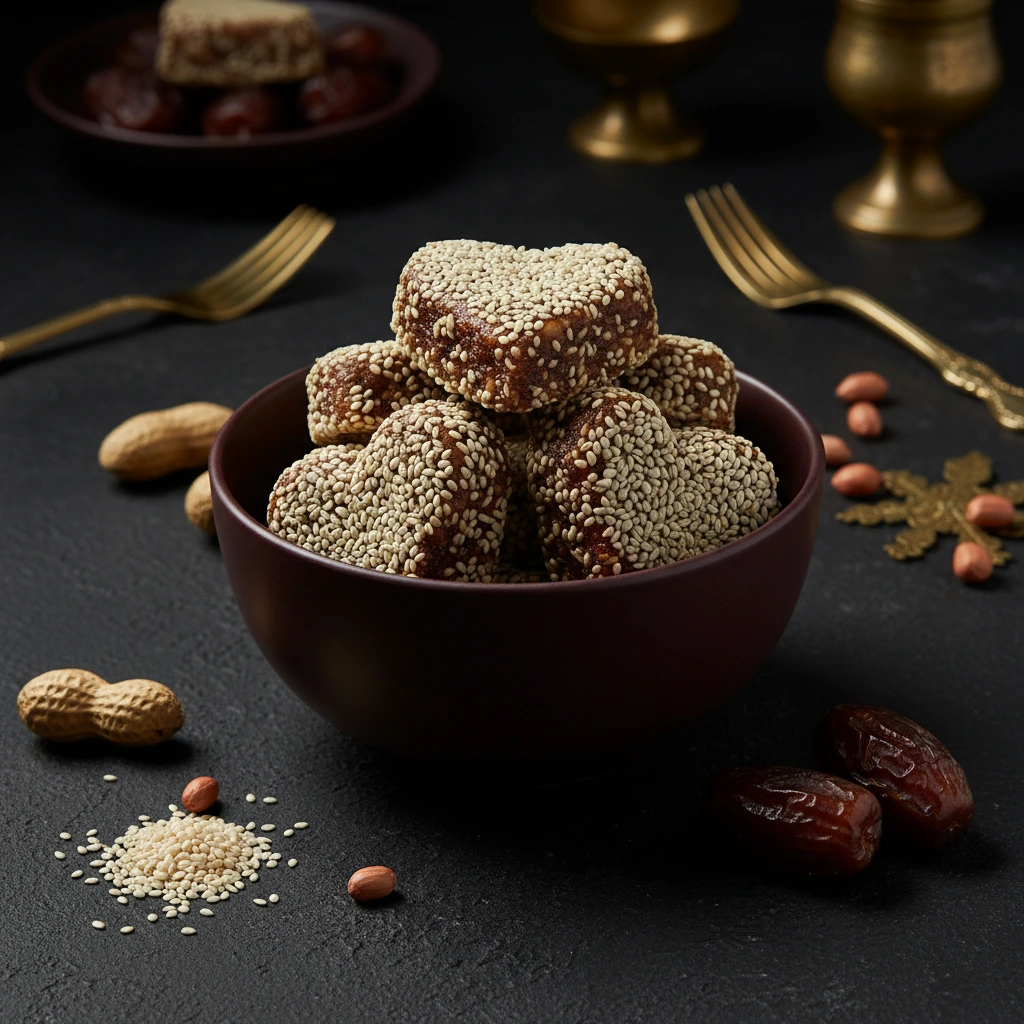
This is not a preference, it is a constraint. In Power Bites, dates are 53.8% of the bite. In Peanut-Sesame Delights, they are 50% of a recipe with only four ingredients in total: dates, roasted peanuts, sesame seeds and ghee.
In both, the dates are the sweetener. There is no refined sugar going in behind them to cover a gap. That only works if the fruit is genuinely sweet on its own, which is exactly why the cheap coated kind is not an option for us. Sugar-coated dates would mean paying for dates and adding refined sugar at the same time, which is the worst of both.
Sweetened by dates alone
Frequently asked questions
What is the difference between Arabian dates and local dates?
Quality Arabian dates are plump, glossy and soft, and their sweetness comes from the fruit itself. Cheaper dates are often dry and are coated in glucose or sugar syrup to make them sweet and shiny. The ingredient list is the giveaway: good dates list only dates.
How can I tell if dates are sugar-coated?
Press one and check your fingers. Naturally moist is normal, but syrup left on your fingers means a coating. Then read the ingredient list. If it mentions sugar, glucose or syrup alongside dates, the sweetness has been added rather than grown.
Are dates good for weight management?
In portions they work well as a replacement for other sweets, because the fibre and the chew make two or three genuinely satisfying. They are energy-dense, so count them as your sweet for the day rather than as unlimited fruit.
How many dates should I eat in a day?
Two to four is a normal portion for most people. Dates are naturally high in sugar, so a portion is a handful and not an open packet. If you are managing diabetes, treat them as sugar and follow your doctor's advice.
Which dates does Diet Swad use?
Arabian dates, and they are the only sweetener in two of our products: Power Bites at 53.8% and Peanut-Sesame Delights at 50%. Because the dates do the sweetening, no refined sugar is added to either.
Read one word on the packet
Most of what separates a good date from an expensive disappointment is settled by a single line on the back. One word means the sweetness grew there. Three words means somebody added it.
Once you have checked that line a couple of times, you will notice how many packets fail it, and how quietly they were relying on you never turning them over.
More on dates: why they measure low on the glycaemic index despite the sugar, and the seed that grew after 2,000 years.
Sources
- USDA FoodData Central. Dates, medjool (FDC 168191): energy, fibre, potassium. fdc.nal.usda.gov
- Alkaabi JM, et al. Glycemic indices of five varieties of dates in healthy and diabetic subjects. Nutrition Journal, 2011;10:59. pmc.ncbi.nlm.nih.gov/articles/PMC3112406
- FSSAI. Advisory on "100%" claims on food labels and advertisements, May 2025. fssai.gov.in
General information about food, not medical or dietary advice.