
A cookie can genuinely be healthy. Most of the ones sold as healthy are not. The word on the front of the pack is marketing, and nobody checks it. The list on the back is regulated by FSSAI, and it cannot lie to you. So the honest answer to "are millet cookies healthy" is: depends entirely on what sits at number one on that list, and you can find out in about thirty seconds.
Healthy Cookie Ka Sach
The full checklist this article is built on: 7 green-flag ingredients, the 5 red flags that expose a fake, the 30-second cookie test you can run in any shop, and one real label printed in full so you can see what good looks like.
Download the guide (PDF)3 pages. Free, no sign-up, opens straight away.
Front of pack is marketing. Back of pack is law.
There is no legal definition of a "healthy" cookie in India. Koi bhi brand can print it. What is legally defined is the ingredient list: under FSSAI rules it must be in descending order by weight, heaviest ingredient first.
That one rule does most of the work for you. Ingredient number one is what you are mostly eating. Everything after the third or fourth name is present in small amounts, whatever the front of the pack chooses to celebrate.
Seedhi baat: a "millet cookie" with maida at number one and millet at number six is a maida cookie in a millet costume. The order is the whole trick, and it is printed right there.
What actually makes a cookie worth eating
Not a long list. A few things, all of which you can spot without knowing any nutrition science.
- A real grain at the top. Jowar, ragi, oats, whole wheat. These carry more fibre than polished maida, so the energy arrives steadily instead of spiking and dropping.
- A fat you recognise. The label should literally say butter or ghee. Not "edible vegetable oil", which is the industry's polite way of writing palm oil.
- Real nuts, not filler. Almond flour and actual nuts bring protein and fat that do something. Ek generic "nut flavour" does not.
- A sweetener with a name. Jaggery, desi khand, dates. All still sugar, but honest sugar you can picture.
- Percentages next to the ingredients. No law forces a brand to print "(30.8%)". A brand that does is volunteering information it could have hidden. That confidence is itself a signal.
And what gives a fake one away
Char cheezein, and any one of them is enough to put the pack back on the shelf.
Maida at number one. The cookie is mostly polished starch. Nothing further down the list rescues that.
Palm oil standing where butter should be. It is the cheapest fat in the business, and it is used because it is cheap, not because it is good.
Sugar wearing costumes. Sugar, liquid glucose and invert syrup all on the same label is one large sugar dose split into three small-looking ones. Har naam alag, kaam ek hi.
A long tail of INS numbers. Emulsifiers, improvers, preservatives. Each one is there to help the cookie survive months in a warehouse. None of them is there for you.
The downloadable guide above turns these into a proper shop-floor checklist, including the buying test and the full green-flag list. This article is the reasoning; that is the thing to keep on your phone.
Our own label, printed in full
It would be a bit rich to write all this and not show you ours. This is the complete ingredient list of our Millet Butter Cookies, exactly as it appears on the pack:
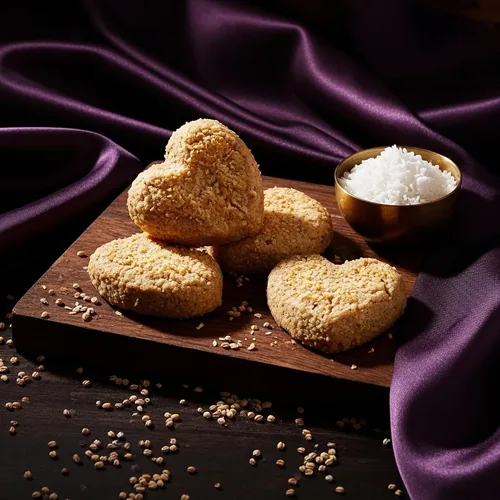
Sorghum Flour (Jowar) 30.8%, Salted Butter 28.8%, Desi Khand 15.4%, Oats Flour 11.5%, Almond Flour 11.5%, Vanilla Extract 1.2%, Baking Powder 0.8%
Seven ingredients. Real names, printed percentages. Number one is a millet, the fat is real butter, and the sweetener is desi khand. No maida, no palm oil, no preservatives, and nothing on that list needs looking up.
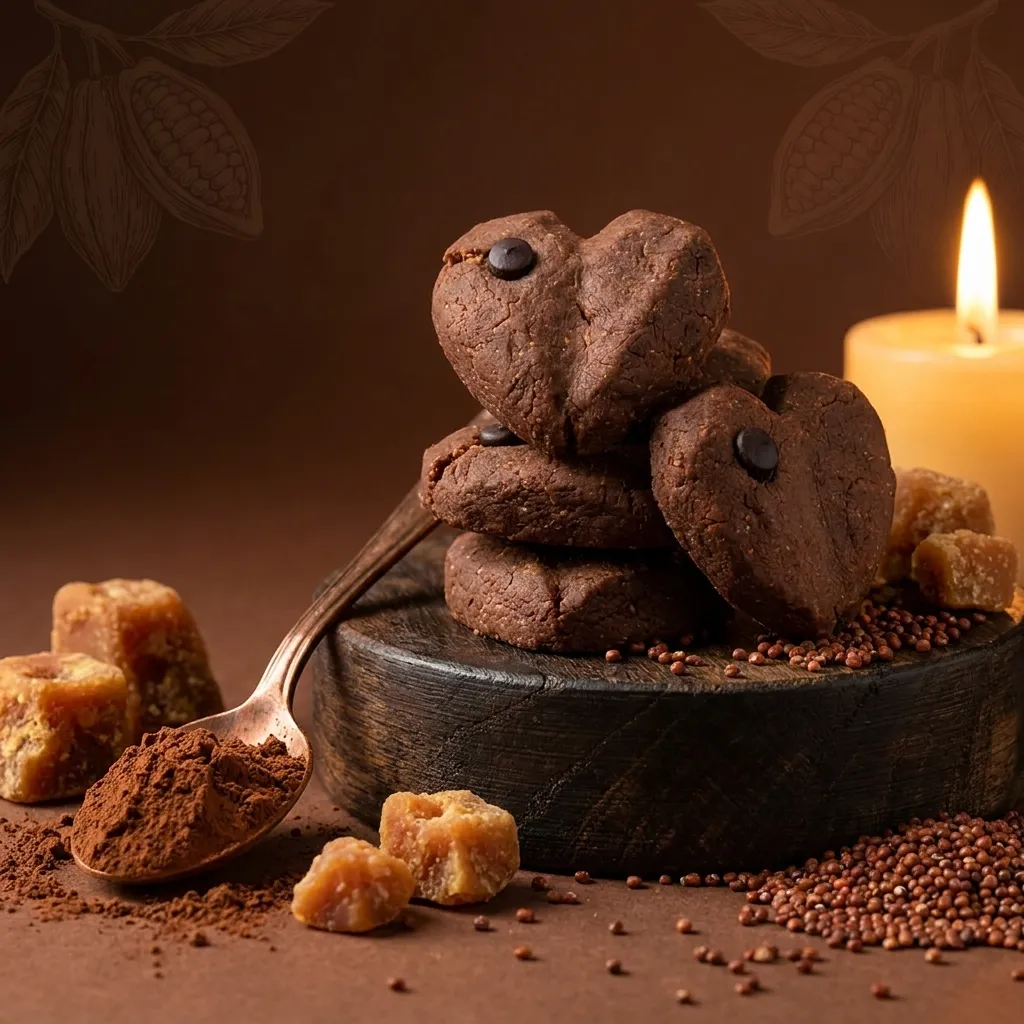
The other two follow the same rules. Millet Coconut Cookies lead with jowar and butter, sweetened with desi khand at 11.1%. Millet Choco Cookies are our dual millet and almond flour recipe, jowar with ragi, sweetened with jaggery at 13.4%, with real dark chocolate chips rather than a flavouring. All three are naturally sweetened, with no artificial sweeteners anywhere in the range.
The cookies in this article

Frequently asked questions
Are millet cookies actually healthy?
A millet cookie is only as good as its ingredient list. If a millet flour is the first ingredient, the fat is butter or ghee rather than palm oil, and the sweetener is named, it is a genuinely better cookie. If maida sits at number one, the word millet on the front changes nothing.
How do I check a cookie in a shop?
Turn the pack over and read four things: the first ingredient, the fat, the sweetener, and how many INS numbers are listed. A whole grain first, butter or ghee as the fat, a named sweetener, and almost no INS numbers is a good cookie. It takes about thirty seconds.
Is maida really that bad?
Maida is refined wheat with the bran and germ removed, so most of the fibre is gone. That is why it digests fast and gives a quicker sugar rise than a whole grain. It is not poison, but when it is the main ingredient of something sold as healthy, the label is doing marketing rather than describing food.
Are Diet Swad cookies gluten-free?
No. Jowar and ragi are naturally gluten-free grains, but our cookies also contain oats flour and are made in a kitchen that handles wheat, so we do not describe them as gluten-free. They are made without maida.
What sweetener is used in Diet Swad cookies?
Desi khand in Millet Butter Cookies (15.4%) and Millet Coconut Cookies (11.1%), and jaggery in Millet Choco Cookies (13.4%). All three are naturally sweetened, and no product in the range contains artificial sweeteners.
Thirty seconds, that is all it takes
You do not need to memorise nutrition tables or trust anybody's front-of-pack promise, ours included. Flip the pack, read the first ingredient, find the fat, find the sweetener, count the INS numbers. That is the whole skill.
Do it once in a shop and you will not be able to stop doing it. Most packs get put back, which is exactly the point.
Related reading: the full label-reading guide, and what "ultra-processed" actually means.
Sources
- ICMR-NIN. Dietary Guidelines for Indians, 2024: Guideline 15, which names biscuits and cookies among foods to restrict. nin.res.in/dietaryguidelines
- Monteiro CA, et al. Ultra-processed foods: what they are and how to identify them. Public Health Nutrition, 2019. pubmed.ncbi.nlm.nih.gov/30744710
- FSSAI. Advisory on "100%" claims on food labels and advertisements, May 2025. fssai.gov.in
General information about food, not medical or dietary advice.