
General information, not medical advice. Iron deficiency is diagnosed with a blood test, and supplements should only be taken on a doctor's advice, because too much iron is harmful. Sources are listed at the end.
Most iron advice in India stops at "eat spinach", which is both incomplete and slightly wrong. The more useful fact is this: how much iron a food contains matters far less than how much of it your body can actually absorb, and absorption is something you can influence at the table.
Two changes do most of the work. Add a source of vitamin C to the meal, and move your chai away from it.
Two kinds of iron
Iron in food comes in two forms, and they behave very differently.
- Heme iron comes from animal foods: meat, poultry, fish, liver. The body absorbs it comparatively easily and few things interfere.
- Non-heme iron comes from plants: dals, seeds, greens, millets, jaggery. It is absorbed far less efficiently, and it has to be chemically converted in the gut before it can be taken up at all.
For a largely vegetarian country this is the whole issue. It is not that Indian food lacks iron. It is that the iron is in the form that needs help getting in. Iron kam nahi hai, absorb kam hota hai.
Where the iron actually is
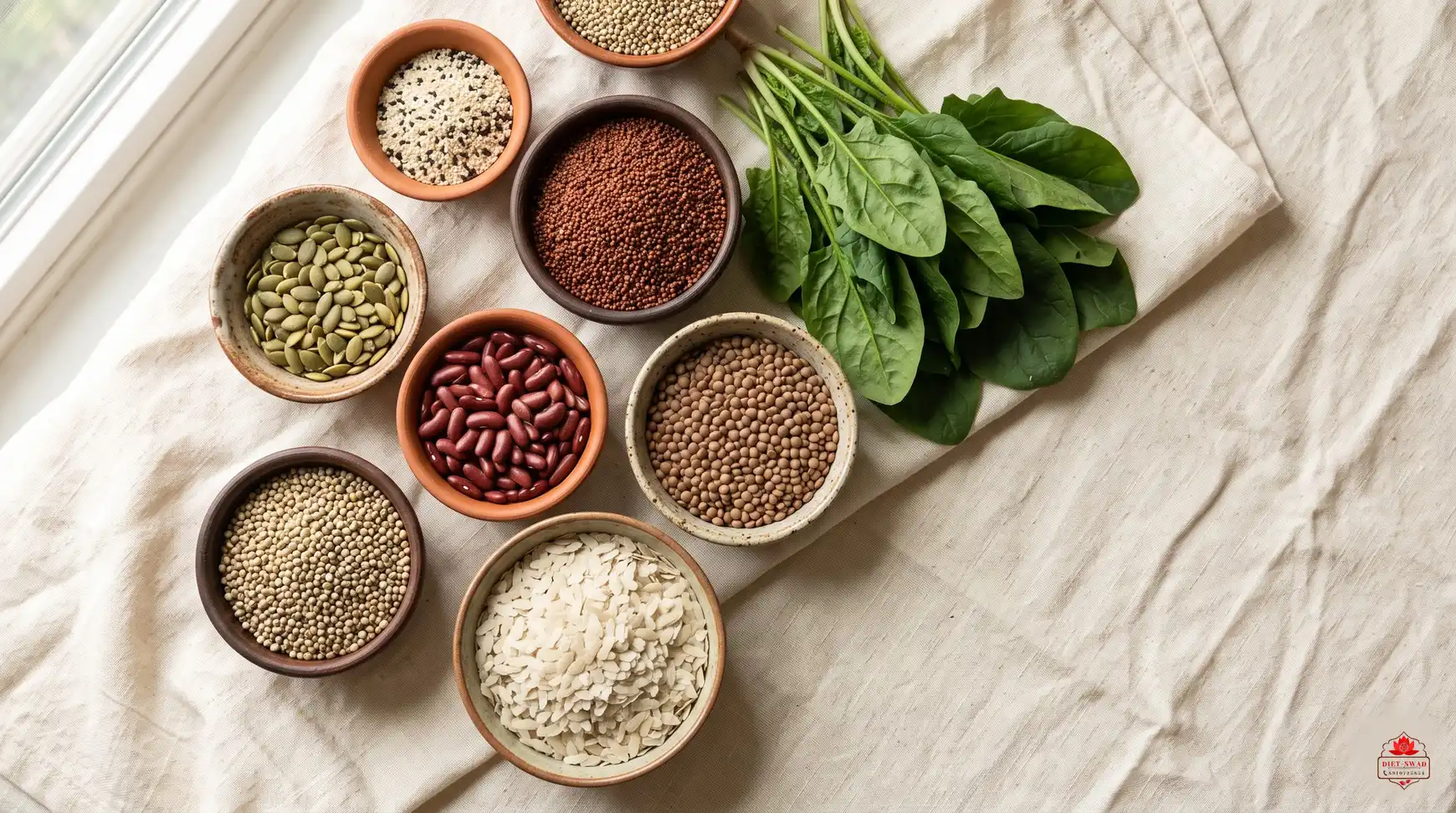
Everyday Indian foods worth knowing about:
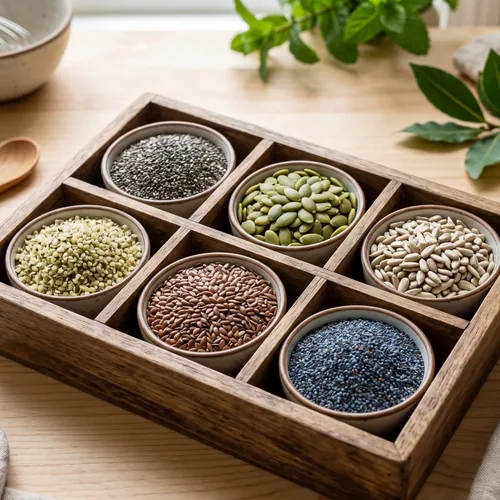
- Garden cress seeds (halim, aliv). Unusually high, at around 100 mg of iron per 100 g of seed, though a portion is a tablespoon rather than a bowl. Traditionally soaked and made into ladoo.
- Sesame seeds (til). Genuinely iron-rich and easy to add to almost anything.
- Pumpkin seeds. Iron plus a useful amount of magnesium.
- Ragi and bajra. The millets are a considerably better source than polished rice or maida.
- Dals and pulses. Rajma, chana, masoor. Ordinary, cheap, and doing real work.
- Poha. Genuinely high in iron, partly from the traditional iron equipment used in processing.
- Dark leafy greens. Palak, methi. Real sources, just not the miracle they are made out to be.
- Jaggery. Carries some iron, which is part of why it is traditionally eaten in winter. It is still sugar, so this is a bonus rather than a strategy.
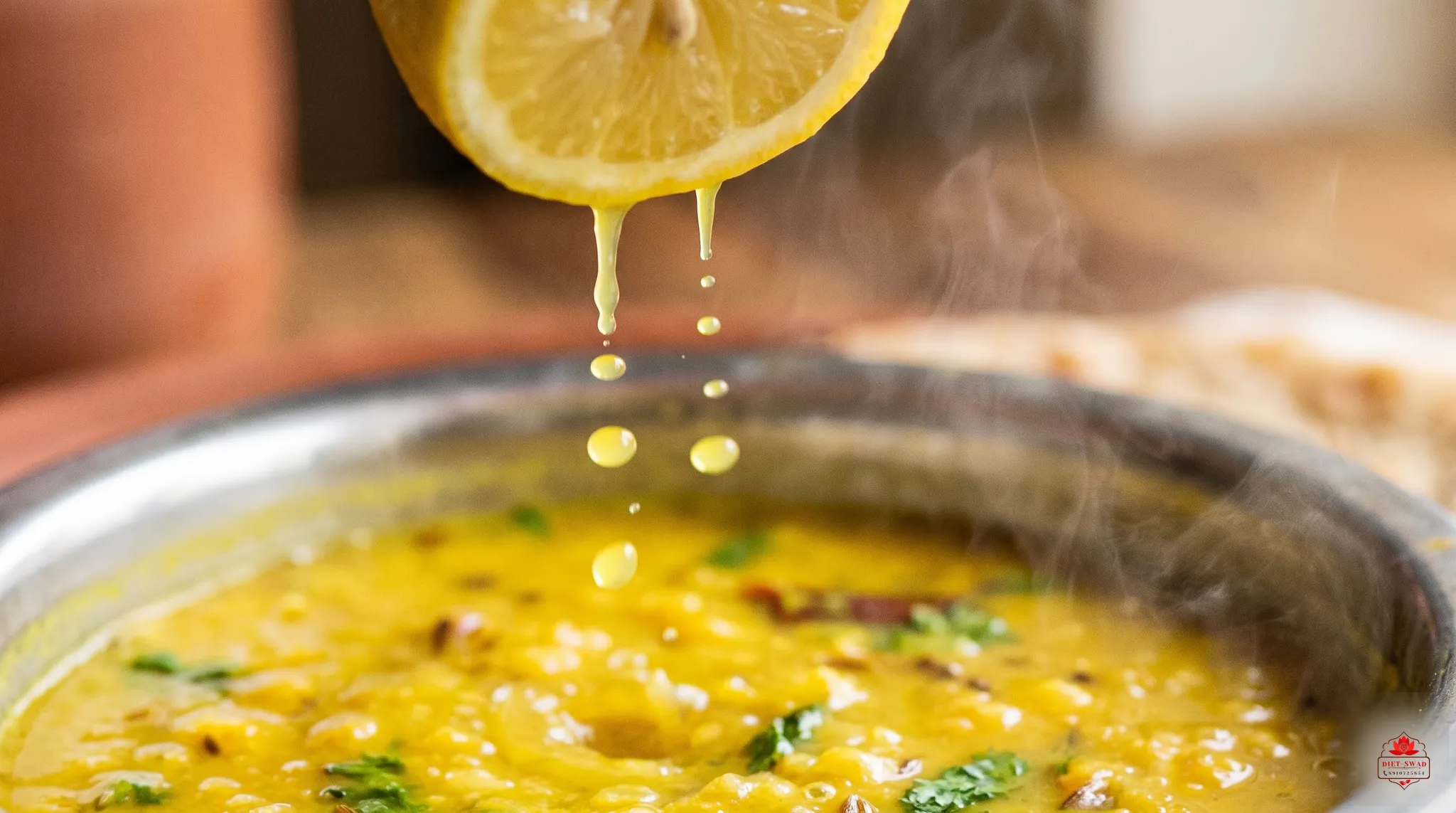
The one habit worth building. Squeeze lemon over your dal. Vitamin C converts plant iron into the form your gut absorbs more readily, and it works within the same meal. Nimbu nichod do, that is the entire intervention.
What helps, and what quietly blocks
Helpers, eaten in the same meal:
- Lemon or lime juice
- Amla, in any form
- Guava, orange, sweet lime
- Tomato and capsicum
- A little meat or fish alongside plant foods, which improves absorption of the plant iron too
Blockers, mostly a matter of timing:
- Tea and coffee. Polyphenols bind iron in the gut. Chai immediately after a meal is working directly against the meal. An hour's gap solves it.
- Calcium in large amounts. A big glass of milk with an iron-rich meal competes for absorption. Separate them where convenient.
- Phytates in whole grains and legumes. Soaking, sprouting and fermenting reduce these, which is quietly why idli, dosa and soaked dals are traditional practice rather than fussiness.
Why this comes up around periods
Menstrual bleeding is a recurring loss of iron. For people with heavy periods that loss can accumulate faster than diet replaces it, and low iron reduces how much oxygen the blood carries, which shows up as fatigue, breathlessness and trouble concentrating.
Iron deficiency is common among menstruating women in India. But "common" is not a diagnosis, and this is exactly the point where an article should stop and a blood test should start. Please do not start iron tablets because a website suggested it. Get tested, and let a doctor decide.
What a day could look like
Nothing exotic, just the pairings applied.
- Breakfast. Poha with peanuts and a squeeze of lemon. Iron and vitamin C in one plate.
- Mid-morning. Guava, or a handful of seeds.
- Lunch. Dal with lemon, a millet roti, a green vegetable, salad with tomato.
- Chai. An hour after lunch, not with it. This is the change most people find hardest and it costs nothing.
- Dinner. Rajma or chana, with a tomato-based gravy.
Seeds and nuts we use, as a composition note
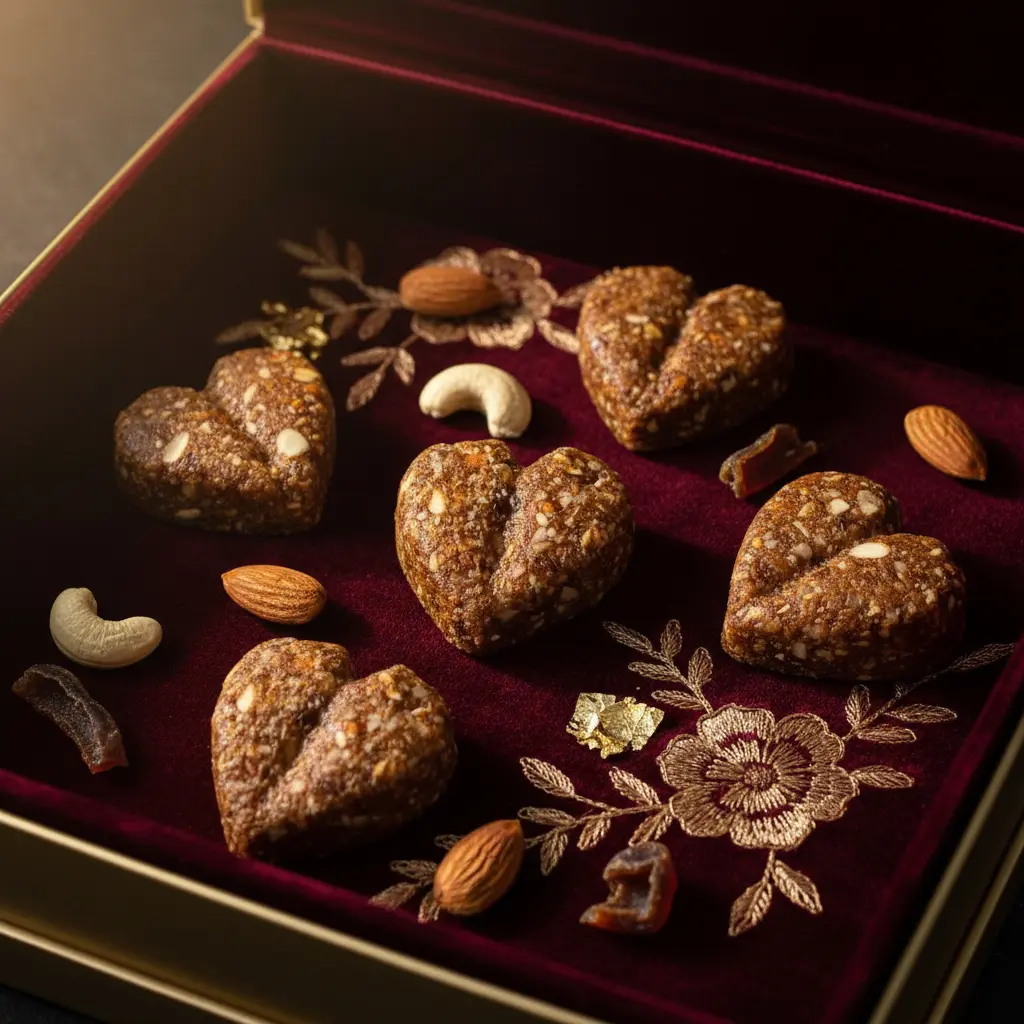
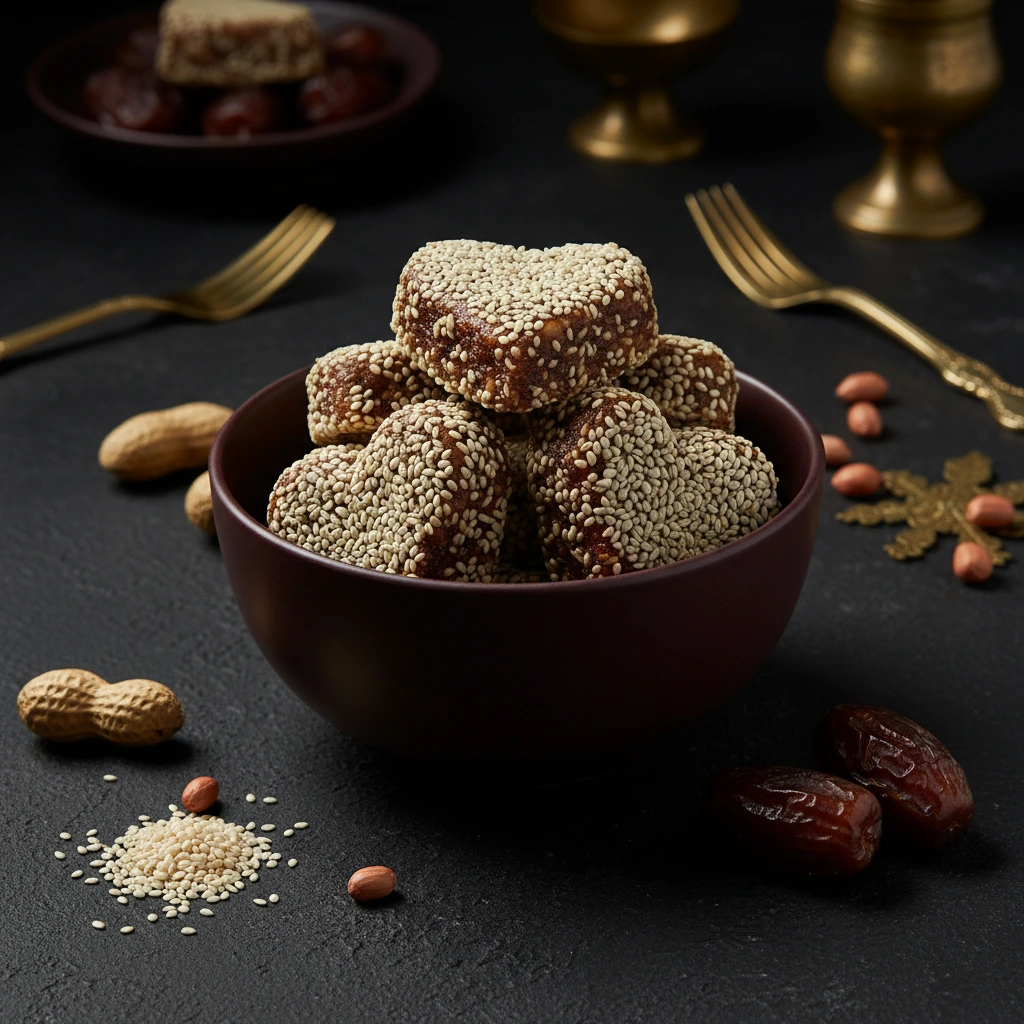
Listed as a note on what is in them, not as a solution to anything. These are snacks, not an iron strategy and not a treatment for deficiency.
Frequently asked questions
Which Indian foods are highest in iron?
Good plant sources common in Indian kitchens include garden cress seeds, also called halim or aliv, which are exceptionally high in iron, along with sesame seeds, pumpkin seeds, ragi, bajra, rajma, chana, masoor dal, poha, jaggery and dark leafy greens. Among non-vegetarian foods, liver, red meat, chicken and fish supply iron in a form the body absorbs more readily.
Why is iron from vegetarian food harder to absorb?
Plant foods contain non-heme iron, which the body absorbs far less efficiently than the heme iron found in meat, poultry and fish. Non-heme iron also has to be converted into a more absorbable form in the gut before it can be taken up, and several common dietary compounds interfere with that process.
Does vitamin C help iron absorption?
Yes, substantially. Vitamin C converts iron into the form the gut absorbs more readily, so eating a vitamin C source in the same meal as a plant iron source meaningfully increases how much iron you take up. Lemon squeezed over dal, amla, guava, orange, tomato or capsicum alongside an iron-rich meal all work.
Does tea reduce iron absorption?
Tea and coffee both contain compounds called polyphenols that bind iron in the gut and reduce how much is absorbed, and this effect is strongest when they are drunk with a meal. Leaving roughly an hour between an iron-rich meal and your chai is a simple way to avoid working against yourself.
Should I take an iron supplement?
That is a decision for a doctor, based on a blood test, not something to start on your own. Iron deficiency needs to be confirmed, not assumed, and too much iron is harmful. If you have persistent fatigue, heavy periods or suspect anaemia, ask for a test instead of self-prescribing.
Small changes, same food
What is genuinely encouraging here is that none of this requires eating differently. It requires eating the same things in slightly different combinations, and moving one cup of tea by an hour.
And if you are tired all the time, get the blood test. That is the part no meal plan replaces.
Related reading: why period cramps happen covers where the fatigue fits in, and magnesium and where to find it covers the other mineral that comes up constantly.
Sources
- Garden cress seeds: a review on nutritional composition, therapeutic potential, and industrial utilization. pmc.ncbi.nlm.nih.gov/articles/PMC11167195
- Nutraceutical Profiling, Bioactive Composition, and Biological Applications of Lepidium sativum L. Oxidative Medicine and Cellular Longevity. pubmed.ncbi.nlm.nih.gov/35096265
- Minerals and the Menstrual Cycle: Impacts on Ovulation and Endometrial Health. pmc.ncbi.nlm.nih.gov/articles/PMC11013220
- Pumpkin Seeds as a Natural Remedy for Anemia: Nutritional Insights and Therapeutic Potential. pmc.ncbi.nlm.nih.gov/articles/PMC12173052
- ICMR-NIN. Dietary Guidelines for Indians, 2024. nin.res.in/dietaryguidelines
Diet Swad makes no claim that any product treats or prevents iron deficiency or anaemia.