
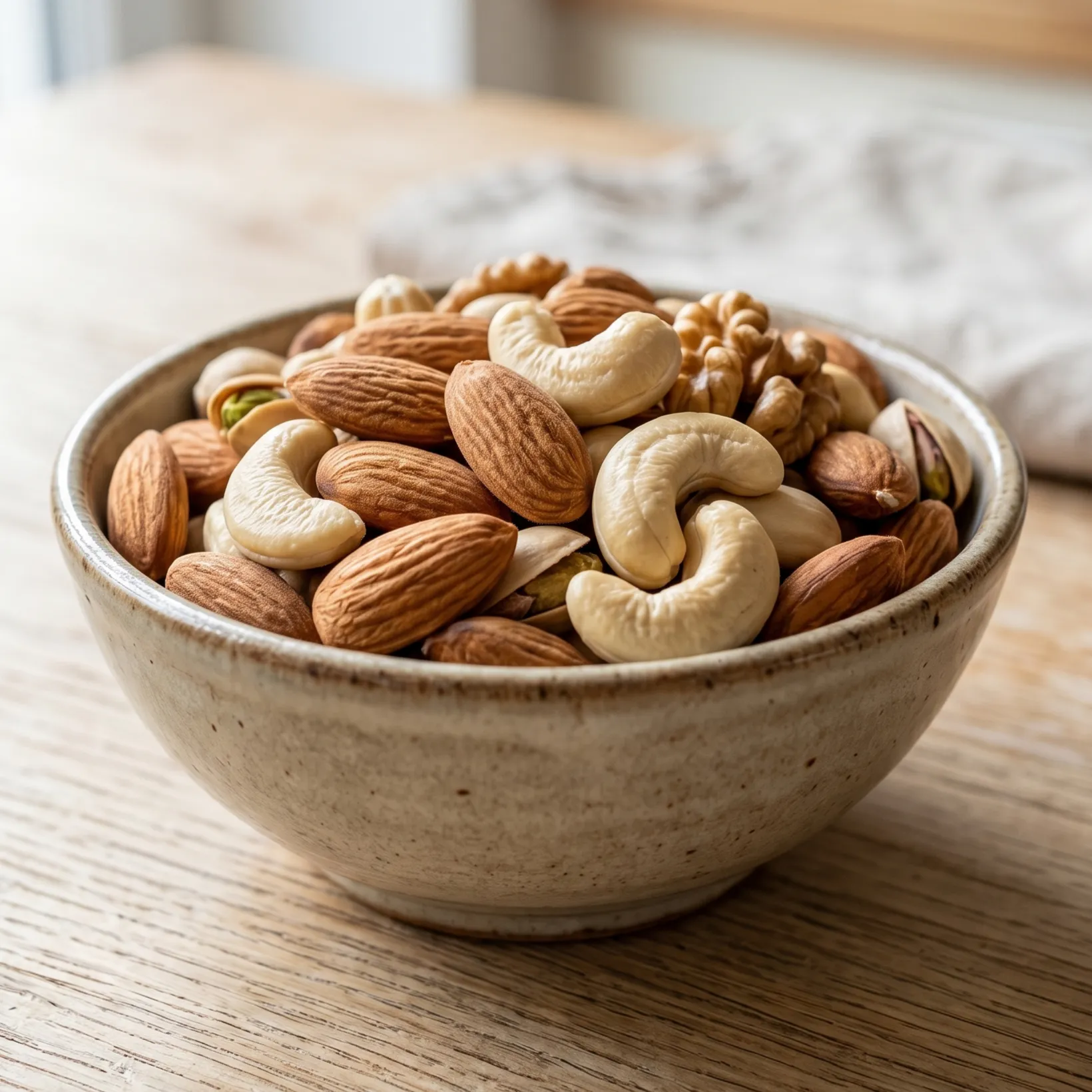
Most snacking advice tries to reduce how much you snack. That is the wrong lever, and it is why it fails by Thursday.
Hunger between meals is normal. What causes trouble is not the hunger, it is that the moment arrives with no plan attached, and at that point you eat whatever is nearest. So give the predictable moments a default in advance, and the improvising mostly stops on its own.
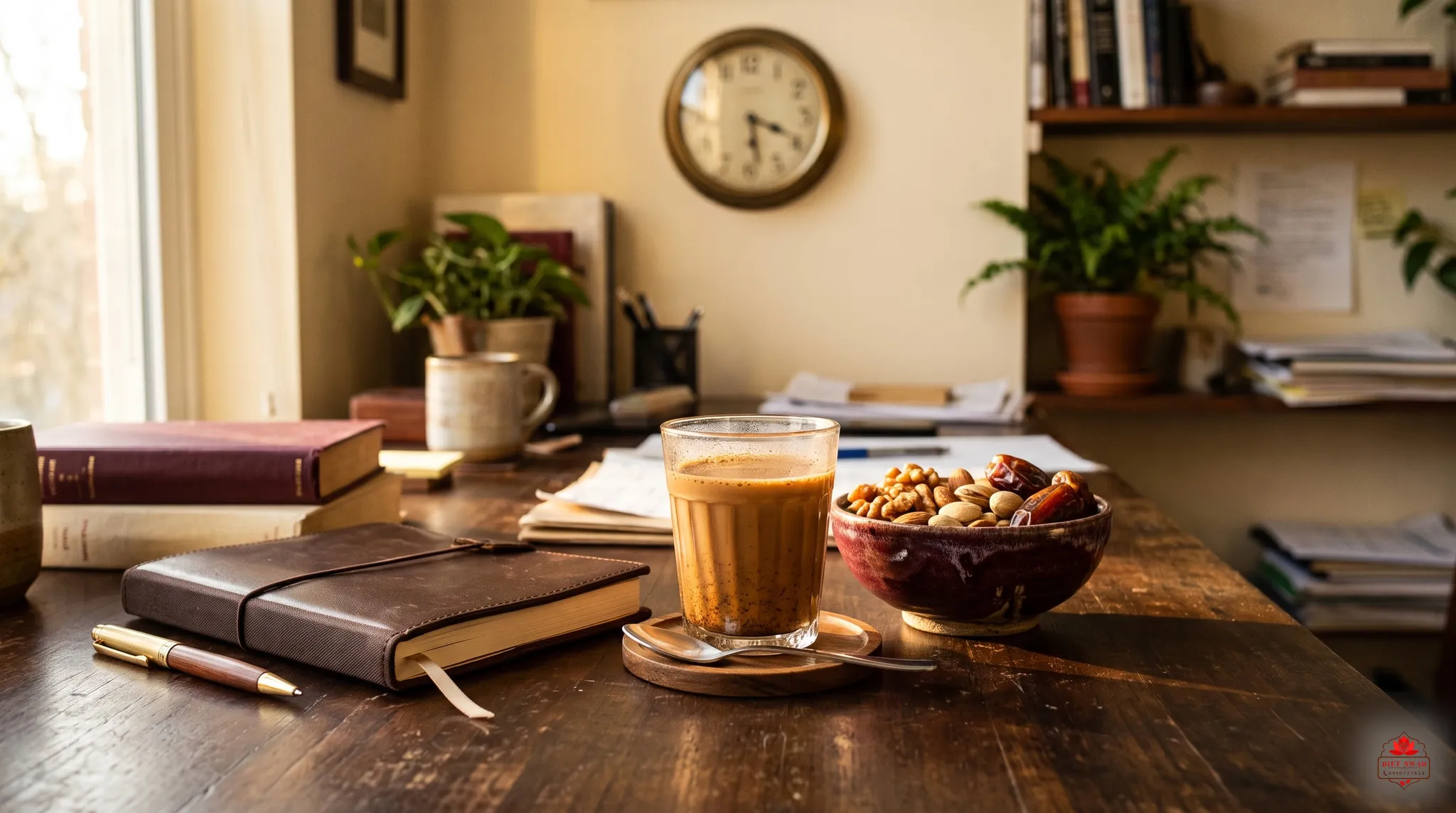
The Diet Swad Snacking Plan
The full seven-day version, every snack window filled in for each day of the week, a product-by-product table of what suits which slot, portion sizes, and how to adjust the whole thing on workout days.
Download the guide (PDF)Free, no sign-up, opens straight away.
The three windows when hunger actually turns up
For most people on an ordinary Indian routine, real hunger arrives at three fairly reliable points.
- Mid-morning, around 11 am. Breakfast was several hours ago and lunch is not close.
- The 4 to 6 pm slump. The big one. This is chai time and it is also when energy genuinely dips.
- After dinner. Often not hunger at all, but a habit attached to sitting down.
Plan those three and you have covered nearly all of it. Everything else is usually thirst, boredom or a meeting that ran long.
What suits each window
Different moments want different things, and matching them is most of the skill.
Mid-morning wants something with staying power, because lunch is still hours away. Fruit with a few nuts, a dahi bowl with seeds, or something date-based works. You want protein or fat in there somewhere, otherwise you are hungry again in forty minutes.
The 4 to 6 pm slump is the one to take seriously, because it is when the day's decisions are worst. Chai with something that is not a maida biscuit. If the craving is specifically for chocolate, meet it with something cocoa-rich rather than pretending it will go away, because it will not.
After dinner, ask first whether you are actually hungry. If you are, keep it small and simple: a couple of dates, warm milk, one cookie. If you are not, the honest answer is that you want the ritual rather than the food, and a cup of something warm usually settles it.
Around a workout, move the denser snack to sit before or after training rather than in the middle of the afternoon. Something date-based works well beforehand, because it is quick energy that arrives with fibre attached. Afterwards, lean towards protein.
Portion anchors, not calorie counting
You do not need to weigh anything. You need a picture in your head for each format, so that "a snack" means a fixed thing, not however much is in the packet.
- Bites and dense sweets: one or two pieces. They are dense precisely because they are made of real dates, nuts and seeds, and that density is the point, not a flaw.
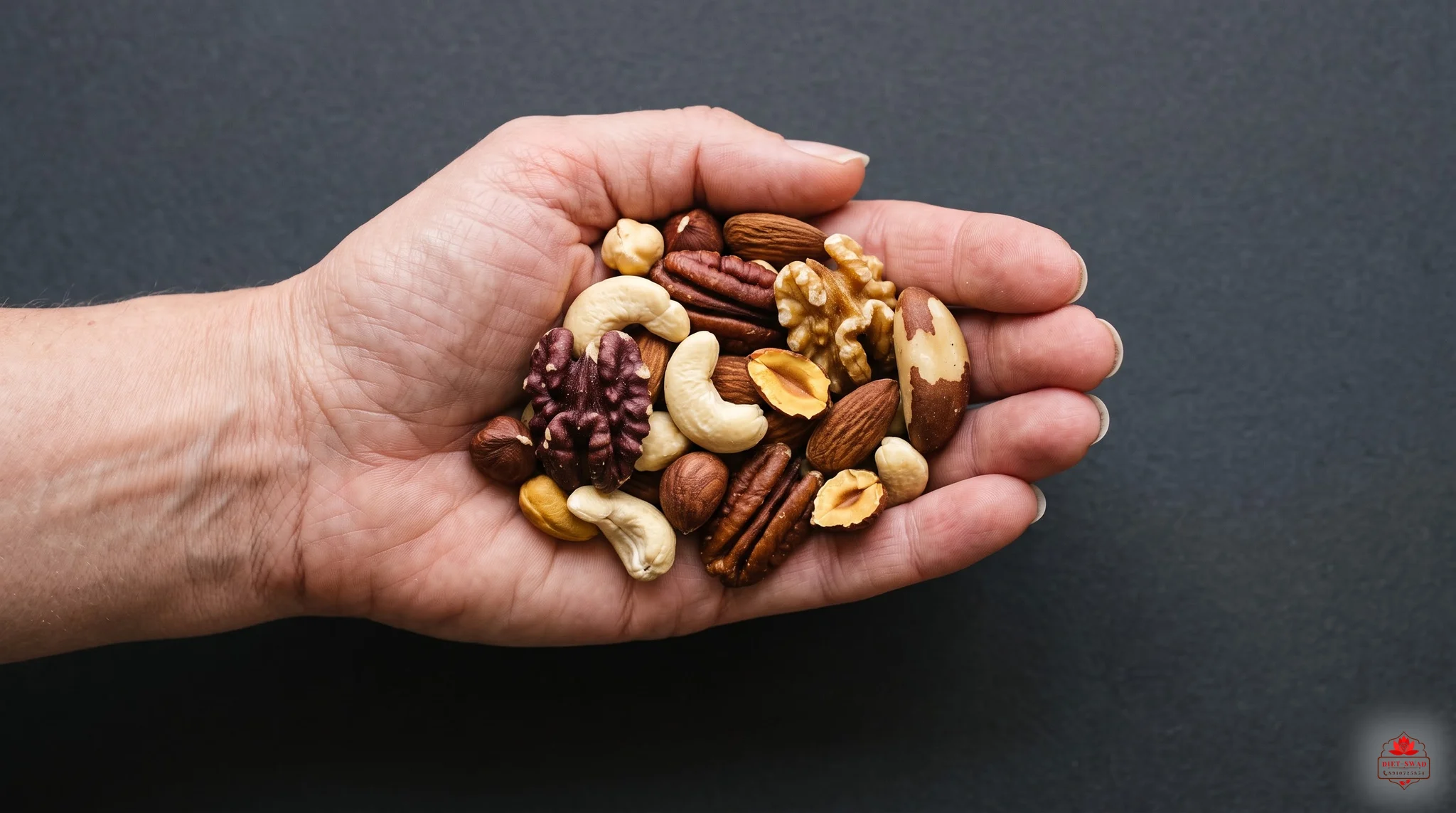
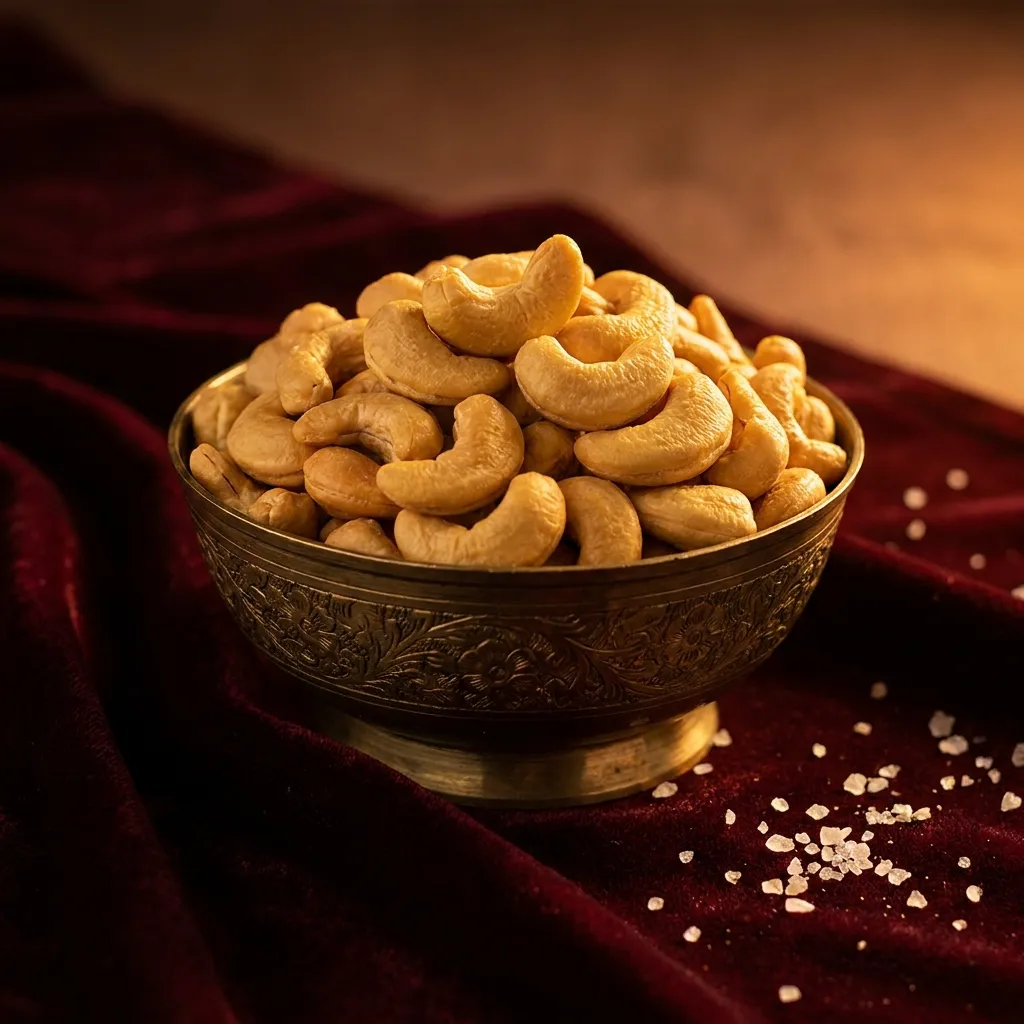
- Nuts: one cupped palm, roughly 25 to 30 g. The palm travels with you, which is why it beats a number.
- Cookies: two with chai.
- Fruit: one whole fruit, and no anxiety required.
If weight is your goal, the simplest version that works: keep two of the three windows light, fruit, dahi, roasted chana, and give one window the thing you look forward to. You stay satisfied, you stop negotiating with yourself, and the total lands roughly where it needs to without a single number being counted.
Reading your own signals
- Hungry again within the hour? The snack was too small, or too refined. Add protein or fat next time, nuts, or something with more substance to it.
- Not hungry at a window? Then skip it. The schedule exists to serve you, and eating on a timetable you are not hungry for is just a different way of not listening.
- Constantly hungry at one particular window? Look at the meal before it. A light breakfast reliably produces a difficult 11 am.
What suits which window

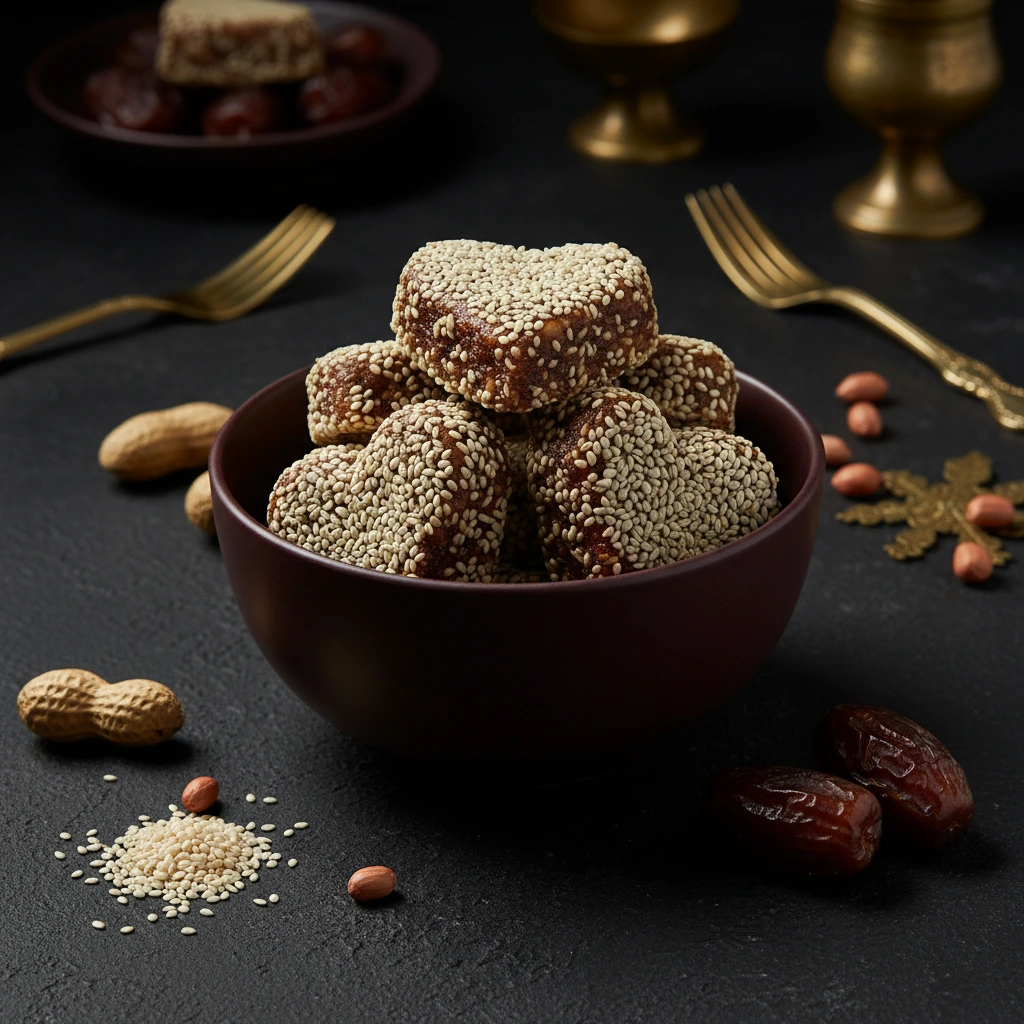

Honest note on those: everything above is dense, real food, and dense food is easy to eat too much of precisely because it tastes good. Dates and jaggery are still sugars in your body, they arrive with fibre and minerals, which genuinely changes how they behave, but they count as sweet food and the portions above assume that.
Making it survive a real week
- Stock all three locations. Office, home, bag. A plan that only works at home fails on the days you are not there, which are the days it mattered.
- Attach snacks to rituals you already have. Chai already happens. Hook the change to it instead of building a new habit from scratch.
- Review after a week. Keep the slots you genuinely enjoyed, change the rest. A plan you like is the only kind that reaches month two.
For a day-by-day version, the 7-day swap challenge runs one change at a time. If the 4 pm slump is your main problem, the piece on late-night cravings covers the evening end of the same question.
Frequently asked questions
When do most people actually get hungry between meals?
Three windows cover most of it on a typical Indian routine: mid-morning around 11 am, the 4 to 6 pm slump, and after dinner. Planning a default for those three tends to remove most unplanned eating, because the difficult moments are the ones that arrive without a decision already made.
How much is one portion of a date-based bite or nuts?
Use format anchors, not numbers. One or two pieces is a portion of a dense date-and-nut bite, because these are concentrated foods. For nuts, one cupped palm is roughly 25 to 30 g. For cookies, two alongside chai. These are guides for an average adult and should be adjusted for your own activity level.
Do I need to count calories to snack sensibly?
Generally not. Keeping two of the three snack windows light with fruit, dahi or roasted chana, and giving one window the snack you genuinely enjoy, tends to land in a reasonable place on its own while remaining something you can sustain. If you have a specific medical or weight-management goal, a dietitian can set targets properly.
What should I eat before and after a workout?
Before training, something that provides quick energy with fibre attached, such as dates or a date-based bite, tends to suit. Afterwards, lean towards protein. The practical point is to move your denser snack of the day next to the workout instead of leaving it in the middle of the afternoon, so the energy is used when you need it.
Why am I hungry again an hour after snacking?
Usually the snack was either too small or too refined. Something made largely of refined flour and sugar digests quickly and leaves little behind, so hunger returns fast. Adding protein or fat, such as nuts or a snack with more substance, generally extends how long it holds you. Persistent hunger despite eating well is worth raising with a doctor.
Structure beats willpower
The point of a schedule is not discipline. It is that a decision made on a calm Sunday is a much better decision than the one made at 4:47 pm on a Wednesday with a meeting overrunning.
Teen windows, teen defaults. That is genuinely the whole plan.
Sources
- ICMR-NIN. Dietary Guidelines for Indians, 2024. nin.res.in/dietaryguidelines
- Hall KD, et al. Ultra-Processed Diets Cause Excess Calorie Intake and Weight Gain: An Inpatient Randomized Controlled Trial of Ad Libitum Food Intake. Cell Metabolism, 2019. pubmed.ncbi.nlm.nih.gov/31105044
- World Health Organization. Healthy diet fact sheet: free sugars below 10% of total energy intake, and under 5% for additional benefit. who.int
- Monteiro CA, et al. Ultra-processed foods: what they are and how to identify them. Public Health Nutrition, 2019: the cosmetic-additive marker test. pubmed.ncbi.nlm.nih.gov/30744710
General nutrition information, not medical or dietary advice. Portion guidance is for an average adult. If you are managing diabetes, a weight-related condition, pregnancy or any other specific need, please follow your doctor's or dietitian's guidance instead.