
General information, not medical advice. These trials used measured, standardised doses under supervision, which is not the same as adding more spice to your food, and none of this is a reason to replace medication. Every study is linked at the end.
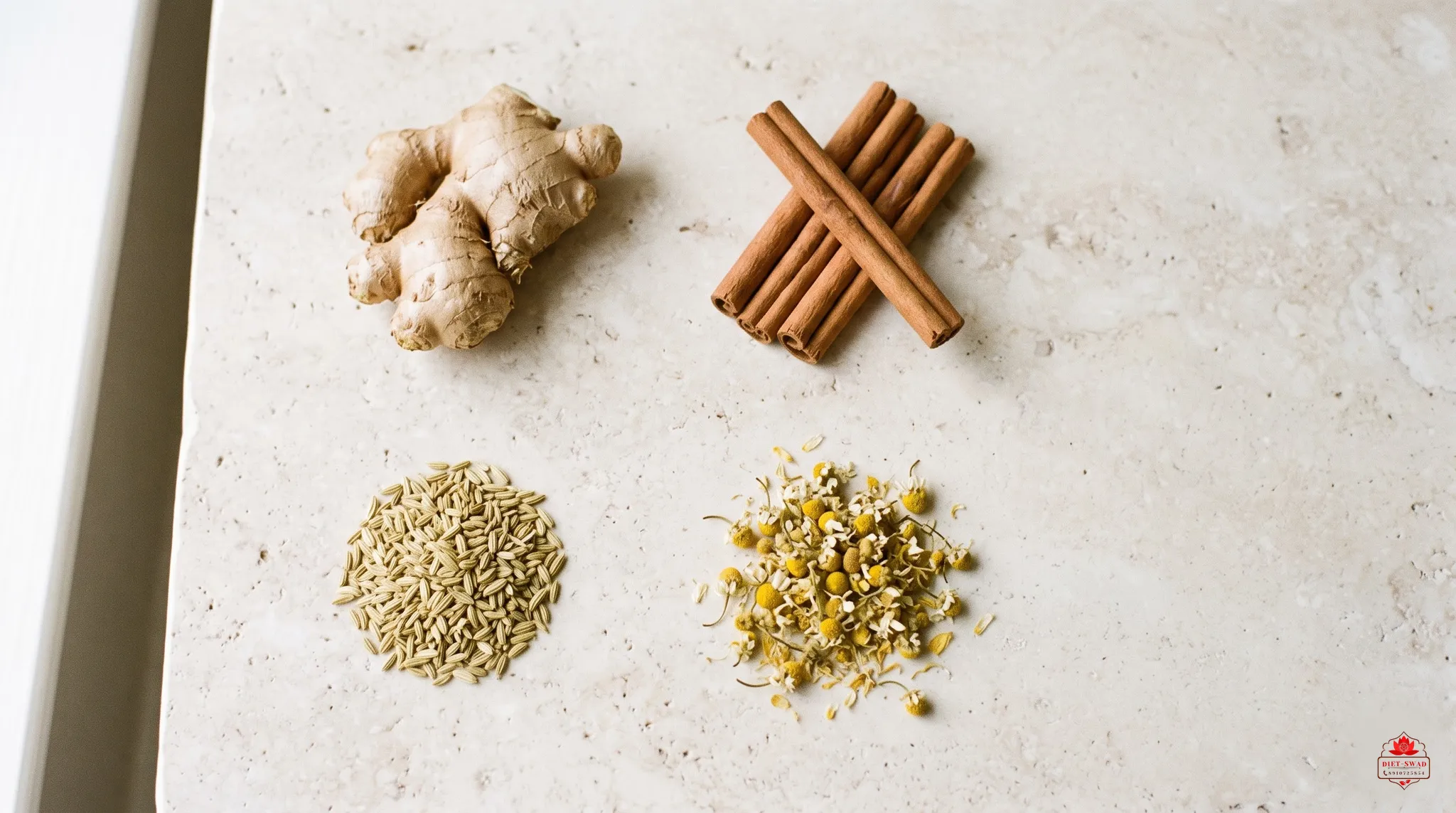
Four kitchen spices have been through actual randomised controlled trials for menstrual pain: ginger, cinnamon, fennel and chamomile. The results are more interesting than most people expect, and weaker than most wellness articles imply.
We are going to give you both halves, because a summary that only carries the encouraging half is not much use to anyone. Poori baat, aadhi nahi.
First, why a spice could plausibly do anything
Period cramps are driven largely by prostaglandins, the local chemical messengers that make the uterus contract, as we explain in why period cramps happen. Anti-inflammatory painkillers work by blocking the enzymes that produce them.
Several plant compounds act on that same enzyme pathway, at least in laboratory work. So the reasoning behind the trials is not folklore, it is a specific and testable mechanism. Whether it produces a meaningful effect in a real person is exactly what the trials set out to measure.
Ginger, the most studied
Ginger has the largest body of evidence here, and it is reasonably consistent.
Meta-analyses pooling randomised controlled trials have reported that ginger reduced menstrual pain compared with placebo. In one exploratory meta-analysis the improvement on a 10 cm pain scale was around 1.55 cm in ginger's favour. Comparative trials against mefenamic acid, a commonly prescribed anti-inflammatory, found no statistically significant difference in pain reduction between the two.
Doses across these reviews ran from roughly 750 mg to 2000 mg of standardised ginger powder daily, taken during the first three to four days of menstruation.
The caveat, which matters: the reviewers themselves flag high statistical heterogeneity between trials, meaning the studies disagreed with each other considerably. That is a signal to treat the pooled result as encouraging rather than settled. It also means the exact preparation and dose probably matter more than the word "ginger" does.
Cinnamon, and the bleeding finding
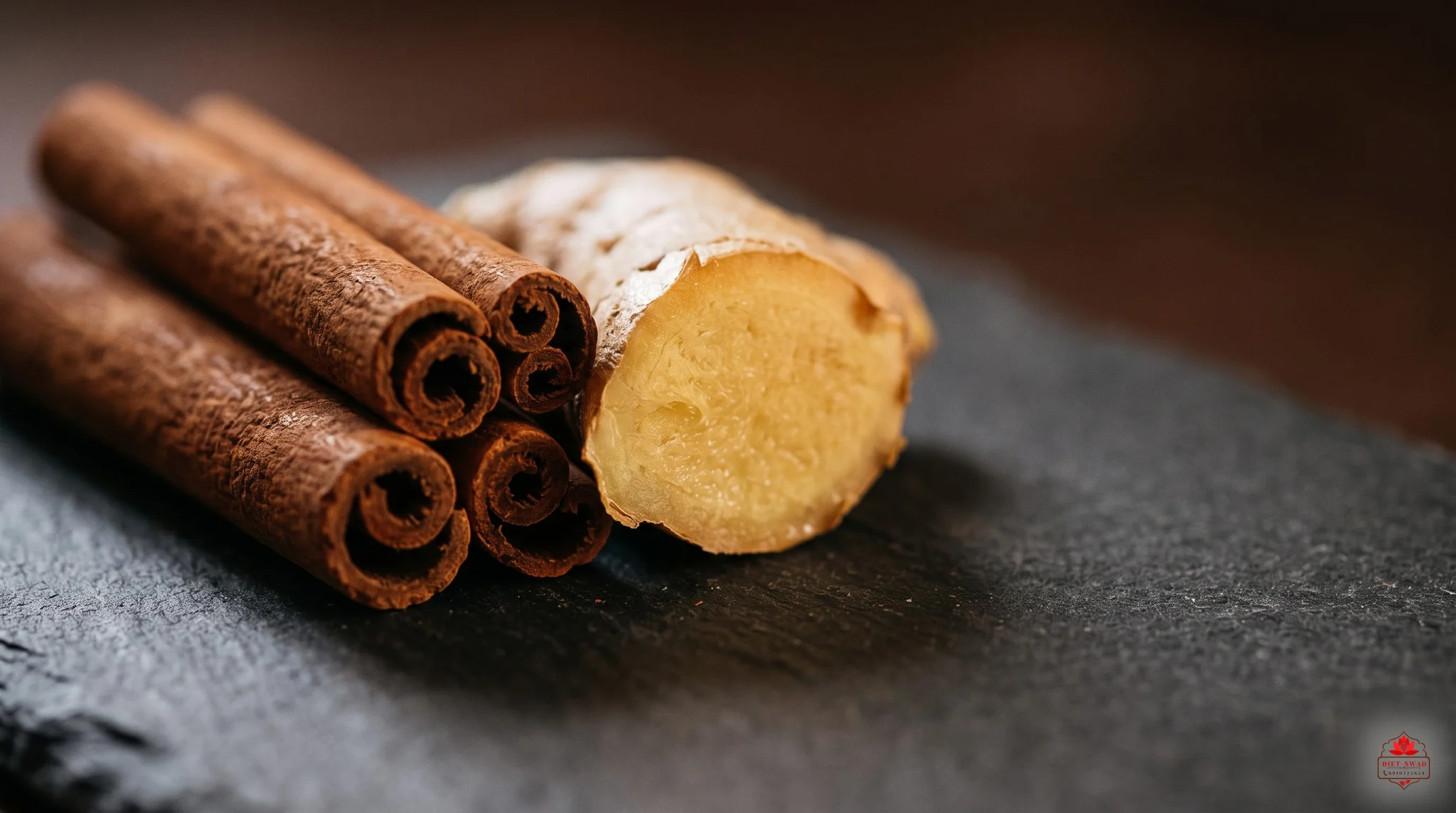
The most cited cinnamon trial is a randomised, double-blind study of 114 women split into three groups: placebo, ibuprofen at 400 mg every 8 hours, and cinnamon at 420 mg every 8 hours.
Cinnamon significantly reduced both the severity and the duration of pain compared with placebo. It is worth stating clearly that ibuprofen outperformed cinnamon on absolute pain reduction. The trial also reported lower menstrual bleeding in the cinnamon group than in the others, along with less nausea and vomiting.
One trial. Reasonably designed, but one trial, and a modest one.
Fennel, strong numbers and a taste problem
A systematic review pulling together 12 randomised trials found fennel performed comparably to conventional drug therapy including mefenamic acid and ibuprofen, and considerably better than placebo.
Two honest notes. The heterogeneity in the placebo comparison was extremely high, which again means the trials varied a great deal among themselves. And the trials themselves record that participants disliked the taste at the doses used, describing it as unpleasant. That is a real-world limitation and the researchers said so.
Chamomile, working on two fronts
Chamomile is interesting because it has been studied for both the physical and the emotional side.
Trials comparing chamomile with mefenamic acid found it comparable for physical pain, with some studies reporting better regulation of the emotional symptoms that accompany PMS. Its flavonoids, mainly apigenin and luteolin, act on uterine smooth muscle and also interact with receptors in the central nervous system, which is the proposed explanation for the mild calming effect.
Trial doses were roughly 250 mg to 400 mg of chamomile extract.
The part to take seriously before you try anything
- Trial doses are not food doses. 750 mg to 2000 mg of standardised ginger powder daily is a measured supplement, not a cup of adrak chai. Do not assume cooking with a spice reproduces a trial.
- Concentrated botanicals are not automatically safe. Ginger can affect blood clotting, which matters if you take blood thinners or have surgery coming up. Some extracts are not advised in pregnancy.
- The studies are small. Dozens to low hundreds of participants, with results that vary between trials.
- Comparable in a trial does not mean interchangeable in life. If a medication works for you, that decision belongs with your doctor, not with an article summarising research.
- Pain that stops your life needs assessment. Severe pain can indicate an underlying condition, and no spice addresses that.
Ye research hai, prescription nahi. Please talk to a doctor before adding any concentrated botanical, especially alongside medicine you already take.
Frequently asked questions
Does ginger help with period pain?
Ginger is the most studied of these spices for menstrual pain. Meta-analyses of randomised controlled trials have reported that ginger reduced pain compared with placebo, and found no statistically significant difference between ginger and the anti-inflammatory drug mefenamic acid in the trials compared. The researchers also note high variability between trials, which means the findings are promising rather than conclusive.
What does the research say about cinnamon and menstrual pain?
A randomised double-blind trial of 114 women compared cinnamon, ibuprofen and placebo. Cinnamon significantly reduced both the severity and duration of pain compared with placebo, while ibuprofen produced a greater reduction in pain than cinnamon did. The cinnamon group also recorded lower menstrual bleeding and less nausea than the comparison groups.
Are these spices as effective as painkillers?
Some trials have found comparable pain reduction, particularly for ginger and fennel against mefenamic acid. That is not the same as saying they should replace medication. The trials used specific standardised doses under supervision, the studies are mostly small, and results vary widely between them. Any decision about pain relief belongs with a doctor.
How much ginger was used in these studies?
Across the systematic reviews, doses ranged from about 750 mg to 2000 mg of standardised ginger powder per day, taken during roughly the first three to four days of menstruation. These are measured supplement doses, which is quite different from the amount of ginger in a cup of chai.
Is it safe to take these spices in large amounts?
Culinary amounts are generally fine for most people, but concentrated doses are a different matter. Ginger can affect blood clotting, which is relevant for anyone taking blood thinners or approaching surgery, and some botanical extracts are not advised during pregnancy. Speak to a doctor before taking any concentrated botanical, particularly alongside existing medication.
Promising is not the same as proven
What the evidence supports is roughly this: several ordinary kitchen spices have measurable effects on menstrual pain in controlled trials, sometimes comparable to common medication, at doses well above culinary amounts, in studies that are small and disagree with one another more than anyone would like.
That is genuinely interesting. It is not a prescription, and anyone selling it to you as one is going further than the research does.
Related reading: why period cramps happen explains the prostaglandin mechanism these trials are acting on, and magnesium and where to find it covers the mineral side.
Sources
Every claim above is linked here so you can check it yourself.
- Daily JW, et al. Efficacy of Ginger for Alleviating the Symptoms of Primary Dysmenorrhea: A Systematic Review and Meta-analysis of Randomized Clinical Trials. pubmed.ncbi.nlm.nih.gov/26177393
- Chen CX, et al. Efficacy of Oral Ginger (Zingiber officinale) for Dysmenorrhea: A Systematic Review and Meta-Analysis. pmc.ncbi.nlm.nih.gov/articles/PMC4871956
- Jahangirifar M, et al. Comparative Effect of Cinnamon and Ibuprofen for Treatment of Primary Dysmenorrhea: A Randomized Double-Blind Clinical Trial. pmc.ncbi.nlm.nih.gov/articles/PMC4437117
- Jaafarpour M, et al. The Effect of Cinnamon on Menstrual Bleeding and Systemic Symptoms With Primary Dysmenorrhea. pmc.ncbi.nlm.nih.gov/articles/PMC4443385
- Ghodsi Z, et al. Fennel for Reducing Pain in Primary Dysmenorrhea: A Systematic Review. pmc.ncbi.nlm.nih.gov/articles/PMC7697926
- Sharifi F, et al. The Effect of Chamomile on Pain and Menstrual Bleeding in Primary Dysmenorrhea: A Systematic Review. pmc.ncbi.nlm.nih.gov/articles/PMC8242407
- Khalesi ZB, et al. Efficacy of Chamomile in the Treatment of Premenstrual Syndrome: A Systematic Review. pmc.ncbi.nlm.nih.gov/articles/PMC6970572
Diet Swad uses none of these botanicals in any product.